Is Your Dog Vomiting in the Car? Motion Sickness and a Habituation Plan
Sedat Çapanoğlu, DVM
Anka Veterinary Clinic
Last updated:
Mustafa Kemal University graduate (2018). After clinical experience in Mersin and a short period in municipal shelter practice, he takes an active role in surgery, emergency care, dental health, and diagnostics.
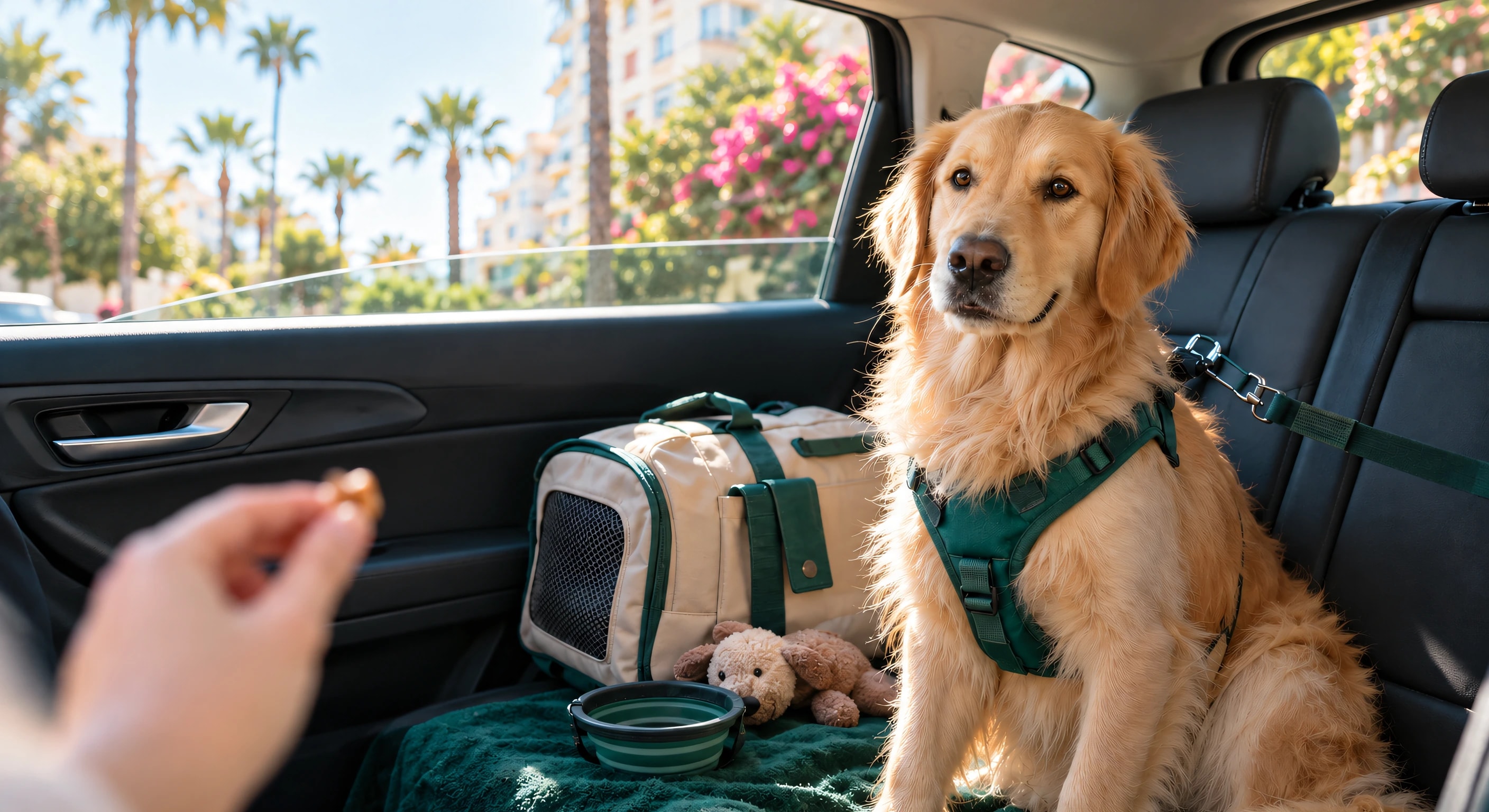
The dog whose tail starts wagging the moment the trunk opens and the dog that starts drooling the moment it sees the back seat can live under the same roof. The first picture describes a cheerful travel companion. In the second picture, restlessness starts even on short trips, lip licking becomes frequent, and the meal comes back up at the end of the trip.
Owners living with this situation often blame themselves. Yet motion sickness involves both the balance system of the inner ear and learned anxiety. Because the balance system is not yet mature in puppies, nausea is more common. Some puppies settle as they grow, but not every dog gets used to it on its own.
In this article we explain the medical side of motion sickness in simple terms. We describe a gradual habituation plan you can apply at home, the travel-day routine, and the warning signs that call for an examination.
What You Will Learn in This Guide
01What Motion Sickness Is and How It Differs from Anxiety
During movement, what the eyes see and what the inner ear senses do not always match. Movement signals from muscles and joints add to this mismatch. The brain responds to the conflicting signals with nausea and vomiting. Veterinary sources define this picture as nausea of vestibular origin. Restlessness that starts while the car is still parked points more to learned anxiety. If the dog trembles before the engine even starts, the problem lies not only in the stomach but also in the negative association your dog has built with the car.
To tell them apart, look at the timing. In true motion sickness, drooling, yawning, lip licking, and vomiting usually increase once the car starts moving. When anxiety dominates, fleeing and whining at the sight of the carrier start earlier. An anxious dog becomes nauseous faster, and the more nausea it feels, the more it fears the car.
Other causes need to be ruled out as well. Ear problems, especially those affecting the middle and inner ear, intestinal parasites, sudden diet changes, heatstroke, and gastrointestinal diseases can also cause vomiting. So do not attribute recurring vomiting to motion sickness alone. During a general examination, the veterinarian takes a history, performs ear and abdominal examinations, and orders parasite screening and blood tests when needed.
02Symptom Table
The table below makes home observation easier. Do not focus on a single sign. Look at the whole picture.
| Sign | Points to motion sickness | Points to anxiety | Your note at home |
|---|---|---|---|
| Drooling and lip licking | Gets worse once the car moves. Eases a little with the window slightly open. | Starts at the sight of the car and continues even before the car moves. | Write down the starting minute. |
| Vomiting and retching | Usually appears early in the trip. | Trembling and whining dominate before vomiting. | Write down the count and time of vomiting. |
| Restlessness and sounds | Restless pacing, faster breathing, and whining. | Fleeing, hiding, howling, and heading for the door. | Write down at which stage it started. |
| Post-trip recovery | Returns to normal in a short time. | Tension lasts even after returning home. | Write down the recovery time. |
Drooling and lip licking
Vomiting and retching
Restlessness and sounds
Post-trip recovery
03Early Observation and Record Keeping at Home
Change only one variable at a time. Continue with short notes every 3-4 days.
Good records are the most useful information you can give your veterinarian. Create four headings in your phone notes: trip duration, vomiting time, stool condition, and general behavior. If your dog handles short trips fine but deteriorates on long ones, be sure to write that distinction down.
A puppy's first car memories often consist only of clinic trips. In that case the car quickly becomes associated with stress. The short, reward-based introduction advice in our article on the first examination for puppies and kittens works here too. Start with steps such as brief sitting with the engine off, brief waiting with the engine on, and a short drive around the block, without letting the fear grow.
Learn the warning signs early. If there is bloody vomit, bloody diarrhea, nonstop vomiting, inability to keep even water down, pale gums, difficulty breathing, or collapse, do not continue trying at home. Your veterinarian will assess these signs together with the emergency criteria in our vomiting and diarrhea guide. If needed, emergency and intensive care take over. So contact the clinic without delay.
04What to Do and What to Avoid
- Start with a short, reward-based introduction: Getting in and out of the car is enough on the first day. Extend the duration slowly over the following days.
- Build trust with the engine off: Introduce the carrier at home. Once the carrier smells of your dog, the car feels less foreign.
- Keep the first drives around the neighborhood: A calm five-minute drive teaches more than a stressful half-hour trip.
- Keep the setup cool and airy: Leave the window slightly open. Do not let strong wind blow directly into your dog's face. Do not let your dog hang its head out of the window. Flying debris can injure the eyes, and sudden braking can cause a fall.
- Plan the meal around the trip: Do not set out on a long trip on a full stomach. Give a light meal a few hours before the trip. Do not cut off water completely.
- Write short breaks into the plan: Stop every two hours and take a short walk. Do not let the dog off the leash at rest stops.
- Never leave the dog alone in a parked car: Even a short wait heats up the interior quickly. On hot days, also take a look at the shade and water routine in the heatstroke protection article.
- Do not let the dog ride in the front seat: Sudden braking and the airbag make the front seat unsafe. Use a secured crate or seat-belt harness in the back seat.
- Never punish or force: Scolding a dog that is vomiting only deepens its fear. Stay calm and shorten the trial.
- Do not try human anti-nausea medication: Not every human medication is safe for dogs. Any support for motion sickness is given only as part of your veterinarian's plan, after an examination.
05Travel-Day Plan
The morning of the trip starts calmly. The dog goes out for a short bathroom break and has some water. Get into the car without a full stomach. The in-car setup stays the same on every trip: the same blanket, the same scent, the same seat.
In the first few minutes of the drive, the dog sniffs around and settles onto the seat. If lip licking increases, check how far the window is open. Do not play loud music and do not leave loose objects on the back seat.
Stop-and-go traffic increases nausea. Choose cooler hours when possible. On arrival, do not offer a heavy meal right away. Offer water and a calm space first. If diarrhea, appetite loss, or weakness after the trip lasts longer than a day, contact the clinic.
06Examination and Appointment Planning in Mersin Mezitli
Home habituation works for most dogs, but some cases call for an examination. If vomiting happens more than once a week, if weight loss has started, if your puppy cannot keep even water down, or if post-trip recovery drags on, do not wait. As Mersin Anka Veterinary Clinic, serving in Mersin Mezitli, we start by taking a detailed history. Together, we pinpoint the trip and the minute when the problem starts.
Trips abroad demand as much care as long domestic journeys. Review the microchip and paperwork steps in the international travel procedures article well in advance. In the travel and microchipping process, we plan the carrier setup and the pre-travel health check together.
Short Summary
Motion sickness in dogs arises from the combination of inner-ear balance signals and anxiety. It is more common in puppies, but not every case resolves with age on its own. Carry out short, reward-based trials at home and use a secured crate or seat-belt harness. If there is nonstop vomiting, inability to keep even water down, or collapse, do not wait at home.
A Note from Anka Veterinary Clinic
Sharing your observations about motion sickness and your travel notes during an examination helps your veterinarian assess your dog.
Book an AppointmentRelated Blog Posts
References and Notes
- Merck Veterinary Manual - Motion sickness in dogs
- Merck Veterinary Manual - Traveling by car with pets
- American Kennel Club (AKC) - Motion sickness in dogs and gradual habituation
- VCA Animal Hospitals - Motion sickness in dogs
This content has been prepared for informational purposes and does not replace a professional veterinary examination.
Frequently Asked Questions
My dog vomits in every car ride. Does that always mean motion sickness?
No. Ear problems, especially those affecting the middle and inner ear, parasite load, and gastrointestinal diseases can also cause vomiting. A pattern that starts with movement and repeats suggests motion sickness, but diagnosis requires an examination.
Does motion sickness in puppies resolve on its own?
Some puppies feel less nausea as they grow. Short, positive trials support the process, but do not simply wait for it to pass on its own. If vomiting becomes frequent, an early examination is healthier.
How many hours before the trip should I feed my dog?
Do not set out on a long trip on a full stomach. Give a light meal a few hours before the trip. Do not cut off water completely. Note which routine works better.
Does opening the window help motion sickness?
Fresh air relaxes most dogs. Leave the window slightly open but do not let your dog hang its head out. Strong wind and flying debris can injure the eyes.
Can I give my dog human anti-nausea medication from the pharmacy?
No. Do not give human medication without consulting the veterinarian. When support is needed, proceed with the veterinarian's plan.
How long does habituation take?
A few weeks of short trials are enough for mild cases. The process takes longer with severe anxiety. Keep notes at every step.
In which situations is a same-day examination needed?
If there is bloody vomit, bloody diarrhea, nonstop vomiting, inability to keep even water down, pale gums, difficulty breathing, or collapse, do not wait. These signs go beyond the limits of home monitoring.
Related Service
Travel and Microchipping
For clinical evaluation and a care plan, review the service page connected to this guide.
View ServiceMedical Information Note
This content is for general information only. It does not replace a veterinary examination, diagnosis, treatment, or specific medication/food recommendations. A veterinary examination and individual assessment are required for your pet’s health. In case of emergency symptoms, please contact the nearest open veterinary clinic.
MERSIN MEZITLI PET CARE
Need Professional Guidance for Your Pet?
Are you in Mersin Mezitli? If you notice these symptoms or have any concerns about your pet’s health, consult our AnkaVet veterinarians immediately. English and Russian-speaking support is available!
Your pet deserves quality care.
Get in touch today to discuss your pet’s health or schedule a consultation.