Why Does Your Pet’s Breath Smell? The Silent Danger of Dental Calculus
Sedat Çapanoğlu, DVM
Anka Veterinary Clinic
Last updated:
Mustafa Kemal University graduate (2018). After clinical experience in Mersin and a short period in municipal shelter practice, he takes an active role in surgery, emergency care, dental health, and diagnostics.
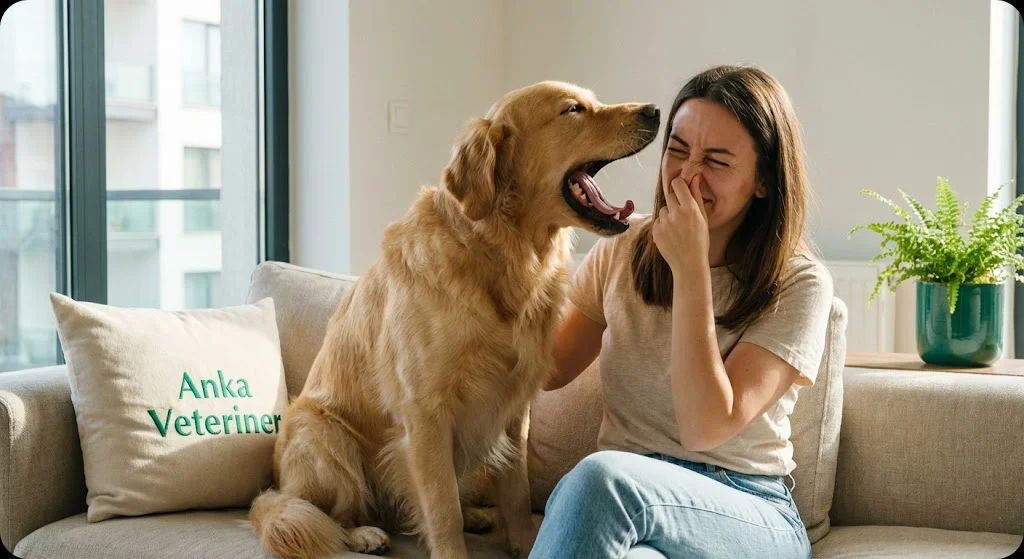
Imagine you’re relaxing on the sofa, your furry friend curls up on your lap, and lets out a big yawn right in your face... Do you suddenly recoil from a strong, unpleasant smell
The breath of a healthy cat or dog should not smell bad. Behind that heavy odor lies a silent enemy that threatens not just your pet’s mouth, but also their heart and kidneys: Dental Calculus (Tartar). Let’s examine how this silent danger progresses in the body, here at Anka Veterinary Clinic. At Anka Veterinary Clinic in Mersin Mezitli, we closely monitor your pet’s well-being with preventive care.
<span className="w-6 h-6 rounded-full bg-emerald-100 flex items-center justify-center"></span> What You Will Learn in This Guide
01The Real Cause of Bad Breath: Is It Just the Food
More than 80% of bad breath, known as halitosis, is caused directly by bacteria on teeth and gums, not by digestion or food. This plaque hardens within 24-48 hours by combining with minerals in saliva, turning into the yellow/brown layer referred to as dental calculus (tartar).
"Even a minor bleeding in the gums is like an open door for bacteria in the mouth to enter the bloodstream directly."
02The Hidden Side of Dental Calculus (Tartar)
Tartar is not just an aesthetic issue. As calculus grows, it pushes the gums down, leading to inflammation (gingivitis). At this stage, your pet begins to swallow their food whole because it hurts to chew, and they may stop chewing on their toys.
03The Dangerous Journey to the Heart and Kidneys
Inflamed and bleeding gums act as a highway for the army of bacteria in the mouth to seep into the bloodstream. These bacteria, distributed throughout the body via the blood, often latch onto heart valves as their first stop, causing serious damage (endocarditis). In short, a simple dental cleaning means protecting your pet’s heart.
04The “Dry Food Cleans Teeth” Myth
While chewing dry food may mechanically reduce some tartar on the tips of the teeth, it provides no benefit to the most dangerous areas: the gum line and between the teeth. Mechanical cleaning with special brushes, professional oral and dental health assessment, and veterinary check-ups are essential for your pet’s oral health.
Short Summary
Pet halitosis is not just a minor hygiene issue but often an early sign of periodontal disease or systemic conditions. Regular dental check-ups, daily toothbrushing, and professional scaling protect your pet’s long-term health.
Note from Mersin Ankavet
Before the procedure, blood work is always performed to evaluate anesthesia safety. Visible tartar as well as subgingival plaque are removed using specialized ultrasonic scaling devices, followed by polishing to delay new tartar formation.
Book AppointmentRelated Blog Posts
Kaynaklar ve Notlar
This content has been prepared for informational purposes and does not replace a professional veterinary examination.
Frequently Asked Questions
How can I get my pet used to having their teeth brushed?
Start slowly, ideally during puppyhood/kittenhood, using specialized, meat-flavored toothpastes designed for pets. Never use minty fluoride toothpastes used by humans; they are toxic.
How often should dental cleaning be done?
It depends on your pet’s breed and dental check results. Small breeds usually require professional cleaning once a year.
Do oral care waters or gels really work?
These applications do not remove existing tartar; they only slow down plaque formation. If dental calculus has already formed, the only solution is professional veterinary intervention.
Related Service
Dental and Oral Health
For clinical evaluation and a care plan, review the service page connected to this guide.
View ServiceMedical Information Note
This content is for general information only. It does not replace a veterinary examination, diagnosis, treatment, or specific medication/food recommendations. A veterinary examination and individual assessment are required for your pet’s health. In case of emergency symptoms, please contact the nearest open veterinary clinic.
MERSIN MEZITLI PET CARE
Need Professional Guidance for Your Pet?
Are you in Mersin Mezitli? If you notice these symptoms or have any concerns about your pet’s health, consult our AnkaVet veterinarians immediately. English and Russian-speaking support is available!
Your pet deserves quality care.
Get in touch today to discuss your pet’s health or schedule a consultation.