Bloody Diarrhea and Parvovirus in Dogs: Emergency Plan for Unvaccinated Puppies
Sedat Çapanoğlu, DVM
Anka Veterinary Clinic
Last updated:
Mustafa Kemal University graduate (2018). After clinical experience in Mersin and a short period in municipal shelter practice, he takes an active role in surgery, emergency care, dental health, and diagnostics.
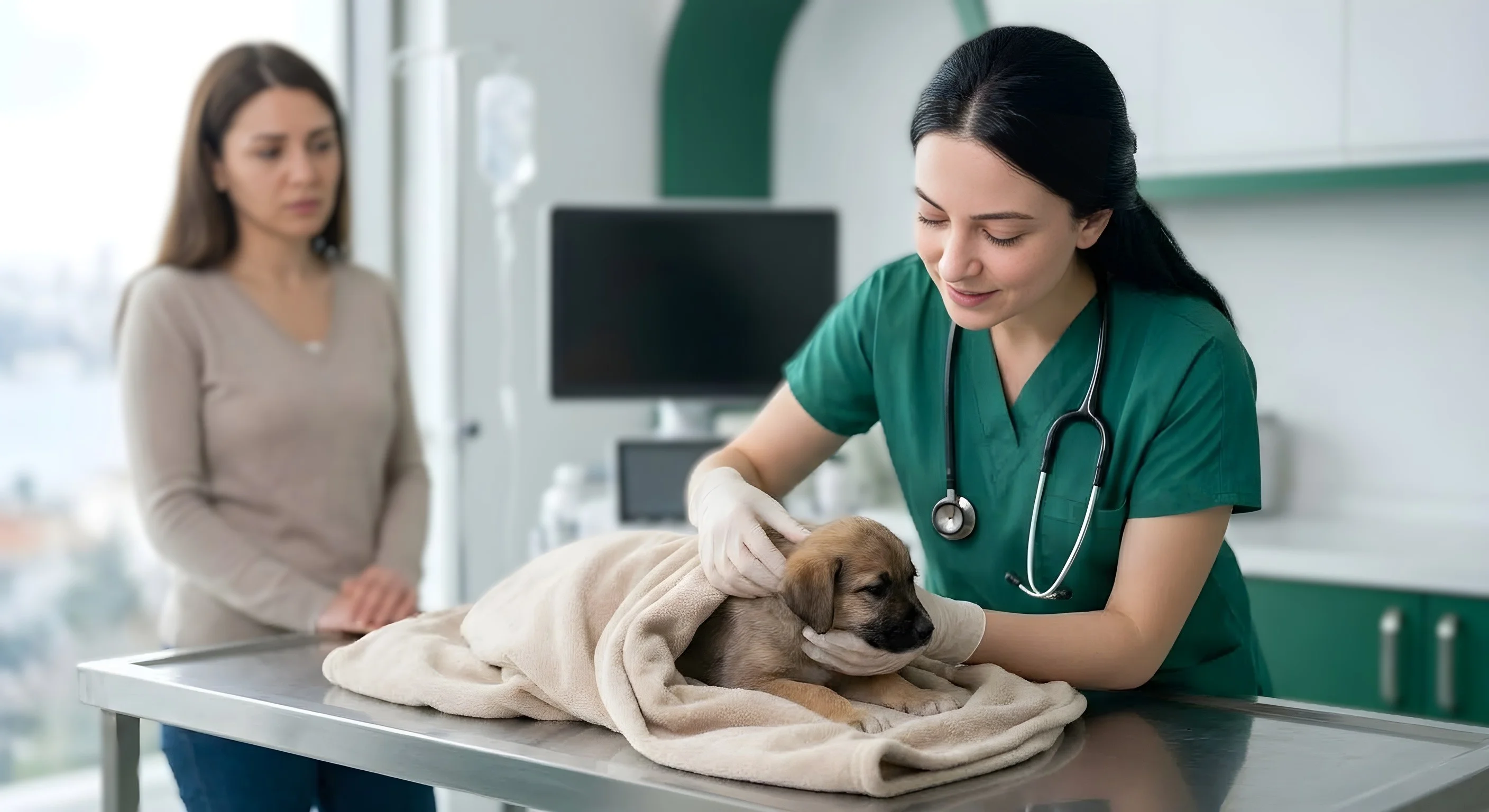
Sudden watery diarrhea in a puppy, ignoring the food bowl and weakness worry you and leave you unsure what to do. When you see blood in the stool, parvovirus comes to mind at once, and this fear is often justified. Bloody diarrhea in puppies moves much faster than a simple stomach upset, and fluid loss develops within hours.
In this article you get a clear picture of parvovirus. You learn which sign calls for an urgent examination, what you monitor at home, how you protect an unvaccinated puppy from the environment, and what you prepare on your way to the clinic in Mezitli, step by step. For general home monitoring in vomiting and diarrhea, you also read the vomiting and diarrhea guide.
What You Will Learn in This Guide
- 1What Parvovirus Is and How It Spreads
- 2Table of Signs, Severity Signals and Home Steps
- 3Why Puppies Stay More Vulnerable
- 4Emergency Signs and Behaviors to Avoid at Home
- 5Behaviors to Avoid at Home
- 6Protection with Vaccination and Environmental Hygiene
- 7Planning an Examination in Mersin Mezitli
- 8References and Scientific Notes
- 9Frequently Asked Questions
01What Parvovirus Is and How It Spreads
Canine parvovirus attacks the small intestine and the immune system, especially in puppies and unvaccinated dogs, and spreads with high contagiousness. The virus targets rapidly dividing cells in the intestinal wall, so bloody diarrhea, vomiting, appetite loss and weakness appear together. When immune cells are suppressed, the puppy stays open to secondary infections.
Spread happens mostly through stool. Food bowls, water bowls, leashes, shoe soles or park soil contaminated with stool from an infected dog carry the virus. A puppy sniffs or licks these surfaces and takes the virus through the mouth. Direct dog contact is not required; crowded walking areas and dirty ground carry risk.
Parvovirus stays highly resistant in the environment. In shade and on damp ground it keeps infectivity for months and resists many ordinary cleaning products. So the thought “no sick dog came to our garden” alone gives no safety. Even dirty soil carried home on shoes creates risk for an unvaccinated puppy.
The incubation period in most puppies ranges from 3 to 7 days (although rarely it can extend up to 14 days). A puppy infected today looks completely normal for several days, then appetite stops suddenly, vomiting starts, and foul-smelling, watery and bloody diarrhea follows. You watch this time window with extra care in newly adopted puppies with incomplete vaccination coming from crowded settings.
The clinical picture usually starts with dullness and appetite loss. Repeated vomiting follows, the puppy refuses water or vomits what it drinks. Diarrhea starts watery and soon turns bloody with a strong odor. What separates this picture from a simple food change is that the signs appear together and worsen rapidly.
You cannot diagnose parvovirus at home. Bloody diarrhea also comes from parasites, foreign bodies and other infections. So when you see bloody diarrhea, you do not try to guess the cause at home and you go for examination without losing time. At the clinic, a rapid test, blood work and dehydration assessment run together, and serum and supportive care follow the veterinarian plan.
02Table of Signs, Severity Signals and Home Steps
| Sign | Severity signal | Home step |
|---|---|---|
| Blood in watery stool | Bright red blood, strong foul odor, frequent defecation | You note the stool time, you separate the puppy from other dogs |
| Repeated vomiting | Vomiting several times a day, inability to keep water down | You stop offering food, you write down vomiting times, you do not force fluids |
| Weakness and appetite loss | Loss of play drive, constant lying down | You let the puppy rest, you keep the puppy warm with a blanket if chilled |
| Dehydration signs | Dry gums, sunken eyes, no urination | You go for examination without waiting, you note the last urination time |
| Abdominal pain and straining | Tucked belly, crying when touched | You do not press the belly, you carry safely in a carrier |
| Trembling and chilling | Cold paws, labored breathing | You do not give fever reducers at home, you keep the puppy calm and warm and call the clinic |
Blood in watery stool
Repeated vomiting
Weakness and appetite loss
Dehydration signs
Abdominal pain and straining
Trembling and chilling
03Why Puppies Stay More Vulnerable
Puppies stay more vulnerable to parvovirus than adult dogs, and several clear reasons explain this. The first reason is the immunity gap. Antibodies passed with maternal milk protect in the first weeks, then decline gradually. If the vaccine series is not yet complete, an unprotected window opens, and disease starts fast when the virus contacts the puppy in this period.
The second reason is rapid renewal of intestinal cells. While a puppy grows, the intestinal wall divides fast, and parvovirus favors exactly these cells. When the virus breaks the intestinal barrier, water and nutrient absorption fails, bloody diarrhea starts, and bacteria find a way into blood. This is why the picture runs heavier in puppies.
The third reason is low tolerance to fluid loss. Because body weight is small, fluid lost through vomiting and diarrhea equals an important share of total body water. Blood sugar drops faster, body temperature destabilizes faster, and weakness becomes marked. A puppy running yesterday does not want to stand up today.
The fourth reason is an inexperienced immune system. When bone marrow is suppressed, white blood cells fall and the puppy struggles to defend itself. A heavy parasite load makes the picture heavier. This is why a “let us wait a little, the puppy recovers” approach stays unsafe in puppy care. When blood, vomiting, appetite loss and weakness come together, the way to examination appears without waiting.
04Emergency Signs and Behaviors to Avoid at Home
When you see bloody diarrhea, you do not panic but you do not linger. If even one of the emergency signs below is present, you take the puppy for examination the same day; if several appear together, you go without losing time.
- If you see bright red blood or clots in the stool,
- Diarrhea becomes frequent and spreads a strong, foul odor,
- Vomiting repeats and the puppy cannot drink water or vomits what it drinks,
- The puppy shows no interest in food and lies down constantly,
- Gums dry out, eyes look sunken,
- If you notice tension in the belly, sounds of pain or straining,
- Trembling, chilling or breathing difficulty starts,
- A puppy of 6-8 weeks, unvaccinated or with an incomplete vaccine series is involved.
Behaviors to Avoid at Home
Behaviors to avoid at home matter as much as emergency signs. A wrong step extends the time until you reach the clinic.
On your way to the clinic you keep stool frequency, vomiting times, last water and urine status and the vaccine card ready. These notes help fast decisions during examination.
- You do not wait at home and hope the diarrhea passes alone.
- You do not give the puppy medicines meant for human diarrhea or vomiting.
- You do not build a home treatment plan with dose and drug names; serum and supportive care follow the veterinarian plan in the clinical setting.
- You do not force water or food through the mouth.
- You do not try milk, fatty food or a new treat.
- You do not take the puppy to the park or near other dogs.
- You do not clean stool with bare hands; you use gloves.
05Protection with Vaccination and Environmental Hygiene
Against parvovirus, your main protection is a regular vaccine program. Puppy vaccines repeat at defined intervals until the immunity gap closes, and each dose strengthens immunity. A puppy with an incomplete series does not count as fully protected. So you follow the dates on the vaccine card and you do not delay the appointment when reminder time comes.
Until the vaccine program ends, you balance socialization with protection. You do not take the puppy to crowded dog parks or near dogs with unknown vaccine status. You walk short and controlled routes in clean areas. You watch a newly adopted puppy at home in the first days and you start contact with other animals in a controlled way.
Environmental hygiene completes vaccination. You wash food and water bowls every day with hot water. You wash blankets and beds regularly. You do not leave stool in the garden, you collect it with gloves and place it in waste. After park walks you clean paws gently and you leave shoes in an area the puppy cannot reach.
You act with care in disinfection. Parvovirus resists many daily cleaners, so you do not use strong chemicals near the puppy. You do not try to copy veterinary disinfection protocols used in the clinical setting one by one at home; you keep practical and safe cleaning. An official vaccine card and a regular general examination record also ease your steps later when boarding or travel is needed.
06Planning an Examination in Mersin Mezitli
As an owner raising a puppy in Mezitli, your road map stays clear when you see bloody diarrhea. First you separate the puppy from other animals, you note vomiting and diarrhea times, and you take the vaccine card with you. Then you contact the clinic without losing time and you clearly share the information “bloody diarrhea and vomiting in an unvaccinated puppy”.
As Mersin Anka Veterinary Clinic serving in Mersin Mezitli, we provide rapid assessment in puppy diarrhea cases. During examination, we measure the dehydration level, run the rapid test and blood values, and shape a path by the age and weight of the puppy. When needed, serum and supportive care follow the veterinarian plan. Even in mild pictures, we set a clear recheck time.
During the clinic visit you also learn the emergency and intensive care and general examination flow. In an urgent picture, fluid support, vomiting control and nutrition planning run together. In recovery, we reshape the food transition and the vaccine calendar. In a Mezitli veterinarian search, working with a team that keeps all records of the puppy in one file eases your work.
Short Summary
Bloody diarrhea in dogs carries parvovirus suspicion in unvaccinated puppies and calls for rapid examination. The virus spreads through stool, stays alive in the environment for a long time, and appears after a 3-7 day incubation with bloody diarrhea, vomiting and weakness. You do not try medicines at home, you do not wait, and you continue the Mezitli veterinary examination and vaccine plan.
A Note from Anka Veterinary
When your puppy shows bloody diarrhea and vomiting, do not wait; with rapid testing and dehydration assessment we set your road map the same day.
Book AppointmentRelated Blog Posts
References and Scientific Notes
- Cornell University - Parvovirus: Transmission to Treatment
- WSAVA - Global Vaccination Guidelines
- VCA Animal Hospitals - Parvovirus in Dogs
This content has been prepared for informational purposes and does not replace a professional veterinary examination.
Frequently Asked Questions
Does bloody diarrhea always mean parvovirus?
No. Parasites, foreign bodies and sudden food changes also cause bloody diarrhea. But in an unvaccinated puppy, when blood, vomiting and weakness appear together, parvovirus probability rises. The exact distinction becomes clear with rapid test and examination.
Does parvovirus infect a vaccinated puppy?
Vaccination gives strong protection, but no vaccine gives complete protection. Puppies with a complete series recover with milder signs. Staying away from crowded and dirty settings before the vaccine series ends remains part of protection.
Is waiting one day at home safe?
When bloody diarrhea and vomiting come together in an unvaccinated puppy, waiting does not stay safe. Puppies lose fluids fast. Even a delay of several hours makes the picture heavier, and examination the same day is needed.
Can you give water through the mouth to a vomiting puppy?
Giving water by force to a vomiting puppy is not right. Given fluid enters the airway and increases vomiting. You note the last drinking time and report it to the clinic. Fluid support follows arrangement in the clinical setting.
Is small amount of blood in stool still urgent?
Even a small amount of blood counts as serious in a puppy. You look not only at the amount of blood but also whether vomiting and weakness accompany it. A picture starting with little blood turns heavy within hours.
Does a recovered puppy keep shedding virus to the surroundings?
Yes, recovered puppies keep shedding virus with stool for some time. So you continue hygiene after recovery, you collect stool without delay, and you avoid contact with other unvaccinated puppies.
Related Service
Emergency and Intensive Care
For clinical evaluation and a care plan, review the service page connected to this guide.
View ServiceMedical Information Note
This content is for general information only. It does not replace a veterinary examination, diagnosis, treatment, or specific medication/food recommendations. A veterinary examination and individual assessment are required for your pet’s health. In case of emergency symptoms, please contact the nearest open veterinary clinic.
MERSIN MEZITLI PET CARE
Need Professional Guidance for Your Pet?
Are you in Mersin Mezitli? If you notice these symptoms or have any concerns about your pet’s health, consult our AnkaVet veterinarians immediately. English and Russian-speaking support is available!
Your pet deserves quality care.
Get in touch today to discuss your pet’s health or schedule a consultation.