How to Plan a Puppy and Kitten Vaccination Schedule in Mersin Mezitli
Şanssım Çapanoğlu, DVM
Anka Veterinary Clinic
Last updated:
Mustafa Kemal University graduate (2019). After internships in Adana and Izmir, she worked in clinical practice in Adana and focuses on preventive medicine and behavior.
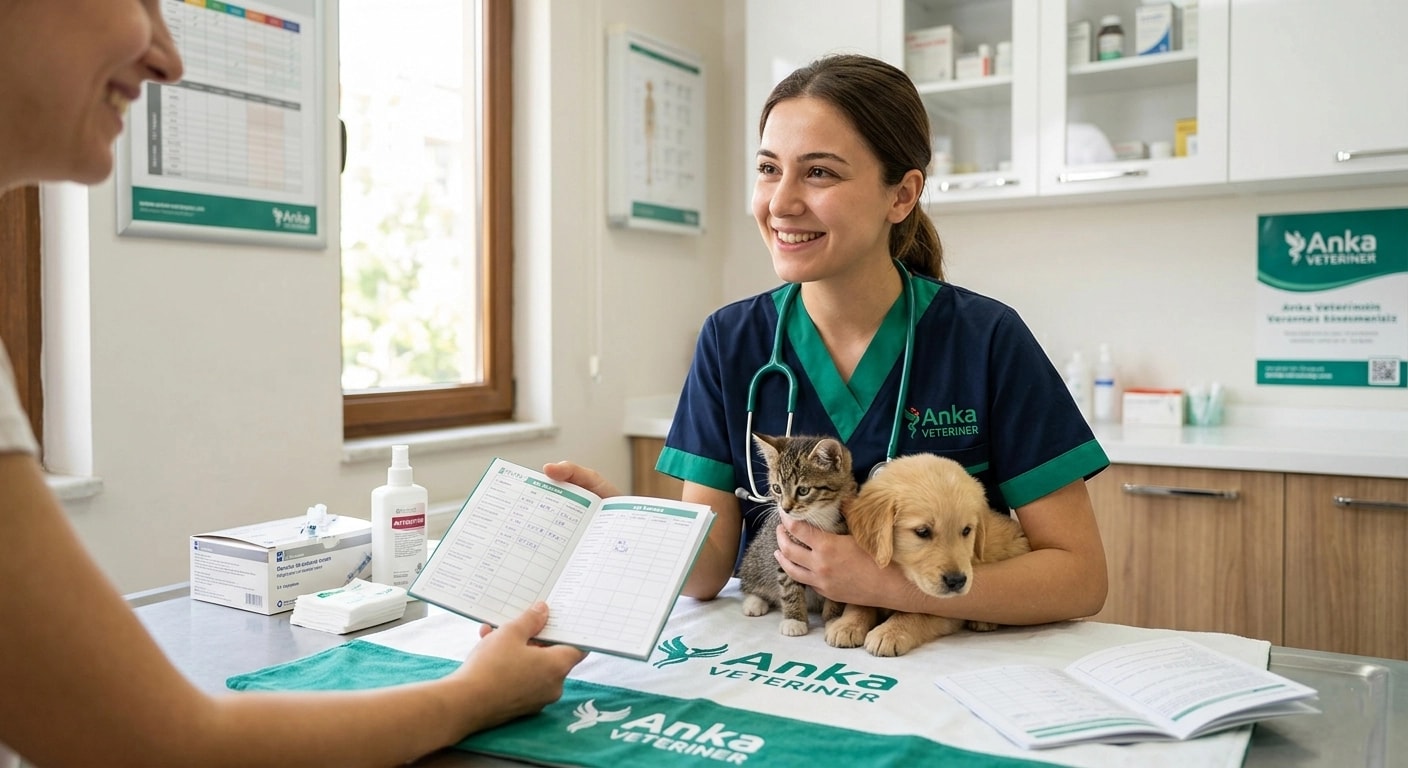
A newly adopted puppy or kitten is not just an adorable family member; it is a young animal with an immune system that is still developing. Vaccinations given during this early stage form the foundation of preventive care against serious viral and bacterial diseases.
A vaccination schedule is not a mechanical checklist of “one shot this week, another shot next week.” Age, colostrum intake, previous vaccination records, other pets at home, outdoor exposure, parasite risk, and the environmental conditions of Mersin Mezitli should all be considered together.
What You Will Learn in This Guide
- 1Why Is a Puppy and Kitten Vaccination Schedule Tailored to Each Pet?
- 2What Are Maternal Antibodies and the Immunity Gap?
- 3Sample Vaccination Schedule for Puppies
- 4Sample Vaccination Schedule for Kittens
- 5Why Is Parasite Protection Especially Important in Mersin Mezitli?
- 6Which Post-Vaccination Signs Are Normal, and Which Are Emergencies?
- 7How Is the Vaccination Schedule Tracked at Anka Veterinary Clinic?
- 8Sources and Notes
- 9Frequently Asked Questions
01Why Is a Puppy and Kitten Vaccination Schedule Tailored to Each Pet?
Not every young pet starts life with the same level of immune protection. Some receive adequate colostrum from the mother, while others may be separated early. Some live as the only pet at home, while others have contact with cats or dogs. That is why the schedule should be built around an examination and a risk assessment.
In Mersin Mezitli, where the climate is mild and parks and shared outdoor spaces are heavily used, preventive care should be planned carefully. Even pets that have not gone outside yet may be exposed indirectly through shoes, contaminated surfaces, or contact with other animals.
02What Are Maternal Antibodies and the Immunity Gap?
Puppies and kittens receive their first protection from maternal antibodies, mainly through colostrum. This early protection is valuable, but it gradually decreases.
If certain vaccines are given while maternal antibodies are still high, the immune response may be weaker than expected. As those antibodies decline, the young animal becomes more vulnerable to disease. This transition is often described as the immunity gap or window of susceptibility.
For this reason, puppy and kitten vaccination is usually not completed with a single dose. Booster doses at proper intervals help the immune system build a more reliable response.
03Sample Vaccination Schedule for Puppies
The table below is for general information. Every puppy’s schedule should be customized by a veterinarian based on examination findings and risk assessment.
| Period | Application | Purpose |
|---|---|---|
| 6-8 weeks | General examination and internal/external parasite treatment | Initial protection against intestinal parasites, fleas, ticks, and environmental parasite risks |
| 6-8 weeks | Core combination vaccine, first dose | Starts immunity against key diseases such as distemper, parvovirus, adenovirus, and parainfluenza |
| 9-12 weeks | Core combination vaccine, second dose | Strengthens the response from the first dose |
| 12 weeks and older | Leptospirosis vaccine | Planned according to regional risk, lifestyle, and exposure; more strongly recommended in some current guidelines |
| 12 weeks and older | Bordetella / kennel cough vaccine | Considered for boarding, grooming, training classes, or frequent dog contact |
| 12 weeks and older | Lyme vaccine | Considered if tick exposure and regional risk are relevant |
| 12-16 weeks | Rabies vaccine | Added because of legal requirements and zoonotic risk |
| 14-16 weeks | Final puppy core dose / booster plan | Helps complete the puppy series safely |
6-8 weeks
6-8 weeks
9-12 weeks
12 weeks and older
12 weeks and older
12 weeks and older
12-16 weeks
14-16 weeks
04Sample Vaccination Schedule for Kittens
A kitten’s vaccination plan is also based on age, lifestyle, and risk assessment. Even strictly indoor cats may still need core vaccines because some pathogens can be brought indoors indirectly.
| Period | Application | Purpose |
|---|---|---|
| 6-8 weeks | General examination and internal/external parasite treatment | Assessment of intestinal parasites, fleas, ticks, and ear mite risks |
| 6-8 weeks | Core combination vaccine, first dose | Starts immunity against panleukopenia, herpesvirus, and calicivirus |
| 9-12 weeks | Core combination vaccine, second dose | Strengthens the immune response from the first dose |
| 12 weeks and older | FeLV testing and feline leukemia vaccine assessment | Especially important for kittens and higher-risk living situations; testing is recommended before vaccination |
| 12-16 weeks | Rabies vaccine | Added because of legal and public health considerations |
| 14-16 weeks | Final kitten core dose / booster plan | Helps complete the kitten series |
6-8 weeks
6-8 weeks
9-12 weeks
12 weeks and older
12-16 weeks
14-16 weeks
05Why Is Parasite Protection Especially Important in Mersin Mezitli?
A preventive schedule is not only about viral diseases. Parasite protection should be part of the same plan so your young pet can grow in a healthier way. Mersin’s mild climate may allow fleas and ticks to remain active for longer periods of the year.
Parasites do more than cause itching or hair loss. Some intestinal parasites may contribute to poor growth, anemia, digestive problems, and weakened immunity. Fleas and ticks can also act as vectors for other infections.
06Which Post-Vaccination Signs Are Normal, and Which Are Emergencies?
Mild tiredness, sleepiness, temporary appetite reduction, or slight tenderness at the injection site may occur after vaccination. These signs usually resolve quickly.
Marked swelling of the face, eyelids, or around the mouth; repeated vomiting; breathing difficulty; fainting; intense itching; or sudden deterioration in general condition are not considered normal. These signs are rare, but they should be taken seriously as possible allergic reactions and require prompt veterinary contact.
On vaccination day, it is good clinical practice to avoid intense exercise, bathing, long travel, or stressful environments. Waiting for the period recommended by your veterinarian before bathing is safer.
07How Is the Vaccination Schedule Tracked at Anka Veterinary Clinic?
Continuity is one of the most important parts of a puppy or kitten vaccination schedule. The first dose matters, but completing booster doses on time is just as important. If intervals become too long, the immunity plan may need to be reassessed.
At Anka Veterinary Clinic, your pet’s vaccinations and parasite treatments are recorded in a digital patient tracking system. This allows monitoring which vaccine was given, when the next dose is due, and when annual check-ups should be scheduled.
For your young pet’s preventive care plan, the general examination and vaccination tracking service can be reviewed.
Short Summary
Pediatric immunization protocols begin as maternal antibodies decline. Timely administration of core vaccines builds protective immunity against fatal infectious diseases.
Note from Mersin Ankavet
A vaccination schedule for puppies and kittens is not a single fixed list. Maternal antibodies, age, lifestyle, parasite risk, and regional conditions should all be assessed together.
Book AppointmentRelated Blog Posts
Sources and Notes
- WSAVA Vaccination Guidelines for Dogs and Cats
- AAHA Canine & Feline Vaccination Guidelines
- AVMA (Vaccinating Your Pet)
This content has been prepared for informational purposes and does not replace a professional veterinary examination.
Frequently Asked Questions
Can I take my puppy outside before the vaccination schedule is complete?
Complete isolation is not ideal, but risky exposure should be avoided. Until the core vaccine series reaches a safer point, puppies should avoid parks, soil surfaces, crowded dog areas, and communal water bowls.
Can I bathe my kitten or puppy immediately after vaccination?
Bathing is not recommended on the day of vaccination or immediately afterward. While the immune system is responding, chilling, stress, or sudden temperature changes should be avoided. It is safer to wait for the period recommended by your veterinarian.
What happens if a scheduled vaccine date is missed?
This depends on the length of the delay and which vaccine was missed. Short delays can often be adjusted, but if the interval is too long, some doses may need to be repeated.
Does an indoor cat need to be vaccinated?
Yes, core vaccines remain important for most indoor cats. Some viruses can be brought indoors on shoes, clothing, or objects. Boarding, travel, a new cat entering the home, or an unexpected escape can also create risk.
Should every cat receive the Feline Leukemia vaccine?
FeLV vaccination is strongly considered for kittens. In adult cats, the decision is based on lifestyle. Outdoor access, contact with other cats, or the possibility of a new cat entering the household increases risk. FeLV testing is recommended before vaccination.
Are Lyme or Bordetella vaccines always necessary for dogs?
No. These vaccines are not automatically required for every dog. They are planned by the veterinarian based on tick exposure, travel, boarding, grooming, training classes, frequent dog contact, and regional risk.
Related Service
General Examination
For clinical evaluation and a care plan, review the service page connected to this guide.
View ServiceMedical Information Note
This content is for general information only. It does not replace a veterinary examination, diagnosis, treatment, or specific medication/food recommendations. A veterinary examination and individual assessment are required for your pet’s health. In case of emergency symptoms, please contact the nearest open veterinary clinic.
MERSIN MEZITLI PET CARE
Need Professional Guidance for Your Pet?
Are you in Mersin Mezitli? If you notice these symptoms or have any concerns about your pet’s health, consult our AnkaVet veterinarians immediately. English and Russian-speaking support is available!
Your pet deserves quality care.
Get in touch today to discuss your pet’s health or schedule a consultation.