Brain Games for Cats and Dogs at Home: Food Puzzles, Scent Games, and Happy Routines
Şanssım Çapanoğlu, DVM
Anka Veterinary Clinic
Last updated:
Mustafa Kemal University graduate (2019). After internships in Adana and Izmir, she worked in clinical practice in Adana and focuses on preventive medicine and behavior.
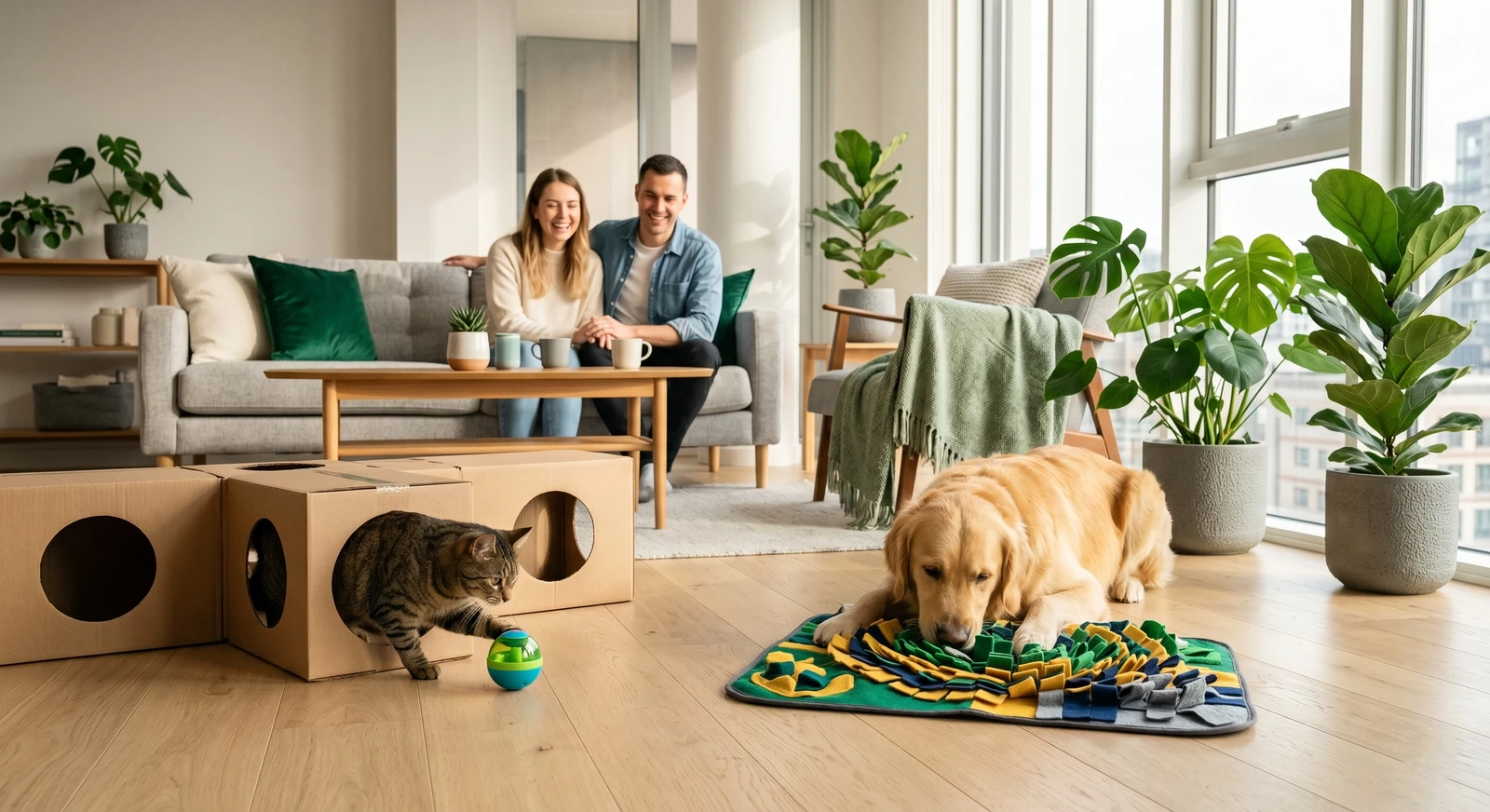
To help pets live happy and healthy lives, high-quality food, regular vaccinations, a safe home, and long naps are essential. All of these are valuable. However, for a cat or dog to live a truly balanced, peaceful, and enjoyable life, their mental needs should be supported just as much as their physical ones.
Mental enrichment means adding small daily opportunities for pets to use their natural behaviors safely and in a controlled way. Searching for scents, foraging for food, tracking toys, exploring, playing short training games, and solving problems are all part of this approach.
In short, play is not just about passing the time. For cats and dogs, play is a way to learn, relax, explore, bond, and channel energy in a healthy way.
What You Will Learn in This Guide
- 1What Is Mental Enrichment?
- 2Why Is Play More Than Just Fun for Cats and Dogs?
- 3Brain and Scent Games to Try at Home
- 4Why Are Scent Games So Valuable for Dogs?
- 5Games That Support the Hunting Instinct in Cats
- 6How to Use Food Puzzles
- 7Why Age, Health, and Personality Matter When Choosing Games
- 8Small but Important Notes for Safe Play
- 9Hot Weather and Indoor Activity Balance in Mersin Mezitli
- 10Sources and Notes
- 11Frequently Asked Questions
01What Is Mental Enrichment?
Mental enrichment means adding small opportunities for exploration, problem-solving, and play into your pet’s daily life. This approach supports not only movement, but also sniffing, thinking, making choices, and gaining small successes.
For cats, boxes, tunnels, wand toys, and hidden food can make the home more interesting. For dogs, snuffle mats, food puzzles, and short training games can do the same.
02Why Is Play More Than Just Fun for Cats and Dogs?
Cats are naturally inclined to hunt, stalk, hide, and pounce. Dogs are especially skilled at sniffing, tracking, moving together, learning, and communicating with humans. Creating small outlets for these needs at home can significantly enrich their daily lives.
Not every game has to be high-energy. In fact, some of the most useful games are the ones where your pet calms down, thinks, sniffs, investigates, and achieves small victories.
03Brain and Scent Games to Try at Home
| Game type | How to use it for cats | How to use it for dogs | Points to keep in mind |
|---|---|---|---|
| Hiding treats in a towel | Hide a few pieces of kibble or treats within the folds of a thin towel. | Roll up a towel and hide a small amount of treats between the layers. | Make sure they do not chew off and swallow loose threads. |
| Cardboard box exploration | Place a few boxes side by side; toys, kibble, or catnip can be placed inside. | Put paper rolls inside a large box and hide treats in some sections. | Remove tape, staples, glue, and small detachable parts. |
| Scent trail game | Use the scent of a favorite food along a short route, leaving a small reward at the end. | Hide treats in different corners of the room or easy-to-find spots. | Choose easy-to-clean floors and avoid leaving food residue. |
| Food puzzle | Use simple treat balls, egg cartons, or safe puzzle toys. | Use puzzle feeders, snuffle mats, or slow-feeder toys. | Do not increase daily food intake; deduct treats from the total daily portion. |
| Short training session | Practice simple behaviors like come, sit, or touching a target stick for a reward. | Reinforce sit, wait, down, and find it with short, fun sessions. | Keep sessions short and end before your pet gets bored. |
| Hide-and-seek / target finding | Hide a favorite toy under a blanket or in an easy corner. | A family member hides, and the dog is encouraged to search with a find cue. | Choose easy hiding spots at first to support success. |
Hiding treats in a towel
Cardboard box exploration
Scent trail game
Food puzzle
Short training session
Hide-and-seek / target finding
04Why Are Scent Games So Valuable for Dogs?
Dogs read the world largely through their noses. A room that seems ordinary to humans can be a vivid map full of scent information for them. Scent games are therefore not only entertaining, but also calming and mentally rewarding.
A simple snuffle mat, towel game, or treat-hiding game can be very useful at home, especially on days when going outside is difficult. Dog scent games provide mental fatigue without requiring intense running or jumping.
05Games That Support the Hunting Instinct in Cats
For cats, play is a safe simulation of the hunting sequence: see, stalk, wait, pounce, and catch. This is why wand toys, feather toys, hidden small toys, boxes, and tunnels are so valuable.
The key is choosing a game that suits your cat’s natural rhythm. Some cats love toys that move along the floor, some enjoy feathers moving through the air, and others prefer hiding spots such as boxes and tunnels.
06How to Use Food Puzzles
Food puzzles and slow-feeder toys require your pet to think and make an effort to reach their food. These toys can turn the daily feeding routine into a small problem-solving game.
The amount of food or treats used in these games should not be added on top of the daily feeding plan; it should be deducted from it. Otherwise, well-intentioned games may lead to unnecessary calorie intake.
It is also better not to start with very difficult puzzles. Easy early successes help your pet engage with the game confidently. The difficulty can be increased over time.
07Why Age, Health, and Personality Matter When Choosing Games
Not every cat or dog enjoys the same game. Age, weight, joint health, heart and respiratory conditions, vision or hearing issues, and personality traits should all be considered.
Young pets may enjoy short and frequent sessions. Adult animals may enjoy more structured scent and problem-solving games. For senior pets, calmer scent games, easy food puzzles, and low-paced interactions may be more suitable than jumping, sharp turns, or fast running.
For pets with joint disease, heart disease, respiratory distress, or significant weight issues, the activity level should be planned according to veterinary advice. If your pet has excessive anxiety, noticeable disinterest, sudden behavior changes, or difficulty adjusting at home, behavioral consultation can help create a more personalized plan.
08Small but Important Notes for Safe Play
Safety should always come first when preparing games at home. Small plastic pieces, strings, rubber bands, detachable decorations, and materials that can be swallowed easily should not be left unsupervised. Tape, staples, and glue residue should be removed from cardboard boxes.
Games do not need to last very long. Short, focused 10-15 minute sessions are often more useful than long but unstructured ones. What matters is that the game suits your pet’s personality and ends on a positive note.
09Hot Weather and Indoor Activity Balance in Mersin Mezitli
In Mersin Mezitli, long outdoor walks can be tiring for some pets on hot and humid days, especially around noon. During these periods, indoor brain and scent games offer a practical alternative.
Food puzzles in a cool room, hidden treats, short training sessions, and calm exploration games help your pet channel energy safely during hours when going outside is not ideal. This keeps the daily routine intact and makes time at home more enriching.
Short Summary
Brain games for cats and dogs at home are valuable not only for playful time together, but also for supporting mental balance and the human-animal bond. Scent games, food puzzles, cardboard box exploration, short training sessions, and hide-and-seek can enrich daily life.
The most suitable game is the one that suits your pet’s age, health, personality, and interests. Small, regular, and safe play routines can make home life more enjoyable for both you and your furry friend. At Anka Veterinary Clinic in Mersin Mezitli in Mersin Mezitli, we closely monitor our patients with tailored preventive protocols.
Note from Mersin Ankavet
Our pet companions' mental stimulation and happiness are just as valuable as their physical health. You can contact our clinic to get more support regarding brain games and behavioral enrichment methods you can implement at home.
Book AppointmentRelated Blog Posts
Sources and Notes
- AAHA - Enrichment: Supporting your pet’s mental and emotional wellbeing at home
- AAHA - Canine and Feline Behavior Management Guidelines
- AAFP/ISFM - Feline Environmental Needs Guidelines
- Environmental Enrichment for Indoor Cats - PMC
This content has been prepared for informational purposes and does not replace a professional veterinary examination.
Frequently Asked Questions
How can I keep my cat entertained at home?
You can create small exploration areas out of cardboard boxes, set up safe window-watching perches, have short hunting sessions with wand toys, and use food puzzles. Trying different textures, movements, and toys is useful to find the type of game that captures your cat’s interest.
How can I make my dog happy at home?
You can play hide-and-seek indoors, prepare a snuffle mat, organize short training sessions, and serve meals using slow-feeder toys. For dogs, sniffing and problem-solving activities can be just as rewarding as physical exercise.
Are food puzzles suitable for every animal?
They can be suitable for most cats and dogs, but the difficulty level must be chosen correctly. Puzzles that are too hard can cause frustration in some animals. It is recommended to start with easy toys and slowly increase the difficulty as their success grows.
Do scent games tire out my dog?
Yes. Scent games work a dog’s brain and can provide a calm, satisfying type of fatigue. These activities can be a great support, especially on days when high-tempo exercise is not appropriate.
What should I do if my cat shows no interest in games?
Every cat has different play preferences. Some like toys moving along the floor, some prefer feathers moving in the air, and others love box and tunnel games. It is important to keep play short, choose the right time of day, and not force your cat.
How much playtime is enough every day?
Generally, 2-3 high-quality play sessions of 10-15 minutes a day are a good starting point for many pets. However, needs can vary based on age, health, energy level, and personality.
Related Service
Behavior and Psychology
For clinical evaluation and a care plan, review the service page connected to this guide.
View ServiceMedical Information Note
This content is for general information only. It does not replace a veterinary examination, diagnosis, treatment, or specific medication/food recommendations. A veterinary examination and individual assessment are required for your pet’s health. In case of emergency symptoms, please contact the nearest open veterinary clinic.
MERSIN MEZITLI PET CARE
Need Professional Guidance for Your Pet?
Are you in Mersin Mezitli? If you notice these symptoms or have any concerns about your pet’s health, consult our AnkaVet veterinarians immediately. English and Russian-speaking support is available!
Your pet deserves quality care.
Get in touch today to discuss your pet’s health or schedule a consultation.