Do Dogs Really Understand Their Owners? How They Read Our Emotions
Sedat Çapanoğlu, DVM
Anka Veterinary Clinic
Last updated:
Mustafa Kemal University graduate (2018). After clinical experience in Mersin and a short period in municipal shelter practice, he takes an active role in surgery, emergency care, dental health, and diagnostics.
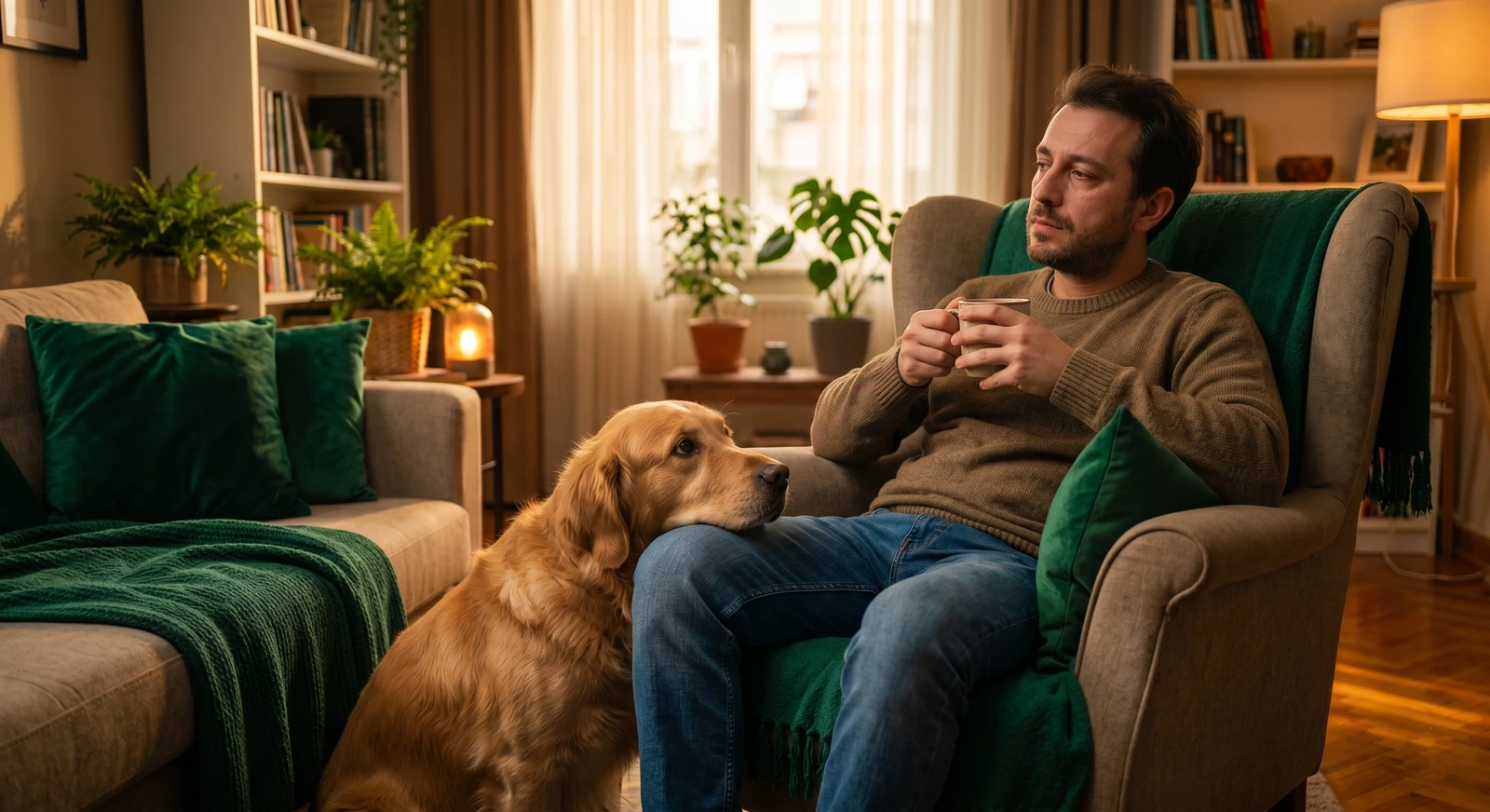
Have you ever noticed your dog greeting you a little more attentively than usual when you step through the door after a tough day? When you sit on the couch exhausted and they quietly snuggle up to you, rest their head on your knee, or simply look into your eyes, it is rarely a coincidence.
Many dog owners feel that their companion understands their mood. Phrases like “They sensed I was sad today,” “They come to me when I’m stressed,” or “They know something is wrong from my tone of voice” are very common in daily life.
But is this just wishful thinking, or is there a scientific basis for it? Can dogs really read human emotions?
At Anka Veterinary Clinic in Mersin Mezitli, this article explores how dogs can perceive facial expressions, tone of voice, body language, routines, and scent changes using scientific yet accessible language.
What You Will Learn in This Guide
- 1Can Dogs Really Understand Human Emotions?
- 2How Do They Read Our Facial Expressions?
- 3Why Are Tone of Voice and Speech Rhythm Important?
- 4What Do Body Language and Daily Routines Tell Dogs?
- 5Does the Sense of Smell Play a Role in Understanding Emotions?
- 6The Signals Your Dog Reads: A Practical Table
- 7The Difference Between Love, Attachment, and Separation Anxiety
- 8The Daily Bond You Build with Your Dog in Mersin Mezitli
- 9Sources and Notes
- 10Frequently Asked Questions
02Can Dogs Really Understand Human Emotions?
Dogs do not think like humans; they do not evaluate events with words, long-term plans, or abstract concepts the way humans do. However, they are incredibly skilled at observing human behavior, learning repetitive patterns, and distinguishing emotional signals.
Thousands of years of human-dog companionship have made dogs highly attuned to human faces, voices, movements, and daily routines. Therefore, your dog “understanding” you is not about thinking like a human; it is about observing you closely, recognizing your voice, learning your behaviors, and noticing changes in your body.
So, the answer to “Does my dog know I’m sad?” is mostly yes. But they do this not by empathizing like a human, but by reading a combination of signals from your face, voice, body language, routine, and scent.
03How Do They Read Our Facial Expressions?
Smiling, frowning, expressions of surprise, or tension are not meaningless images to dogs. Dogs watch the human face carefully and are especially sensitive to changes around the eyes, the mouth line, and facial muscles.
While a happy facial expression can be soothing for a dog, a tense or angry expression may cause them to act more cautiously. In such moments, some dogs may display calming signals such as yawning, lip licking, turning their head away, or averting their gaze.
These behaviors should not be interpreted as “guilt” or “stubbornness.” Most of the time, the dog is trying to understand the emotional state of the person in front of them and defuse tension in the environment.
04Why Are Tone of Voice and Speech Rhythm Important?
Dogs pay attention not only to the words spoken, but also to how they are said. The pitch, rhythm, harshness, softness, and repeated emphasis patterns of a voice are powerful clues for dogs.
An excited, soft, and rhythmic tone can invite a dog to play or interact. A harsh, sudden, or loud tone can trigger retreating, freezing, barking, or overarousal in some dogs.
For this reason, using a clear, calm, and consistent tone is much healthier than yelling. Especially during training, commands, and boundary-setting, consistency helps the dog feel safer.
05What Do Body Language and Daily Routines Tell Dogs?
Dogs are excellent observers. Shoulders slumping, walking fast, slowing down, heading toward the door, grabbing keys, putting on shoes, or reaching for a bag do not escape their notice.
Many routines are created during the day without realizing it. Dogs learn these routines over time. Picking up your keys, putting on a specific pair of shoes, or getting ready at the same time each morning can mean “they are about to leave” to your dog.
This observational skill is an important part of how well your dog knows you. However, if these cues become too strong for some dogs, preparations for leaving can trigger anxiety. In such cases, routines may need to be managed more calmly and predictably.
06Does the Sense of Smell Play a Role in Understanding Emotions?
A dog’s sense of smell is far more advanced than a human’s. When people experience stress, fear, excitement, or happiness, physiological changes occur in the body. Heart rhythm, sweating, breathing, hormone levels, and scent molecules released from the skin can change.
Humans do not notice these micro-changes, but dogs are highly sensitive to scent signals. Therefore, your dog can pick up clues about your mood not only from your face or voice, but also from certain scent changes in your body.
This does not mean dogs have a supernatural ability. It shows that they have a biologically advanced perception system.
07The Signals Your Dog Reads: A Practical Table
| Signal the Dog Reads | How the Dog May Notice It | What the Owner Can Do |
|---|---|---|
| Facial expression | By watching changes around the eyes, mouth line, and facial muscles | Communicate more calmly and gently, knowing your dog can sense tension |
| Tone of voice | By following pitch, harshness, rhythm, and emotional emphasis | Use a clear, calm, and consistent tone instead of yelling |
| Body language | By observing slumped shoulders, rapid movements, slowing down, or tense posture | Keep your body as calm as possible when interacting with your dog |
| Daily routine | By learning repeated cues such as grabbing keys, putting on shoes, or packing a bag | Sometimes neutralize departure cues to reduce anxiety triggers |
| Scent changes | By detecting body scents that change during stress, excitement, or fear | Try to manage your own stress and avoid leaving your dog in an overstimulating environment |
| Touch and contact style | By sensing changes in petting speed, pressure, and approach | Respect your dog’s desire for contact and their boundaries |
Facial expression
Tone of voice
Body language
Daily routine
Scent changes
Touch and contact style
08The Difference Between Love, Attachment, and Separation Anxiety
Your dog following you, lying beside you, or reacting to your mood is often part of a healthy social bond. However, not every proximity behavior should be interpreted only as love.
If your dog cannot tolerate even short separation at home, panics at the bathroom door, barks, chews objects, drools excessively, becomes restless, has potty accidents when you leave, and cannot calm down for a long time after you return, separation anxiety should be considered.
This does not mean your dog is “spoiled” or “stubborn.” Separation anxiety is a behavioral issue that can be managed with proper planning and, when needed, veterinary support. The goal is not to punish the dog, but to make being alone safer and more predictable.
For separation anxiety or clear behavior changes, the Behavior & Psychology service can support clinical assessment.
09The Daily Bond You Build with Your Dog in Mersin Mezitli
While walking your dog along the coastline in Mersin Mezitli, you may notice how carefully they explore the scents, sounds, and movements around them. At the same time, they are watching you: your walking pace, the places you stop, your tone of voice, and your mood.
These small daily moments are the most natural experiences that strengthen the human-dog bond. Regular walks, calm play, consistent routines, and trying to read your dog’s body language make communication between you healthier.
Dogs do not speak like humans; but they watch, smell, listen, and make meaning from repeated behaviors. That is one of the most beautiful parts of the bond shared. At Mersin Ankavet Veterinary Clinic in Mersin Mezitli, we closely monitor our patients with tailored preventive protocols.
Short Summary
Dogs possess an extraordinary capacity to decode human vocal tones, facial expressions, and olfactory cues. Understanding this empathic bond allows for positive and effective training.
Note from Mersin Ankavet
Dogs do not think like humans, but they are highly skilled at reading human facial expressions, tone of voice, body language, daily routines, and scent changes. When they approach during sad moments, it is rarely a coincidence; it is often the result of careful observation.
Book AppointmentRelated Blog Posts
Sources and Notes
- Albuquerque, N. et al. (2016). Dogs recognize dog and human emotions. Biology Letters.
- Andics, A. et al. (2014). Voice-sensitive regions in the dog and human brain. Current Biology.
- Siniscalchi, M. et al. (2018). Communication in dogs. Animals.
- Overall, K. L. (2013). Manual of Clinical Behavioral Medicine for Dogs and Cats.
This content has been prepared for informational purposes and does not replace a professional veterinary examination.
Frequently Asked Questions
Does my dog really know when I am sad?
Yes, most dogs can tell you are sad from your facial expression, tone of voice, body language, and scent changes. Coming to you, touching you, or quietly staying near you is often not a coincidence.
Do dogs think like we do?
No. Dogs think differently from humans. Instead of abstract plans or complex human emotions, they mostly read immediate signals, repeated routines, body language, and cause-and-effect relationships.
Why does my dog follow my every move inside the house?
This behavior is often related to social bonding, curiosity, and seeking security. If it becomes excessive and panic appears when the dog is left alone, separation anxiety should be considered.
Can dogs sense when I am scared?
Yes. During fear or stress, your body language, tone of voice, movements, and scent signals can change. Dogs can notice some of these changes quite well.
Does my dog like being hugged?
Not every dog enjoys being hugged. Some dogs like close contact, while others may find hugging restrictive or stressful. Watch ear position, tail movement, gaze, muscle tension, and attempts to move away.
How do I know if my dog has separation anxiety?
Intense panic when you leave, prolonged barking, chewing objects, excessive drooling, potty accidents, self-harm, or inability to calm down after you return should be evaluated for separation anxiety.
Related Service
Behavior and Psychology
For clinical evaluation and a care plan, review the service page connected to this guide.
View ServiceMedical Information Note
This content is for general information only. It does not replace a veterinary examination, diagnosis, treatment, or specific medication/food recommendations. A veterinary examination and individual assessment are required for your pet’s health. In case of emergency symptoms, please contact the nearest open veterinary clinic.
MERSIN MEZITLI PET CARE
Need Professional Guidance for Your Pet?
Are you in Mersin Mezitli? If you notice these symptoms or have any concerns about your pet’s health, consult our AnkaVet veterinarians immediately. English and Russian-speaking support is available!
Your pet deserves quality care.
Get in touch today to discuss your pet’s health or schedule a consultation.