Legal Obligation and Safety: Microchipping and PETVET Registration for Pets
Şanssım Çapanoğlu, DVM
Anka Veterinary Clinic
Last updated:
Mustafa Kemal University graduate (2019). After internships in Adana and Izmir, she worked in clinical practice in Adana and focuses on preventive medicine and behavior.
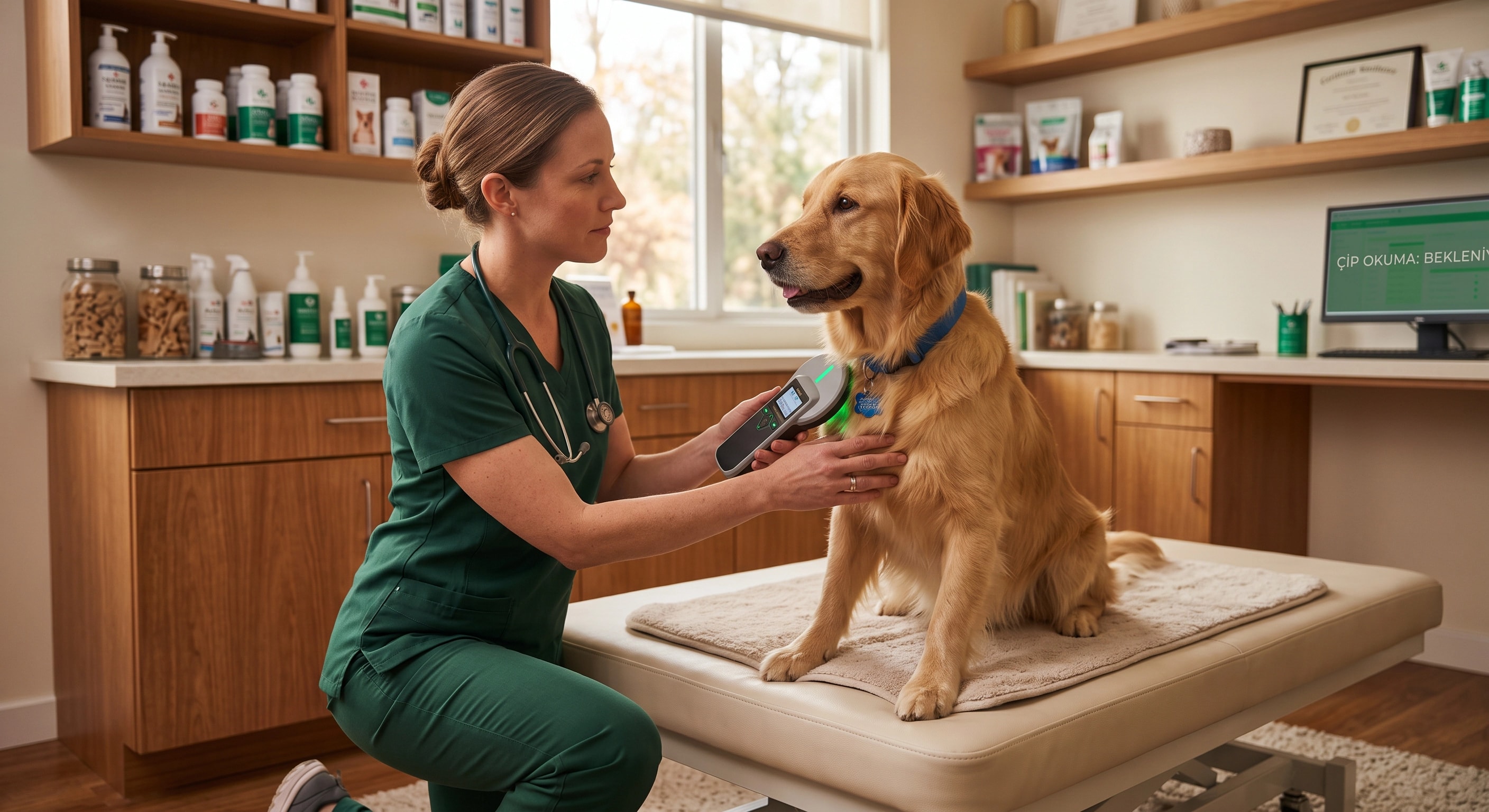
In dynamic cities with extensive coastlines and high social mobility like Mersin, outdoor activities for pets are quite common. Within the crowded parks and apartment life of Mezitli, a pet might suddenly cheat the door or slip its leash out of fear during a walk. Losing a pet ranks among the highly distressing and emotionally draining scenarios for owners.
While owners previously relied only on collar tags, modern technology and evolving legal regulations now provide a much more reliable foundation for pet identification. Pet microchip technology and integration into national databases allow a lost animal found on the street to reunite with its official owner in a short time. This comprehensive guide examines the medical aspects of cat and dog microchipping, the legal obligations of the PETVET system, and specific procedures like address changes from a preventive care perspective.
What You Will Learn in This Guide
- 1What is a Microchip and How Do Veterinarians Apply It?
- 2Differences Between Microchips and GPS
- 3The PETVET Registration System and Legal Obligations
- 4Special Cases in the Registration Process: Transfer, Loss, and Updates
- 5Timing for Microchipping Kittens and Puppies
- 6Sources and Notes
- 7Frequently Asked Questions
01What is a Microchip and How Do Veterinarians Apply It?
A microchip is a passive electronic circuit enclosed in a biocompatible glass or polymer capsule, roughly the size of a grain of rice (about 12 mm long and 2 mm in diameter). Designed using Radio Frequency Identification (RFID) technology, these devices require no internal battery or power source. They only activate when a special microchip scanner approaches them, using radio waves to display a unique 15-digit identification number on the screen.
The implantation process mirrors a routine vaccine injection. The veterinarian uses a specially designed, sterile, single-use syringe to insert it quickly under the skin between the cat’s or dog’s shoulder blades (scapula). The procedure requires no anesthesia or sedation, and the momentary sensation does not exceed that of a standard vaccination. The chip integrates rapidly with the tissue, remains in that area for the animal’s entire life, and causes no allergic reactions.
02Differences Between Microchips and GPS
| Feature | Microchip (Identification) | GPS Tracker | Veterinary Recommendation |
|---|---|---|---|
| Location Tracking | Does not report location; lacks satellite connection. | Provides live location tracking via a map. | Using both together provides maximum safety. |
| Power Source | Contains no battery; requires no charging. Works for a lifetime. | Requires regular charging or battery replacement. | The microchip stays active permanently; the GPS turns off when the battery dies. |
| Lost Animal Function | Allows a finder to access owner details by taking the pet to a clinic. | Allows the owner to see the pet’s location while the device is attached. | Both serve critical roles in different scenarios. |
| Physical Structure | Placed under the skin; carries no risk of falling off or detaching. | Attaches to the collar. Carries risks of loss, theft, or breakage. | The chip serves as a permanent, legal ID; the collar acts as a temporary accessory. |
Location Tracking
Power Source
Lost Animal Function
Physical Structure
03The PETVET Registration System and Legal Obligations
In Turkey, Law No. 5199 on the Protection of Animals and related regulations mandate that owners microchip their cats, dogs, and ferrets. The Ministry of Agriculture and Forestry registers the 15-digit code on the applied microchips into the “Pet Animal Registration System,” commonly known as the PETVET database.
Along with the PETVET registration, the state’s official system integrates the pet’s physical traits (species, breed, age, gender), vaccination history (especially the rabies vaccine), and the owner’s ID number, address, and contact details. Following this process, the authorities issue an internationally standardized “Pet Passport” for each animal. The government applies administrative fines to owners who fail to microchip their pets or register them in the PETVET system. Furthermore, veterinary clinics cannot create a legal vaccination card for an unchipped pet, blocking official procedures like travel or proof of ownership.
04Special Cases in the Registration Process: Transfer, Loss, and Updates
When a pet’s owner changes, the address updates, or the animal unfortunately gets lost, the owner must legally update the information in the system. Failing to complete these transactions on time can create legal liabilities.
- Ownership Transfer: If a pet’s ownership passes to another person, both the former and new owner must declare this jointly. The former owner must apply to the Provincial/District Directorate of Agriculture and Forestry (or authorized veterinary clinics) with a transfer contract or approval document to issue a new passport.
- Loss Notification: If the animal gets lost, the owner must notify the Provincial/District Directorate of Agriculture and Forestry within 7 days. The system marks the animal as “lost”; thus, when any clinic or shelter scans the microchip, the system issues a warning and alerts the original owner.
- Address and Phone Updates: When the owner’s residential address or contact number changes, the law requires them to process these updates into the PETVET system within 60 days. Outdated contact information prevents authorities from reaching the owner if someone finds the lost animal.
05Timing for Microchipping Kittens and Puppies
Legal and medical timelines exist for microchipping and officially registering kittens and puppies. When evaluating this within a comprehensive kitten care guide, planning the microchip application alongside weaning and the start of the core vaccination schedule proves ideal.
Veterinarians usually insert the microchip safely when puppies and kittens reach 8 weeks (2 months) old, during their first combination vaccines. Legal regulations mandate that owners must microchip newborn pets and register them in the PETVET system before they reach 6 months of age. Properly timed identification allows the digital passport to record the animal’s entire vaccination history from day one.
Within the scope of Mersin Mezitli veterinary services, pet identification processes require great care regarding both health and legal dimensions. As Anka Veterinary Clinic in Mersin Mezitli, we handle PETVET registration processes with strict attention to detail. We first subject every patient brought to our clinic for chipping to a comprehensive general examination to evaluate their health status.
Following the examination, the veterinarian applies the microchip under sterile conditions and simultaneously registers the pet’s information into the Ministry of Agriculture and Forestry’s PETVET system. We deliver the official barcoded passport issued at the end of the process to the pet owner. The clinic also handles necessary rabies titer tests and documents for future cross-border travels through this microchip number. You can find more information about these travel procedures in our article titled international travel procedures.
Short Summary
Microchipping pets and registering them in the PETVET system serves not only as a legal obligation but also as an ideal protective step for your pet’s safety. The microchip functions as a digital ID card that the veterinarian places under the skin quickly and painlessly, lasting a lifetime.
Completing the cat and dog microchipping processes within legal timeframes allows our friends to return home safely if they get lost. Simultaneously, reporting ownership transfers, address changes, and loss notifications to official institutions or authorized clinics within legal deadlines remains critical for protecting animal welfare. At Mersin Ankavet in Mersin Mezitli, we closely monitor our patients with tailored preventive protocols.
Note from Mersin Ankavet
Microchipping pets and registering them in the PETVET system serves not only as a legal obligation but also as the most suitable protective step for your pet’s safety. You can easily book an appointment for the procedures and registration approval.
Book AppointmentRelated Blog Posts
Sources and Notes
- Republic of Turkey Ministry of Agriculture and Forestry - Digital Identification of Pets
- Turkish Veterinary Medical Association (TVHB)
- RSPCA - Pet Microchipping Guide
This content has been prepared for informational purposes and does not replace a professional veterinary examination.
Frequently Asked Questions
Do pets feel pain during microchip insertion?
The needles used for microchip application are slightly thicker than standard vaccine syringes; however, the quick completion of the process prevents any extra pain or ache. It is a highly safe and routine clinical procedure that requires no anesthesia.
What should I do if my pet’s passport gets lost?
If the official pet passport gets lost or becomes unusable, the owner must apply to the Provincial/District Directorate of Agriculture and Forestry or an authorized veterinarian within 60 days to request a new passport. The veterinarian scans the animal’s chip, pulls the old records from the PETVET database, and issues a new document.
Does the microchip battery die or break?
No. Microchips are passive RFID systems that possess no power source or battery. They only wake up via radio waves and reflect the number when a reader scanner approaches them. Therefore, they work for a lifetime and carry almost zero risk of breaking.
How do I update microchip information when I move or change my phone number?
When the owner’s contact or address information changes, they must update this situation within 60 days. The owner completes the update processes through the Provincial/District Directorates of Agriculture and Forestry or authorized veterinary clinics, which process the data into the PETVET system.
Does the microchip interfere with X-ray or MRI scans?
No. Microchips do not interact with X-ray, Ultrasonography, or MRI (Magnetic Resonance) devices used in clinical diagnostic processes for pets, nor do they degrade image quality. They are completely safe because a biocompatible glass coating covers them.
Can I track my cat or dog’s location via the microchip if they get lost?
No, microchips do not contain GPS technology and do not offer live location tracking by connecting to satellites. They only allow a finder to access the owner’s registered contact information in the system when someone takes the animal to a veterinary clinic or shelter and scans it with a reader.
Related Service
Travel and Microchipping
For clinical evaluation and a care plan, review the service page connected to this guide.
View ServiceMedical Information Note
This content is for general information only. It does not replace a veterinary examination, diagnosis, treatment, or specific medication/food recommendations. A veterinary examination and individual assessment are required for your pet’s health. In case of emergency symptoms, please contact the nearest open veterinary clinic.
MERSIN MEZITLI PET CARE
Need Professional Guidance for Your Pet?
Are you in Mersin Mezitli? If you notice these symptoms or have any concerns about your pet’s health, consult our AnkaVet veterinarians immediately. English and Russian-speaking support is available!
Your pet deserves quality care.
Get in touch today to discuss your pet’s health or schedule a consultation.