Kitten Care Guide: A Roadmap for First-Time Cat Owners
Sedat Çapanoğlu, DVM
Anka Veterinary Clinic
Last updated:
Mustafa Kemal University graduate (2018). After clinical experience in Mersin and a short period in municipal shelter practice, he takes an active role in surgery, emergency care, dental health, and diagnostics.
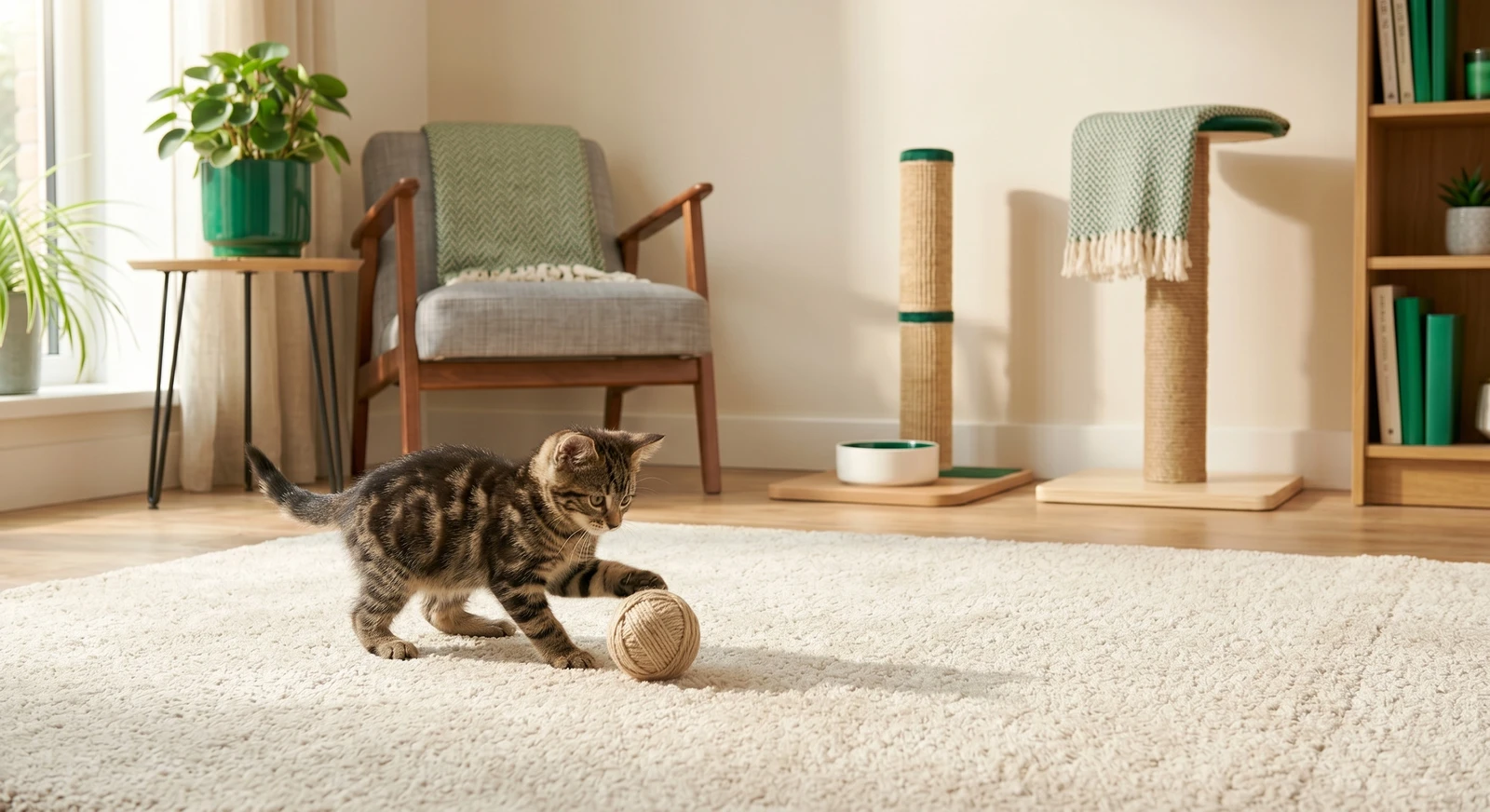
When a new life joins the warm homes of Mersin and Mezitli, the arrival of a kitten is undoubtedly a source of immense joy. However, adopting a cat for the first time brings not only this joy but also the significant responsibility of taking on the lifelong care of a tiny and vulnerable creature. The early developmental period is the most critical stage where both the physical and psychological foundations of kittens are laid.
From structuring the home environment correctly to establishing balanced nutrition plans, and from litter training to preventive medicine measures against infectious diseases, every right step taken is the key to raising a healthy and well-adjusted adult cat in the future. This comprehensive kitten care guide details all the needs beginners may encounter throughout the process, based on solid medical and behavioral foundations.
What You Will Learn in This Guide
- 1Preparing the Home for a Kitten and Safety Measures (Paw-Friendly Home)
- 2First Examination, Vaccination Schedule, and Health Checks in Kittens
- 3Kitten Nutrition: Transitioning from Mother’s Milk to Solid Food
- 4Periodic Kitten Development and Needs Table
- 5Litter Training and Basic Behavioral Habits
- 6Supporting Socialization and Mental Development
- 7Kitten Health Monitoring and Appointment Planning in Mersin Mezitli
- 8Sources and Notes
- 9Frequently Asked Questions
01Preparing the Home for a Kitten and Safety Measures (Paw-Friendly Home)
Kittens are naturally boundlessly curious. Since their perception of danger is not yet developed, the home environment must be carefully inspected before they arrive. First of all, it is vital to hide electrical cables with cable protectors against the risk of chewing. Installing durable safety nets on windows and balconies in high-rise buildings is the most basic rule to eliminate the risk of falling and trauma.
Sewing needles, packaging rubber bands, strings, and small hair ties that pose a swallowing risk should be kept securely in closed drawers inside the house. Additionally, toxic houseplants such as lilies, dieffenbachia, and aloe vera must be removed from the home, and cleaning chemicals and human medications must be stored in unreachable cabinets. When setting up a new living space, having basic necessities such as a bed, food bowl, and scratching post already placed in a quiet corner of the house will speed up the adaptation process. In case of possible home accidents or chemical ingestion, you should apply to emergency and intensive care services without delay.
02First Examination, Vaccination Schedule, and Health Checks in Kittens
After a few days of resting to allow the kitten to adapt to the home, the most important step to be planned is a visit to the veterinarian for a detailed general examination. In this initial evaluation, heart sounds, respiratory tract, eye and ear health, and general body condition are carefully examined.
Protective applications against internal and external parasites, which are among the biggest threats during the pediatric period, are initiated at this stage. A body cleared of parasites is a prerequisite for vaccines to create a full and effective response in the immune system. Following the parasite prevention program, core vaccinations are planned to provide protection against viral infections (Feline Panleukopenia, Herpesvirus, Calicivirus, etc.). Since the immune status of each kitten may vary, the timing of the program is shaped by the veterinarian’s evaluation. Detailed information on the subject can be accessed by checking out the kitten vaccination schedule guide.
03Kitten Nutrition: Transitioning from Mother’s Milk to Solid Food
A healthy kitten diet should be formulated to meet the high energy, protein, calcium, and essential fatty acid needs of the growth period. Usually, between the 4th and 6th weeks, the weaning period, which is the gradual transition from mother’s milk to solid food, begins. In this transition, kitten wet foods or dry kibbles slightly softened with warm water can be preferred initially.
The digestive systems of kittens are extremely sensitive; therefore, it is necessary to stay away from home-cooked meals or low-quality foods and use high-quality kitten foods (Kitten formulas) specially produced for pets and recommended by veterinarians. The amount of food should be divided into meals according to the daily growth chart, and access to fresh and clean water should always be available.
04Periodic Kitten Development and Needs Table
| Age Range | Feeding Routine | Health & Vaccine Check | Development & Socialization |
|---|---|---|---|
| 0 - 4 Weeks | Only mother’s milk or special kitten milk replacer formulas. | Regular weight tracking and body temperature control. | Contact only with mother and siblings, basic motor skills. |
| 4 - 8 Weeks | Transition to wet food and softened dry food begins. | First veterinary examination and internal/external parasite applications. | Environmental exploration increases, litter habits begin to be acquired. |
| 2 - 4 Months | Only high-quality kitten dry and wet foods. | Administration of Core, Rabies, and FeLV (Leukemia) vaccines as planned by the vet. | High play energy, period of establishing social bonds with humans. |
| 4 - 6 Months | Portion-controlled, meal-based dry food routine. | Completion of vaccine boosters and spay/neuter planning. | Character settling, tooth replacement, increased scratching needs. |
0 - 4 Weeks
4 - 8 Weeks
2 - 4 Months
4 - 6 Months
05Litter Training and Basic Behavioral Habits
Kittens are naturally fastidious about cleanliness and usually know how to use the litter box instinctively or learn by observing their mothers. For litter training to progress smoothly during the process of adopting a cat for the first time, it is important to position the litter box in a quiet corner of the house, away from food and water bowls.
When the kitten first arrives home, it should be gently placed inside the litter box and encouraged to dig the litter with its paws. Unscented, dust-free, and fine-grained litters are more suitable for the sensitive paws of kittens. In case of possible out-of-box accidents, resorting to punishment methods is absolutely not recommended; a solution should be sought by increasing the cleanliness of the box or changing the texture of the litter.
06Supporting Socialization and Mental Development
The socialization period determines how the kitten will communicate with its environment throughout its life. Kittens that are safely and calmly accustomed to different people, indoor sounds (like a vacuum cleaner), and other pets in the house, if any, during the early period, will be much more successful in stress management in their adulthood.
Routine care processes such as brushing, tooth brushing, nail trimming, and entering the carrier should be taught accompanied by play and rewards rather than as an obligation. Daily activity sessions should be organized with puzzle toys and safe interactive toys where they can expend their energy to support mental development and establish positive bonds during the kitten training process.
07Kitten Health Monitoring and Appointment Planning in Mersin Mezitli
At Anka Veterinary Clinic in Mersin Mezitli, the health checks of patients in the pediatric period are carried out with great precision. From the moment the kitten steps into the clinic, examinations are performed with a compassionate approach so that they can experience a fearless and stress-free clinical visit. Guidance is provided to pet owners in all developmental stages, from comprehensive health screenings to parasite management, and from nutritional counseling to personalized vaccine protocols.
Short Summary
For first-time cat owners, kitten care is a multifaceted process that begins with taking safety measures at home and continues with proper nutrition and litter training. The healthy growth of kittens is directly dependent on high-quality nutritional formulas and preventive medicine practices initiated on time (parasite treatments and vaccinations).
At the same time, play hours that support mental development and early socialization steps enable the pet to become a psychologically balanced individual in the following years. Regular veterinary checks are the most fundamental guarantee of this happy and healthy life.
Note from Mersin Ankavet
You can plan the first steps for your kitten’s healthy and happy life under the guidance of our veterinarians. Create an appointment to get detailed info on development stages, vaccination tracking, and nutrition protocols.
Book AppointmentRelated Blog Posts
Sources and Notes
- Blue Cross - Caring for Your Kitten
- International Cat Care - Preparing for Your New Cat or Kitten
- Cornell Feline Health Center - Choosing and Caring for Your New Cat
This content has been prepared for informational purposes and does not replace a professional veterinary examination.
Frequently Asked Questions
How should one behave on the first day the kitten comes home?
A kitten may be quite scared and shy on its first day in a new environment. When it arrives home, instead of showing it the whole house immediately, it should be given time to explore on its own in a quiet, small room where its litter box, food, and water are located. Sudden movements and loud noises should be avoided.
At what age can a kitten be spayed/neutered?
Depending on the general health and development of the cat, it is clinically appropriate to spay or neuter kittens generally from the 6th month onwards, before they enter their first heat cycle. The exact timing must be determined after a veterinary examination.
Is it harmful to give cow’s milk to a kitten?
Cow’s milk contains high levels of lactose, which kittens cannot digest. This can cause diarrhea, gas, and digestive system distress, so giving cow’s milk is harmful. If needed, only kitten milk replacer formulas obtained from veterinary clinics should be used.
When and how should a kitten’s nails be trimmed?
It is important to establish the habit of nail trimming at an early age. Generally, starting from the 2nd month, only the sharp white tip of the nail should be trimmed using special cat nail clippers. It is recommended to learn the first trimmings under the supervision of a veterinarian to avoid damaging the blood vessels in the pink part (the quick).
At what week do parasite applications start in kittens?
It is generally recommended to start the first internal and external parasite applications for protective purposes against parasites that can be transmitted via mother’s milk or the environment between the 6th and 8th weeks.
Is it necessary to bathe a kitten?
Cats are creatures that clean themselves by licking, and they have a natural protective oil layer on their skin. Unless there is a medical necessity (severe soiling or skin diseases), kittens do not need to be bathed. Regular brushing is sufficient for coat cleanliness.
Related Service
General Examination
For clinical evaluation and a care plan, review the service page connected to this guide.
View ServiceMedical Information Note
This content is for general information only. It does not replace a veterinary examination, diagnosis, treatment, or specific medication/food recommendations. A veterinary examination and individual assessment are required for your pet’s health. In case of emergency symptoms, please contact the nearest open veterinary clinic.
MERSIN MEZITLI PET CARE
Need Professional Guidance for Your Pet?
Are you in Mersin Mezitli? If you notice these symptoms or have any concerns about your pet’s health, consult our AnkaVet veterinarians immediately. English and Russian-speaking support is available!
Your pet deserves quality care.
Get in touch today to discuss your pet’s health or schedule a consultation.