Are Lethargy and Swelling Normal After Vaccines in Cats and Dogs? The 3-2-1 Rule and Emergency Guide
Şanssım Çapanoğlu, DVM
Anka Veterinary Clinic
Last updated:
Mustafa Kemal University graduate (2019). After internships in Adana and Izmir, she worked in clinical practice in Adana and focuses on preventive medicine and behavior.
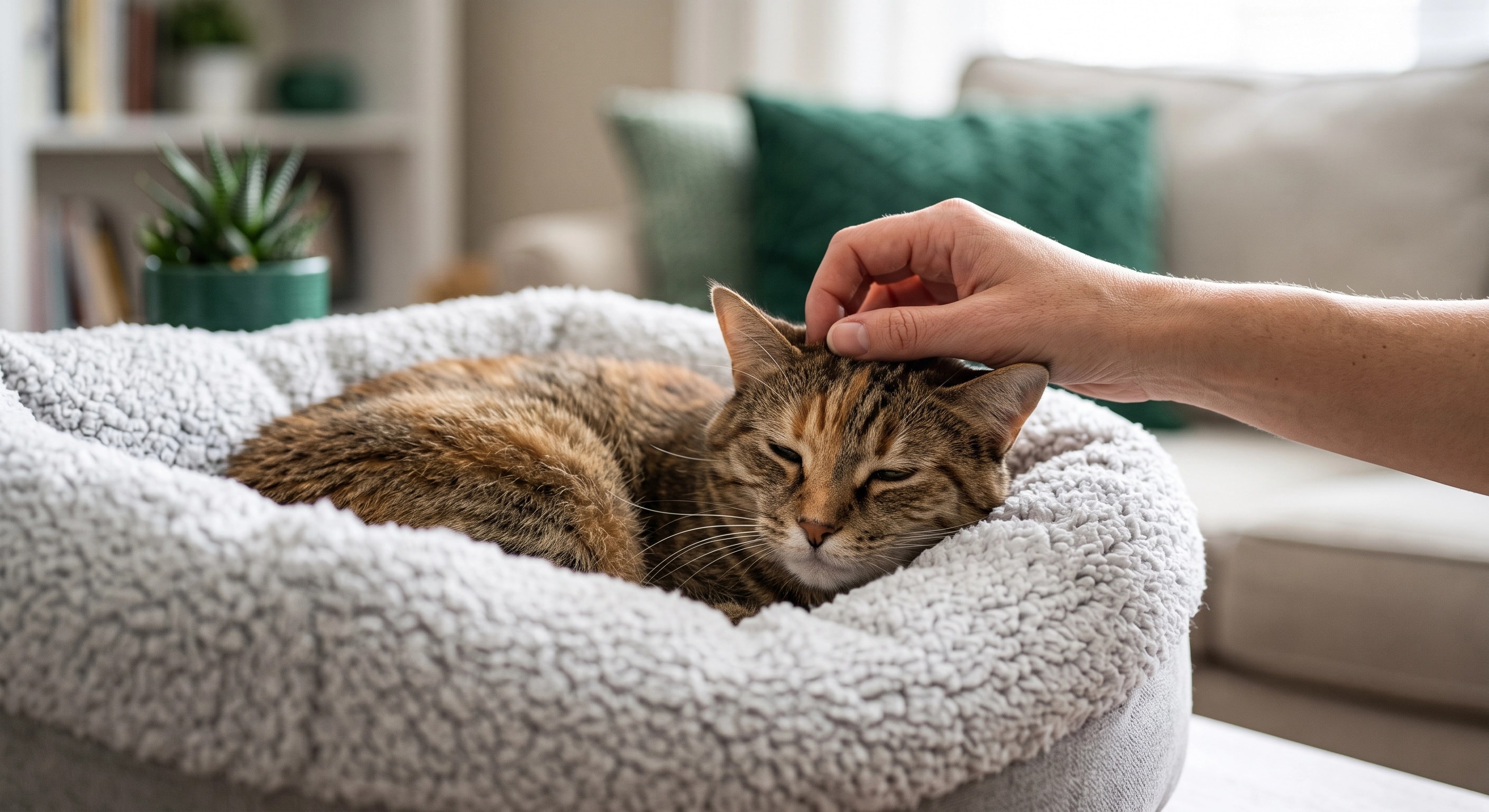
You brought your pet home after an upbeat clinic visit where, despite a moment of tension on the exam table, it happily accepted liquid treats from the veterinarian’s hand. But the moment you stepped indoors, that lively animal vanished; in its place was a subdued companion curled up in the farthest corner, refusing its favorite food, and letting out a faint whimper when touched. A few days later, while stroking its back, your fingers discover a firm, walnut-sized lump beneath the skin, triggering immediate apprehension.
Questions flood your mind: Was it an adverse reaction? Was the injection misplaced? Could it be a tumor? In reality, your pet’s body is currently staging an intense biological training exercise. Mild post-vaccination lethargy, low-grade fever, and local swelling are typically proof that the immune system is doing its job. However, not all reactions are benign; distinguishing normal physiological side effects from life-threatening anaphylaxis is essential. In this clinical guide, we explore what to expect post-vaccination, when to let your pet rest quietly, and when to seek immediate veterinary intervention.
What You Will Learn in This Guide
- 1The Physiology Behind Vaccines: Why Does the Immune System Trigger Lethargy and Fever?
- 2Normal Side Effects vs. Dangerous Emergencies Table
- 3Lumps and Bumps at the Injection Site: What Is a Granuloma and When Does It Resolve?
- 4The Gold Standard for Monitoring Feline Masses: What Is the 3-2-1 Rule?
- 5True Allergic Reactions and Anaphylaxis: Facial Edema, Hives, and Respiratory Distress
- 6Dangerous Mistakes to Avoid at Home: Why Human Pain Relievers Must Never Be Given
- 7Comfort Measures Supporting Recovery During the First 48 Hours
- 8When to Contact the Veterinary Clinic Immediately
- 9Safe Immunization Protocols and Veterinary Follow-up in Mezitli, Mersin
- 10References and Scientific Notes
- 11Frequently Asked Questions
01The Physiology Behind Vaccines: Why Does the Immune System Trigger Lethargy and Fever?
The canine and feline immune system operates like a finely tuned army. A vaccine is a biological blueprint containing attenuated, inactivated, or recombinant antigens designed to train this army against dangerous viral or bacterial foes. When introduced, circulating immune cells sound the alarm and initiate antibody synthesis.
Mounting a robust immune response demands tremendous cellular energy. When your companion enters a prolonged sleeping state and exhibits post-vaccine lethargy during the first 24 to 48 hours, its body is actively reallocating metabolic resources toward antibody production. The central nervous system signals: “This is not the time for running or digestion; all energy is reserved for building protective shields.” Similarly, a mild transient fever optimizes the microenvironment for antibody synthesis. This process is not disease; it is the active construction of immunity.
02Normal Side Effects vs. Dangerous Emergencies Table
| Symptom / Reaction | Expected vs. Dangerous | Expected Duration | Recommended Action |
|---|---|---|---|
| Drowsiness and Calm Rest | Completely Expected | 24 - 48 Hours | Provide a quiet, warm, and comfortable sleeping space; avoid disturbances. |
| Mild Fever & Reduced Appetite | Normal Physiological Response | 24 - 48 Hours | Ensure fresh water access; offer a little palatable wet food without forcing. |
| Firm Lump at Injection Site | Normal (Vaccine Granuloma) | 2 - 4 Weeks | Do not massage or squeeze; monitor size weekly. |
| Facial Swelling, Vomiting & Dyspnea | Dangerous (Anaphylaxis) | First 15 min - 2 hours | Seek immediate emergency veterinary care without delay. |
Drowsiness and Calm Rest
Mild Fever & Reduced Appetite
Firm Lump at Injection Site
Facial Swelling, Vomiting & Dyspnea
03Lumps and Bumps at the Injection Site: What Is a Granuloma and When Does It Resolve?
Days or weeks after vaccination, you may feel a firm, painless nodule under the skin resembling a pea or marble while petting your dog or cat. While this discovery often sparks immediate tumor panic among pet owners, it is clinically recognized as a Vaccine Granuloma.
Vaccine formulations often incorporate adjuvants, compounds designed to recruit immune cells and enhance antigenic stimulation. When injected subcutaneously, white blood cells converge on the depot site, forming a dense localized inflammatory cluster. This cellular congregation feels like a firm subcutaneous knot. In the initial weeks, a vaccine lump is completely expected. These granulomas typically regress and resolve spontaneously within 2 to 4 weeks as the local immune response concludes.
04The Gold Standard for Monitoring Feline Masses: What Is the 3-2-1 Rule?
While vaccine lumps in dogs are virtually always benign and self-limiting, feline connective tissue is uniquely reactive. Cats harbor a rare but documented predisposition to develop Feline Injection-Site Sarcoma (FISS), an aggressive soft-tissue tumor. Consequently, feline medicine practitioners worldwide adhere to the clinical 3-2-1 Rule for mass surveillance.
A biopsy and histopathological evaluation are medically indicated if an injection-site lump fulfills any of the following criteria:
1. Persists for 3 months or longer following vaccination,
2. Measures larger than 2 centimeters in diameter,
3. Continues to grow rapidly 1 month after injection instead of shrinking.
Exceeding any of these benchmarks indicates the nodule is no longer an ordinary self-resolving granuloma. The 3-2-1 Rule serves as a lifesaving diagnostic protocol ensuring potential malignancies are detected and managed early.
05True Allergic Reactions and Anaphylaxis: Facial Edema, Hives, and Respiratory Distress
Distinct from transient sluggishness and low fever, an acute hypersensitivity reaction (anaphylaxis) triggered by vaccine antigens is a true medical crisis. Allergic manifestations generally arise within 15 minutes to 2 hours post-vaccination, and rarely up to 12 hours later.
Sudden dramatic swelling of the eyelids, muzzle, and lips (facial angioedema), generalized hives (urticaria), stridor or open-mouth breathing, explosive recurrent vomiting, and watery diarrhea represent classic signs of systemic anaphylaxis. The immune system is treating the vaccine as a catastrophic foreign threat. Under these circumstances, immediate admission to an emergency and critical care unit is vital.
06Dangerous Mistakes to Avoid at Home: Why Human Pain Relievers Must Never Be Given
Well-meaning pet owners seeking to alleviate their pet’s post-vaccine discomfort can inadvertently make catastrophic, life-threatening mistakes:
- Administering Human NSAIDs or Paracetamol: Never give over-the-counter human analgesics like Acetaminophen (Paracetamol) or Ibuprofen to dogs or cats. Pets lack the hepatic glucuronyl transferase enzymes required to metabolize these compounds. A single paracetamol tablet induces lethal methemoglobinemia (erythrocyte destruction) in cats, and causes acute renal and hepatic necrosis in dogs.
- Aggressive Massage on the Injection Site: Squeezing or vigorously massaging a vaccine granuloma in an attempt to “break it down” severely traumatizes localized immune cells, amplifying inflammation, swelling, and localized pain. The lump must be left undisturbed.
- Cold Baths for Fever: Forcing a feverish pet into cold water or applying ice packs triggers peripheral vasoconstriction, shivering, severe cardiovascular shock, and dangerous hypothermia.
07Comfort Measures Supporting Recovery During the First 48 Hours
Upon arriving home, your companion requires peaceful rest in a tranquil setting. Designate a dimly lit, warm room isolated from energetic children and other pets. Position its favorite bedding away from drafty doorways.
Due to mild nausea, your pet may decline standard dry kibble; this transient inappetence is completely normal. Keep fresh water bowls nearby and offer a small spoonful of aromatic wet food without forcing consumption. If your dog is reluctant to walk, keep bathroom breaks brief and allow immediate return to rest. Providing uninterrupted sleep empowers the immune system to finalize antibody production swiftly.
08When to Contact the Veterinary Clinic Immediately
Mild side effects should steadily subside within 24 to 48 hours. However, symptoms persisting beyond 48 hours or worsening rapidly require professional re-evaluation.
Do not hesitate if you observe relentless vomiting, wheezing, profound facial puffiness, pale or cyanotic mucous membranes, or profound collapse where your pet fails to respond to your voice. These signs represent systemic circulatory compromise rather than normal immunization fatigue.
09Safe Immunization Protocols and Veterinary Follow-up in Mezitli, Mersin
Every immunization is a cornerstone of preventive veterinary medicine protecting your pet from fatal contagious diseases. At Anka Veterinary Clinic, located in Mezitli, Mersin, our doctors customize vaccination roadmaps based on your pet’s breed, age, prior vaccine history, and lifestyle.
Prior to every vaccination, we perform a thorough general examination to confirm your pet is healthy and immunocompetent. If subclinical fever or infection is detected, vaccination is postponed until complete recovery. Should unexpected adverse reactions arise, our fully equipped emergency and critical care department is prepared to intervene immediately. We remain available for guidance regarding any post-vaccine symptoms.
Summary
Mild lethargy, increased sleep, transient inappetence, and firm, painless injection-site nodules (granulomas) are normal physiological responses confirming immune activation in cats and dogs. Providing a peaceful recovery space while strictly avoiding human medications is vital.
However, acute facial edema, labored breathing, or severe vomiting indicate emergency anaphylaxis. In cats, persistent injection-site masses must be evaluated against the clinical 3-2-1 Rule (present for 3 months, larger than 2 cm, or growing after 1 month) to ensure prompt diagnostic safety.
Schedule a Post-Vaccination Evaluation or Consultation
Book an appointment at our clinic to evaluate post-vaccine symptoms, perform follow-up health screenings, or customize your immunization plan.
Book AppointmentRelated Blog Posts
References and Scientific Notes
- AVMA - Pet Vaccines and Adverse Event Tracking Guidelines
- WSAVA - Global Veterinary Vaccination and Safety Guidelines
- Cornell Feline Health Center - Feline Vaccines, Benefits, Risks, and FISS Information
This content has been prepared for informational purposes and does not replace a professional veterinary examination.
Frequently Asked Questions
How long does post-vaccination lethargy typically last in pets?
Mild lethargy, low fever, and increased sleep usually begin the evening of vaccination and resolve spontaneously within 24 to 48 hours. Symptoms worsening beyond 48 hours warrant veterinary consultation.
Should I massage or apply warm compresses to a vaccine lump?
No. The nodule (vaccine granuloma) is a natural local immune aggregation. Squeezing or massaging traumatizes reactive cells, worsening local inflammation and pain. It should be left undisturbed.
My pet refused food after its shot; should I force-feed?
No. Transient mild inappetence is expected, and force-feeding may provoke vomiting. Ensure clean drinking water is nearby and offer small portions of gentle wet food when your pet is ready.
If my pet had a prior allergic reaction, should vaccines be stopped entirely?
Not necessarily. Your veterinarian can split vaccines, switch manufacturers, or administer pre-treatment antihistamines and corticosteroids to ensure safe ongoing immunization against fatal diseases.
Does the 3-2-1 Rule for feline injection sites also apply to dogs?
The 3-2-1 Rule was formulated specifically for feline medicine to monitor for rare Feline Injection-Site Sarcomas (FISS). Canine vaccine lumps are almost universally benign granulomas that regress over time.
Can I take my dog to the dog park or on a vigorous run immediately after vaccines?
Strenuous exercise is discouraged. The body is redirecting metabolic energy toward antibody production. Keep walks calm and allow your companion to rest quietly on vaccination day.
Related Service
Emergency and Intensive Care
For clinical evaluation and a care plan, review the service page connected to this guide.
View ServiceMedical Information Note
This content is for general information only. It does not replace a veterinary examination, diagnosis, treatment, or specific medication/food recommendations. A veterinary examination and individual assessment are required for your pet’s health. In case of emergency symptoms, please contact the nearest open veterinary clinic.
MERSIN MEZITLI PET CARE
Need Professional Guidance for Your Pet?
Are you in Mersin Mezitli? If you notice these symptoms or have any concerns about your pet’s health, consult our AnkaVet veterinarians immediately. English and Russian-speaking support is available!
Your pet deserves quality care.
Get in touch today to discuss your pet’s health or schedule a consultation.