The Secret of Cats Eating the Center of the Plate and Leaving the Edges: Whisker Fatigue!
Şanssım Çapanoğlu, DVM
Anka Veterinary Clinic
Last updated:
Mustafa Kemal University graduate (2019). After internships in Adana and Izmir, she worked in clinical practice in Adana and focuses on preventive medicine and behavior.
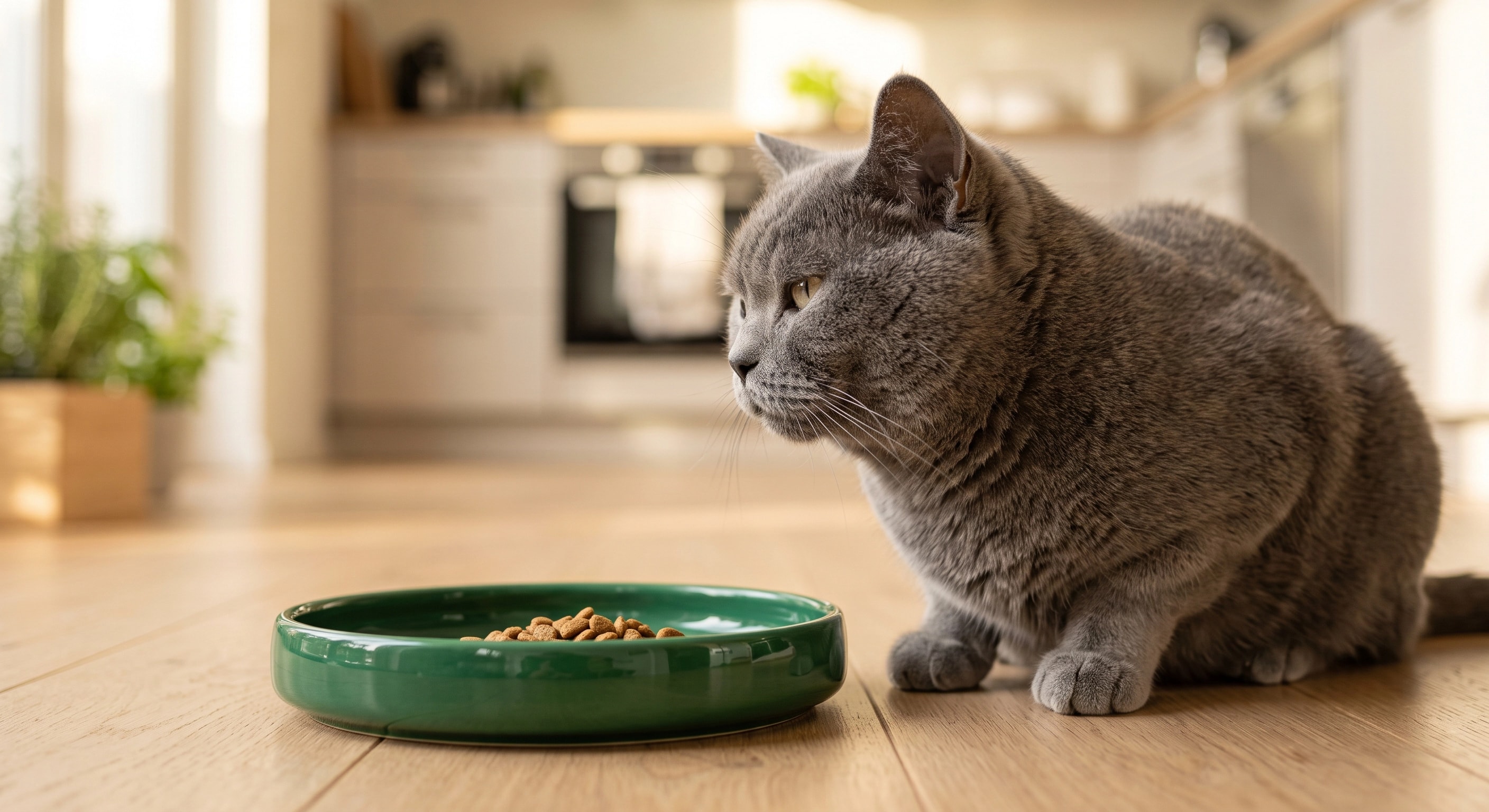
Our cute feline friends who share our homes have a unique place in our lives. Some of the behaviors they display during the day may seem funny or grumpy to us. For example, have you ever seen a cat hesitantly waiting in front of their food bowl despite being hungry, carrying their food outside with their paw and eating it on the floor, or cleaning only the exact center of the bowl and not touching the kibbles on the edges?
As Anka Veterinary Clinic in Mezitli, Mersin we would like to point out that this situation is not a matter of being spoiled. Behind the grumpiness you face lies a physiological sensory overload condition originating from the mysterious biology of cats and medically called 'Whisker Fatigue'.
What You Will Learn in This Guide
01What is Whisker Fatigue?
Cats' whiskers (vibrissae) are not ordinary hairs. Each whisker is practically a natural radar system equipped with thousands of sensitive receivers called 'proprioceptors' connected to deep nerve endings under the cat’s skin. This system allows cats to feel air currents around them, measure distances, navigate in the dark, and test the width of narrow passages.
If your cat’s food bowl is narrow, deep, and steep-sided, the cat’s whiskers constantly touch these hard edges and bend every time they attempt to eat or drink. This constant mechanical stimulation causes a sensory overload by sending an excessive amount of electrical signals to the brain every time the cat leans in. This condition is called whisker fatigue.
02Comparative Features of Cat Food Bowls
| Bowl Type | Whisker Health Impact | Hygiene Level | Clinical Recommendation |
|---|---|---|---|
| Deep Plastic Bowl | Very Bad (Constant friction) | Low (Scratches easily, harbors bacteria) | Strictly Not Recommended |
| Narrow Steel Bowl | Bad (Metallic noise and contact) | Medium (Easy to clean) | Not Recommended |
| Wide & Shallow Ceramic Plate | Excellent (Zero contact) | High (Highly hygienic) | Most Ideal Option |
Deep Plastic Bowl
Narrow Steel Bowl
Wide & Shallow Ceramic Plate
03What Are the Symptoms of Whisker Fatigue in Cats?
Your cat cannot speak, but clearly shows you this stress through their body language and feeding rituals. You can easily tell that this sensory fatigue has started in your pet friend by observing your cat’s behavior and psychology:
Hesitantly waiting, meowing, and being unable to focus on eating in front of the food bowl despite being hungry is the first signal of whisker sensitivity. Eating only by hollowing out the exact center of the food in the bowl and never eating the ones on the edges is also the most obvious symptom.
Moreover, showing a tendency to take the food out of the bowl with their paw and eat it on the floor, and dipping their paw into the water and licking it to drink to avoid putting their whiskers into the bowl are direct attempts to alleviate the contact pain of the whiskers. If this situation becomes chronic, aggression and restlessness can be observed in the cat during feeding.
04What Should We Do to Prevent Whisker Fatigue?
To improve your cat’s feeding quality and eliminate this sensory overload, you can take simple and effective steps in your home. Here is what needs to be done:
- Choose Wide and Shallow Plates: Ensure that the food bowls consist of ceramic/porcelain plates that are wide, flat, and shallow enough so that the cat’s whiskers never touch the edges.
- Remove Plastic Bowls from Your Life: Plastic bowls accumulate static electricity, stimulating the whiskers, and easily scratch, hosting bacteria that cause feline acne (chin acne).
- Prefer Water Fountains: Instead of narrow water bowls, increase water consumption by using wide-mouthed water fountains that provide flowing water and do not hit the whiskers.
"When choosing a food plate for your cat, consider the length of their whiskers. A wide human soup bowl or a shallow porcelain saucer is healthier than the best cat food bowl."
05How Should the Right Feeding Corner Be Designed?
Choosing the right bowl alone is not enough; the location of the feeding corner also directly determines the stress level of sensitive cats experiencing whisker sensitivity. The food and water corner should be set up in a quiet corner, away from noisy areas in the house.
Having the food bowl right next to the water bowl goes against feline psychology in nature (fear of the prey contaminating the water source). Therefore, you should position the water and food bowls not adjacent to each other, but with at least one meter of distance between them. Additionally, placing food right next to the litter box can lead to severe hygiene stress and inappropriate elimination in cats; therefore, it is recommended to set up the nutrition and diet structure for cats and dogs in accordance with clinical protocols.
As Anka Veterinary Clinic in Mezitli, Mersin we aim to protect not only the medical health of our pets but also their psychological well-being and quality of life at the highest level. When you notice sudden changes in your cat’s eating habits, loss of appetite, or fear towards the food bowl, you can get support from our veterinarians by having a general examination at the clinic.
Short Summary
Cats eating the center of their food bowls and leaving the edges or carrying the food outside to eat is not being spoiled, but a condition of whisker fatigue caused by the sensitive proprioceptor nerves at the tips of the whiskers hitting narrow bowls. By using wide, flat porcelain plates and wide water fountains, this sensory overload can be instantly relieved, and the cat’s feeding stress can be completely eliminated.
Note from Anka Veterinary Clinic
Sudden changes in your cat’s eating habits or loss of appetite may not always be limited to whisker fatigue; they may also be harbingers of gum diseases or digestive system problems. In suspicious cases, you can get professional veterinary examination by applying to our clinic in Mezitli, Mersin.
Book an AppointmentRelated Blog Posts
References and Notes
This content has been prepared for informational purposes and does not replace a professional veterinary examination.
Frequently Asked Questions
Is whisker fatigue a disease?
No, whisker fatigue is not a pathological disease; it is a sensory overload and stress condition caused by the constant stimulation of the touch receptors in the cat’s whiskers due to narrow bowls.
How is whisker fatigue treated?
It has no medical treatment. The solution is entirely environmental modification: You can completely eliminate this stress by replacing your cat’s food and water bowls with wide, rimless, and shallow ceramic plates.
Which food bowls are the healthiest for cats?
Wide, shallow porcelain, ceramic, or glass bowls where the whiskers will not touch the edge are the healthiest. Plastic bowls are not recommended as they breed bacteria and scratch easily, and metal bowls can increase stress with their reflections.
What happens if whisker fatigue is not treated?
As whisker fatigue continues, the cat experiences chronic stress during feeding. Over time, this stress can lead to loss of appetite, malnutrition, kidney problems by reducing water intake, or behavioral disorders such as chewing on other items in the house.
Does cutting my cat’s whiskers prevent whisker fatigue?
Absolutely NO! Cats' whiskers must not be cut. Whiskers are their organs for navigating, measuring distance, and maintaining balance. A cat whose whiskers are cut loses its sense of direction, becomes scared, cannot maintain its balance, and falls into deep depression.
Do cats who use their paws to drink water from the water bowl have whisker fatigue?
Yes, it is one of the most common symptoms. The cat prefers to dip its paw into the water and lick it to drink to avoid rubbing its whiskers against the edges of the narrow water bowl. In this case, the water bowl should be immediately replaced with a wide bowl.
Related Service
General Examination
For clinical evaluation and a care plan, review the service page connected to this guide.
View ServiceMedical Information Note
This content is for general information only. It does not replace a veterinary examination, diagnosis, treatment, or specific medication/food recommendations. A veterinary examination and individual assessment are required for your pet’s health. In case of emergency symptoms, please contact the nearest open veterinary clinic.
MERSIN MEZITLI PET CARE
Need Professional Guidance for Your Pet?
Are you in Mersin Mezitli? If you notice these symptoms or have any concerns about your pet’s health, consult our AnkaVet veterinarians immediately. English and Russian-speaking support is available!
Your pet deserves quality care.
Get in touch today to discuss your pet’s health or schedule a consultation.