Drinking More Water Isn’t Always a Sign of Health: Early Detection of Chronic Kidney Disease and the IRIS Staging System
Şanssım Çapanoğlu, DVM
Anka Veterinary Clinic
Last updated:
Mustafa Kemal University graduate (2019). After internships in Adana and Izmir, she worked in clinical practice in Adana and focuses on preventive medicine and behavior.
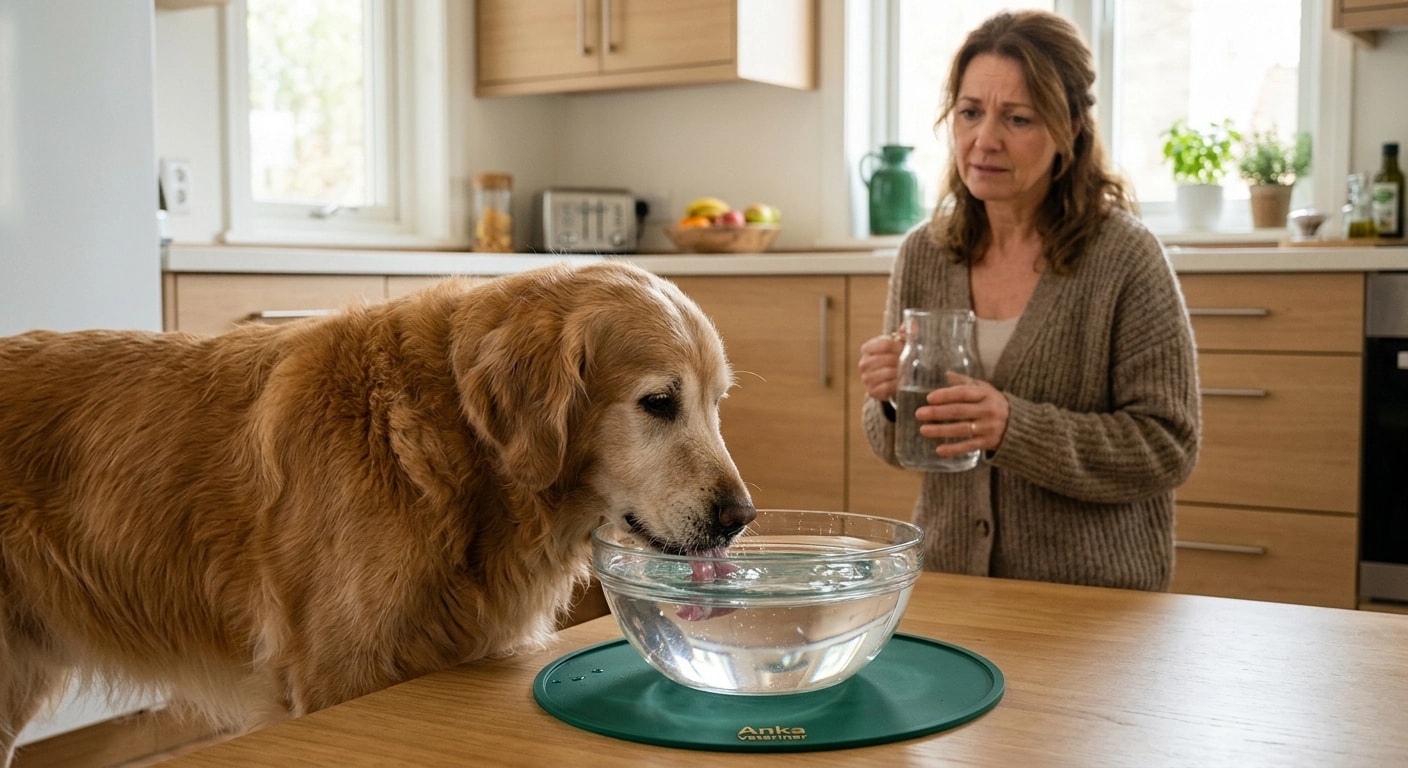
Have you noticed that you’ve been refilling your pet’s water bowl much more often lately? Many pet owners see drinking plenty of water as a sign of health and vitality. Water is, of course, essential to life. But when that intake suddenly increases and your pet is urinating much more often than before, it may be less a sign of wellness and more a signal that the body is asking for help.
Excessive drinking (polydipsia) and excessive urination (polyuria) are among the most important early warning signs of chronic kidney disease in cats and dogs, especially during the senior years. At Anka Veterinary Clinic in Mezitli, Mersin, we have summarized this quietly progressive disease, the value of early diagnosis, and the globally accepted IRIS staging system in a clear and practical way. At Anka Veterinary Clinic in Mersin Mezitli, we closely monitor your pet’s well-being with preventive care.
What You’ll Learn in This Guide
- 1Why Can Drinking More Water Point to Kidney Disease?
- 2The Silent Threat: Why Do Symptoms Appear Late?
- 3A Breakthrough in Early Detection: What Is the SDMA Test?
- 4A Scientific Framework: What Is IRIS Staging Used For?
- 5Treatment Planning and Preserving Quality of Life
- 6Kaynaklar ve Notlar
- 7Frequently Asked Questions
01Why Can Drinking More Water Point to Kidney Disease?
One of the kidneys’ most important jobs is to filter harmful waste while retaining water in the body, in other words, to concentrate the urine. As kidney function begins to decline, that ability weakens. Like a bucket with holes in the bottom, water passes out through the urine before the body can use it efficiently.
To compensate for this fluid loss and avoid dehydration, your pet returns to the water bowl again and again. In other words, they do not urinate more because they drink more water; they drink more water because their kidneys can no longer conserve it properly.
Important Distinction: Increased urination is a classic sign of kidney issues. However, if your cat is straining repeatedly in the litter box and producing no urine at all, this is likely an emergency urethral blockage, not simple kidney disease. Learn the differences in our guide My Cat Goes to the Litter Box But Can’t Pee.
02The Silent Threat: Why Do Symptoms Appear Late?
The kidneys are remarkably hardworking organs. When some filtering units, called nephrons, are damaged, the remaining healthy ones work harder to compensate. That is why a patient can appear completely normal from the outside for quite a long time.
Unfortunately, by the time clinical signs such as poor appetite, vomiting, weight loss, lethargy, stronger thirst, or a uremic odor in the mouth become obvious, a substantial portion of kidney function has often already been lost. Traditional blood markers like creatinine and urea usually rise only after damage has progressed significantly.
"WAITING FOR SIGNS SUCH AS VOMITING OR WEIGHT LOSS OFTEN MEANS YOU ARE ALREADY LATE IN CHRONIC KIDNEY DISEASE. REGULAR BLOOD TESTING IS THE SAFEST PATH."
03A Breakthrough in Early Detection: What Is the SDMA Test?
For many years, kidney damage in veterinary medicine was assessed mainly through creatinine. Today, however, a much more sensitive tool exists: SDMA, or symmetric dimethylarginine.
Creatinine tends to rise later in the disease process, while SDMA can reveal declining kidney function much earlier. Another advantage is that creatinine is influenced by muscle mass, whereas SDMA reflects kidney function more directly. That is why strong emphasis is placed on SDMA screening in routine check-up panels, especially for patients older than seven.
04A Scientific Framework: What Is IRIS Staging Used For?
The International Renal Interest Society, known as IRIS, created a four-stage framework so veterinarians around the world can assess chronic kidney disease using a common standard. This staging is not based on creatinine or SDMA alone; urine protein loss and blood pressure are also part of the full picture.
Patients are not simply labeled as having kidney disease. They are staged according to IRIS standards, because the nutritional plan, monitoring frequency, and medical priorities for a Stage 1 patient are very different from those for a Stage 3 patient.
Stage 1: Kidney damage has started, but there is not yet a marked buildup of waste substances in the blood. SDMA may be mildly elevated. With the right diet and monitoring plan, some patients can remain stable at this stage for years.
Stage 2: Loss of function becomes more apparent. The ability to concentrate urine drops, and increased drinking often becomes noticeable at this point. Mild toxin accumulation may begin to appear in blood work.
Stage 3: A large portion of kidney function has been lost. Poor appetite, vomiting, weight loss, and lethargy are usually more evident. Intensive medical support becomes increasingly important.
Stage 4: Kidney function is severely compromised. More aggressive fluid support, medication protocols, and close follow-up are needed to preserve comfort and quality of life.
05Treatment Planning and Preserving Quality of Life
Chronic kidney disease is unfortunately not a fully reversible condition. Damaged nephrons do not regenerate. The main goal is therefore to reduce the workload on the remaining healthy kidney tissue and slow progression as much as possible.
Phosphorus restriction is one of the most important tools we have. If the kidneys cannot eliminate phosphorus effectively, they deteriorate faster. That is why carefully selected renal diets with adjusted protein levels and lower phosphorus become central to treatment. In later stages, subcutaneous fluid support, blood pressure control, and medications aimed at reducing urinary protein loss can make a major difference in comfort and long-term stability.
For senior pets in particular, building a regular geriatric care and check-up plan can be invaluable for catching kidney disease early.
Even at the first sign of concern, it is wise to begin with a general wellness and preventive-care evaluation so increased drinking and early kidney markers can be reviewed together.
As patients grow older, geriatric care protocols offer a major advantage in identifying chronic kidney disease before the clinical picture becomes more severe.
If you would also like to explore this topic from a senior-care perspective, the senior check-up guide for cats and dogs .
Short Summary
Chronic kidney disease is a progressive condition common in senior cats. Early screening (SDMA, renal panels, urinalysis) allows for timely therapeutic diet intervention and disease management.
Note from Mersin Ankavet
Living with a chronic illness can be emotionally exhausting for pet owners. Professional support and regular monitoring protocols are crucial to manage a high-quality, comfortable life.
Book AppointmentRelated Blog Posts
Kaynaklar ve Notlar
- IRIS (International Renal Interest Society Guidelines)
- ISFM (Feline Chronic Kidney Disease Care)
- AAHA (Chronic Kidney Disease in Dogs and Cats)
This content has been prepared for informational purposes and does not replace a professional veterinary examination.
Frequently Asked Questions
How can I encourage my pet with kidney disease to drink more water?
You can place extra water bowls in different parts of the home. Cats often drink more from moving-water fountains. With your veterinarian’s guidance, adding wet food or mixing a little warm water into dry food can also help support fluid intake.
Is feeding only home-cooked food or boiled meat good for the kidneys?
Usually not. Plain meat can be high in phosphorus and protein, which may put additional strain on already compromised kidneys. If a home-prepared diet is considered, it should be designed under veterinary supervision with a properly balanced renal recipe.
Can chronic kidney disease be completely cured?
We do not expect a fully reversible recovery. However, with early detection, the right renal diet, fluid support, and regular monitoring, progression can often be slowed for years while preserving a good quality of life.
Medical Information Note
This content is for general information only. It does not replace a veterinary examination, diagnosis, treatment, or specific medication/food recommendations. A veterinary examination and individual assessment are required for your pet’s health. In case of emergency symptoms, please contact the nearest open veterinary clinic.
MERSIN MEZITLI PET CARE
Need Professional Guidance for Your Pet?
Are you in Mersin Mezitli? If you notice these symptoms or have any concerns about your pet’s health, consult our AnkaVet veterinarians immediately. English and Russian-speaking support is available!
Your pet deserves quality care.
Get in touch today to discuss your pet’s health or schedule a consultation.