Aging is Not a Disease: Why Senior Pets Need Regular Check-Ups
Şanssım Çapanoğlu, DVM
Anka Veterinary Clinic
Last updated:
Mustafa Kemal University graduate (2019). After internships in Adana and Izmir, she worked in clinical practice in Adana and focuses on preventive medicine and behavior.
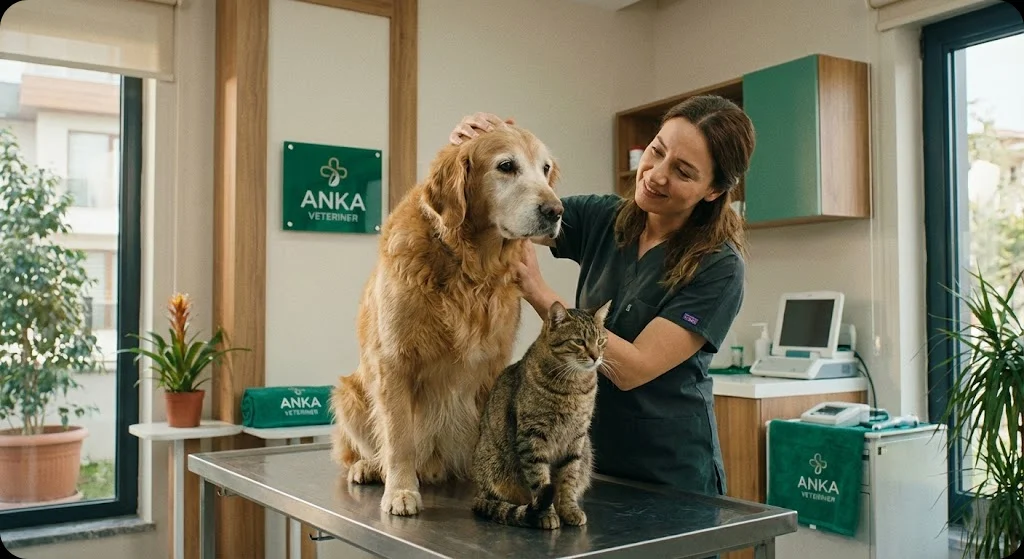
You may have noticed that your once-bustling pup or kitten, who has grown up with you for years, now spends most of its day sleeping. They pause a bit when climbing stairs, and prefer lying in a warm corner instead of playing...
However, there is a very clear rule in medicine: Aging is not a disease. Behind your pet’s slowing down is often hidden joint pain, tired kidneys, or changing blood pressure. At Anka Veterinary Clinic, our geriatric care and regular check-ups focus on helping senior pets maintain comfort and quality of life as they age.
<span className="w-6 h-6 rounded-full bg-emerald-100 flex items-center justify-center"></span> What You Will Learn in This Guide
01When is Your Pet Considered “Senior”
- Cats: Usually start between 8-10 years; “senior” from 11 years and “super senior” over 15.
- Small Dogs: breeds like Chihuahuas usually don’t count as senior until 10-12 years.
- Large Dogs: step into their senior period much earlier, around 6-7 years.
"A pet’s silence should be investigated not as a simple sign of aging, but as potential pain or fatigue that they cannot verbally express."
02Aging and Symptoms in Dogs
- Osteoarthritis: Difficulty getting up is treatable joint pain.
- Cognitive Dysfunction: Barking for no reason at night can be a sign of pet alzheimer’s.
- Oral Health: Tartar can cause bacteria to attach to heart valves.
03Aging and Silent Risks in Cats
- Kidney Disease: Visiting the litter box more often is a key signal.
- Hyperthyroidism: Losing weight despite eating more must be checked.
- Hypertension: High blood pressure is a main cause of sudden blindness in cats.
04What Does a Senior Check-Up Include
- Full Blood & Biochemistry: Liver, kidney, and blood sugar levels.
- SDMA Tests: Catching kidney damage months in advance.
- Ultrasound & X-ray: Visualizing internal organ structures and heart size.
05How Does Early Diagnosis Provide Comfort
The primary goal is not just to extend life, but to support comfort, calmness, and quality of life through early intervention and regular follow-up. At Mersin Ankavet in Mersin Mezitli, we closely monitor our patients with tailored preventive protocols.
Short Summary
Biannual geriatric check-ups for senior pets allow early detection of organ dysfunction and metabolic shifts before symptoms manifest, ensuring a comfortable quality of life.
Note from Mersin Ankavet
Mersin’s suffocating humidity puts more strain on senior hearts. At our clinic, senior companions with low stress tolerance are handled using 'Fear-Free Clinic' principles.
Book AppointmentRelated Blog Posts
Kaynaklar ve Notlar
- AVMA - Senior Pet Care Guidelines
- WSAVA Global Life Stage Guidelines
- AAHA Senior Care Guidelines for Dogs and Cats
This content has been prepared for informational purposes and does not replace a professional veterinary examination.
Frequently Asked Questions
How often should a senior check-up be done?
At least once a year for those over 7, ideally every 6 months.
My cat never leaves the house, is a check-up needed?
Yes, internal metabolic issues like kidney failure don’t depend on being outdoors.
Related Service
Geriatric Care
For clinical evaluation and a care plan, review the service page connected to this guide.
View ServiceMedical Information Note
This content is for general information only. It does not replace a veterinary examination, diagnosis, treatment, or specific medication/food recommendations. A veterinary examination and individual assessment are required for your pet’s health. In case of emergency symptoms, please contact the nearest open veterinary clinic.
MERSIN MEZITLI PET CARE
Need Professional Guidance for Your Pet?
Are you in Mersin Mezitli? If you notice these symptoms or have any concerns about your pet’s health, consult our AnkaVet veterinarians immediately. English and Russian-speaking support is available!
Your pet deserves quality care.
Get in touch today to discuss your pet’s health or schedule a consultation.