Happy Paws on the Mersin Coastline: A Walking Guide to Kültür Park and Soli Beach
Sedat Çapanoğlu, DVM
Anka Veterinary Clinic
Last updated:
Mustafa Kemal University graduate (2018). After clinical experience in Mersin and a short period in municipal shelter practice, he takes an active role in surgery, emergency care, dental health, and diagnostics.
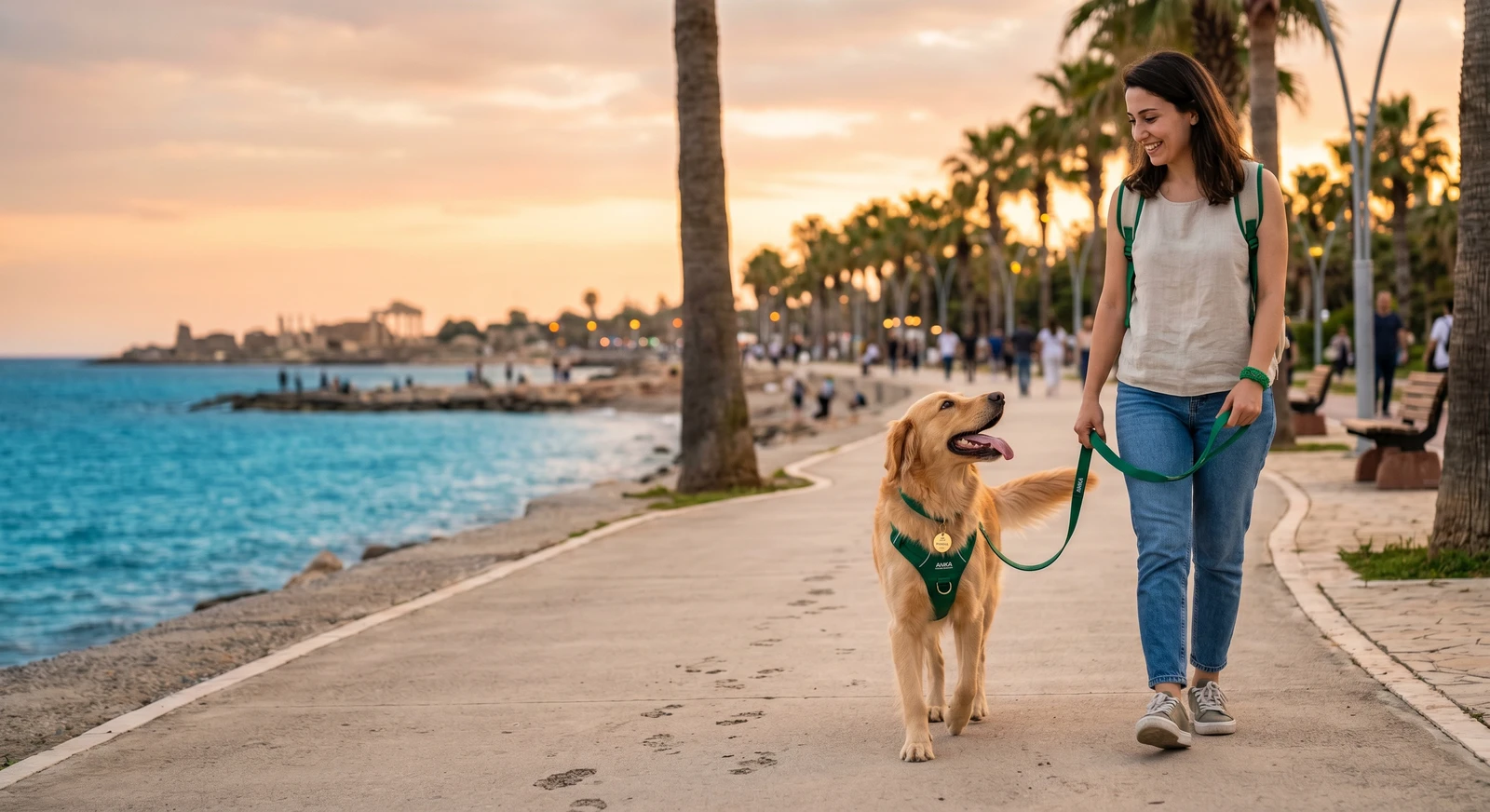
Mersin’s unique Mediterranean climate, expansive coastlines, and stunning blue sea views offer an inviting atmosphere for outdoor activities year-round. Especially for cat and dog owners residing in coastal areas like Viranşehir, Mezitli, and Soli, morning or evening walks along these routes have become an indispensable part of their daily routine. Sharing open spaces with our pets is vitally important, not only for burning off their physical energy but also for providing essential mental stimulation.
However, the Mersin climate, where heat and humidity reach remarkably high levels, brings along certain hidden risks for pets when combined with coastal dynamics. Being aware of these risks, ranging from ground temperatures and hidden parasitic dangers to foreign body penetrations and digestive issues caused by seawater, is of great importance for preventive medicine. In this comprehensive guide, we thoroughly examine the vital rules to follow on Mersin’s coastal dog walking routes and the clinical approaches to protecting the health of pets.
Table of Contents
- 1Mersin’s Most Popular Paw Routes: Kültür Park and Soli Pompeiapolis Beach
- 2Safe Walking on the Beach and Points to Consider
- 3The Danger of Hot Asphalt and Sand: The 5-Second Rule
- 4The Insidious Summer Hazard: Foxtails in Grassy Areas
- 5Swallowing Seawater and Paw Hygiene: Post-Walk Care
- 6Safe Communication and Leash Rules in Beach Socialization
- 7Routine Health Screening and Appointment Planning in Mezitli and Surrounding Areas
- 8Sources and Notes
- 9Frequently Asked Questions
01Mersin’s Most Popular Paw Routes: Kültür Park and Soli Pompeiapolis Beach
The Mersin coastline is virtually an endless center of sensory enrichment for dogs. The expansive lawns stretching along Adnan Menderes Boulevard and the captivating Soli Pompeiapolis Beach, with its historical texture, are frequently preferred for dogs to both exercise physically and develop their social skills.
The dog walking areas in Mersin Kültür Park are ideal for dogs to distinguish different scents in nature, analyze stimuli carried by the wind, and track the traces left by other animals (olfactory enrichment). Considering that dogs primarily perceive the world through smell, dog walking activities at Soli Beach do more than just work the muscle and joint systems; they also provide intense mental training, greatly helping to minimize indoor stress and anxiety levels.
02Safe Walking on the Beach and Points to Consider
| Beach Dynamic / Risk | Potential Clinical Hazard | Preventive Measure | Point to Monitor at Home |
|---|---|---|---|
| Scorching Ground Temperature | 1st and 2nd-degree burns on paw pads | Apply the 5-second rule, early morning/late evening walks | Redness, blistering, obsessive licking on paws |
| Dried Grass and Weeds | Foxtail (grass awn) embedding and abscess formation | Avoid dense and yellowed grassy areas | Constant head shaking, discharge from eyes/nose, or sneezing |
| Seawater Consumption | Sodium poisoning (Hypernatremia) and acute diarrhea | Keep plenty of clean fresh water available during the walk | Severe vomiting, seizures, excessive thirst |
| Salty Sand and Moisture | Interdigital dermatitis (eczema between toes) | Wash paws with lukewarm water and dry them after the walk | Foul odor, redness, hair loss between toes |
Scorching Ground Temperature
Dried Grass and Weeds
Seawater Consumption
Salty Sand and Moisture
03The Danger of Hot Asphalt and Sand: The 5-Second Rule
Under Mersin’s scorching sun, asphalt, concrete walking paths, and beach sand reach temperatures far higher than the air temperature, acting almost like a heat insulator. While humans do not feel this heat through shoes, pets' paws are directly exposed to these burning surfaces. Deep paw burns are highly painful clinical conditions that can lead to tissue loss and severe infections.
To prevent this risk, the “5-Second Rule,” which is accepted worldwide and recommended by veterinarians, should be applied. Before heading out for a walk, press the back of your hand against the asphalt or sand; if your hand cannot withstand the heat for 5 seconds, the ground is not safe for your dog’s paws either. In the Mersin heat, ideal walking hours are the late evening when the sun loses its impact or the early coolness of the morning.
04The Insidious Summer Hazard: Foxtails in Grassy Areas
Especially in late spring and summer, “foxtails” (grass awns) drying up in the lawns of Kültür Park and the green areas of Mezitli pose one of the most insidious dangers to dogs. Thanks to their microscopic, spear-like barbed structure, these awns can pierce through the animal’s coat, penetrate the skin, and begin to migrate in one direction inside the body.
Foxtails can lodge between the toes, causing severe lameness and abscesses. Even more dangerously, they can migrate into the respiratory tract through the nostrils, reach the eardrum through the ear canal, or even penetrate the inside of the eyelids, leading to vital complications requiring surgical intervention, tissue necrosis, and even deafness. After a walk, the spaces between your dog’s paws, the insides of their ears, and their armpits should be meticulously checked; if continuous sneezing or shaking the head in one direction is observed, immediate veterinary intervention is required.
05Swallowing Seawater and Paw Hygiene: Post-Walk Care
While running on the beach, playing, or retrieving a ball thrown into the sea, dogs can unknowingly swallow large amounts of seawater. The excessive salt in seawater rapidly disrupts the sodium balance in the bloodstream, leading to a dangerous condition called “Hypernatremia” (sodium poisoning). This can cause acute vomiting, bloody diarrhea, neurological seizures, and, in advanced stages, kidney damage. Offering clean fresh water breaks throughout the walk will reduce the desire to drink seawater.
Additionally, sea salt and fine sand particles that get stuck between the paws after a walk pave the way for interdigital dermatitis (inflammation and fungal infections between the toes) once back home. Dogs constantly licking their paws to relieve this annoying itch only worsens the irritation. Simply washing the paws with lukewarm water and gently but thoroughly drying them upon returning from the walk is an effective preventive medicine step to avoid these dermatological issues.
06Safe Communication and Leash Rules in Beach Socialization
Although the Mersin coastal strips are wide, they host heavy pedestrian traffic, bicycle paths, and populations of other street/pet animals. While beach socialization is beneficial for dogs' mental development, it can lead to traumatic consequences if safety rules are not followed.
A sudden noise, fireworks, or aggression from another animal can cause even the most trained dog to panic and bolt into traffic. Therefore, keeping leashes (especially harnesses) under constant control during walks is the sole legal and official safety measure to prevent both potential traffic accidents and unwanted fights between dogs.
07Routine Health Screening and Appointment Planning in Mezitli and Surrounding Areas
Beach walks can increase pets' exposure to external parasites (ticks, fleas, sand flies, etc.). Therefore, regular and complete antiparasitic applications are mandatory. For pet owners applying from surrounding areas like Tece, Davultepe, Viranşehir, and Yenişehir, or those searching for a vet near the Soli junction, our clinic implements comprehensive preventive medicine protocols.
At Anka Veterinary Clinic, a detailed general examination is performed for any allergic reactions, dermatological disorders, or possible trauma your friends might face after returning from the beach. In urgent cases such as severe gastroenteritis due to seawater ingestion or foreign body penetrations, rapid medical stabilization is provided through our emergency and intensive care unit. For detailed information on when our friends in their first months of life can start beach socialization, it is recommended to check our kitten care guide or the vaccination schedule articles in our related puppy guides.
Short Summary
Walks at Mersin’s Adnan Menderes Kültür Park and Soli Pompeiapolis beaches are tremendous activities that support our pets' physical conditioning and mentally satisfy them. However, these enjoyable moments must be managed carefully against paw burns from high asphalt temperatures, insidious foreign bodies like foxtails that require surgical intervention, and sodium poisoning from swallowing seawater.
Choosing safe walking hours, maintaining leash control, and not neglecting paw cleaning after the walk make beach strolls hazard-free. Regular veterinary check-ups and a parasite protection schedule are the most fundamental keys to ensuring pets live a long and healthy life in Mersin’s hot climate.
Note from Mersin Ankavet
You can consult our veterinarians for dermatological checks, external parasite treatments, or potential foreign body penetrations after beach walks. Reach out to us for wellness checks and appointments.
Book AppointmentRelated Blog Posts
Sources and Notes
- ASPCA - Hot Weather Safety Tips
- AVMA - Foxtails & Dogs: Why They’re Dangerous
- Blue Cross - Taking Your Dog to the Beach
- WSAVA - Global Guidelines
This content has been prepared for informational purposes and does not replace a professional veterinary examination.
Frequently Asked Questions
How do I stop my dog from eating sand at the beach?
Beach sand can harbor seawater, dead marine life, and waste, posing a serious danger to the digestive system. Since the tendency to eat sand can be a sign of mineral deficiency (pica syndrome), a veterinary examination is recommended. Carrying treats or a favorite toy to redirect their attention during the walk is an effective method.
Should a dog that goes into the sea be bathed immediately after the walk?
Washing the entire body with shampoo every day is not recommended as it will disrupt the natural oil layer of the skin barrier. However, when exposed to seawater, the salt left in the fur dries the skin, causing severe itching and eczema. Therefore, after a sea bath or a sandy walk, the dog should be rinsed with plenty of lukewarm fresh water without shampoo and thoroughly dried.
What symptoms occur if my dog swallows seawater?
If a large amount of seawater is swallowed, excessive thirst, severe vomiting, and diarrhea will appear first. As sodium poisoning progresses, serious neurological symptoms such as muscle tremors, disorientation, lethargy, and seizures may occur. In this case, you should apply to the clinic without wasting any time.
What should be done first for dog paw burns in the Mersin heat?
If redness or blistering is noticed on the paw pads, the dog should immediately be taken to a cool, shaded area. The paws should be washed with room temperature (never ice-cold) water for 10-15 minutes to lower the tissue temperature, and professional veterinary support should be sought without applying any random creams at home against the risk of infection.
What should be done if a foxtail has entered my dog’s body?
Awns that escape into the ear canal reveal themselves by constant head shaking in one direction, scratching the ear, and painful whimpering. Awns lodged between the paws cause severe licking and lameness; those escaping into the nose cause unstoppable, sometimes bloody, sneezing fits.
Is it mandatory to use a leash while walking dogs in Kültür Park or Soli Beach?
Yes, it is a legal requirement to walk dogs on a leash in all public parks, beaches, and walking paths. Using a leash is not just a legal necessity; it is a vital safety cord that prevents traffic accidents, the consumption of toxic foods, and unwanted contacts with other animals.
Related Service
General Examination
For clinical evaluation and a care plan, review the service page connected to this guide.
View ServiceMedical Information Note
This content is for general information only. It does not replace a veterinary examination, diagnosis, treatment, or specific medication/food recommendations. A veterinary examination and individual assessment are required for your pet’s health. In case of emergency symptoms, please contact the nearest open veterinary clinic.
MERSIN MEZITLI PET CARE
Need Professional Guidance for Your Pet?
Are you in Mersin Mezitli? If you notice these symptoms or have any concerns about your pet’s health, consult our AnkaVet veterinarians immediately. English and Russian-speaking support is available!
Your pet deserves quality care.
Get in touch today to discuss your pet’s health or schedule a consultation.