The Power of the Coat in Summer Heat: The Summer Shaving Myth for Cats and Dogs
Sedat Çapanoğlu, DVM
Anka Veterinary Clinic
Last updated:
Mustafa Kemal University graduate (2018). After clinical experience in Mersin and a short period in municipal shelter practice, he takes an active role in surgery, emergency care, dental health, and diagnostics.
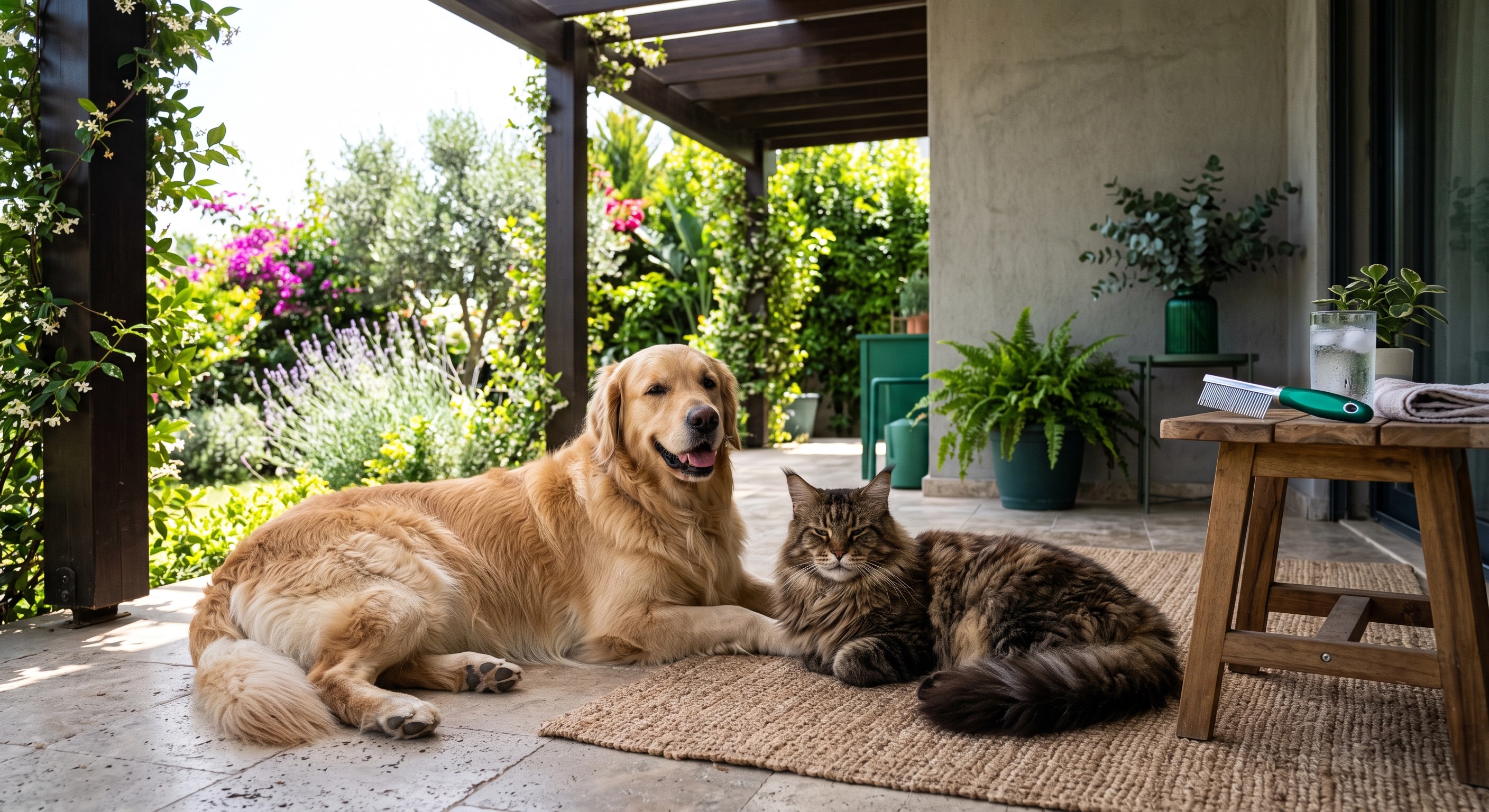
When the highly humid and scorching summer months begin in Mersin and Mezitli, pet owners worry about how the heat affects their companions. It is natural to think that a thick-coated animal must feel overwhelmed in such heat. This empathy often leads owners to shave their pets completely. However, making this decision based on human physiology goes entirely against the nature of cats and dogs.
Questions about the harms of summer shaving for cats and whether to shave dogs in summer top the list of common confusions in dermatology. Fur acts as a primary shield against both cold and heat. This guide explores why shaving causes dangerous outcomes instead of cooling, and how to maintain proper fur care during the harsh Mersin summers, based on scientific data.
What You Will Learn in This Guide
01The Miracle of Thermal Insulation: What is a Double Coat?
The coats of cats and dogs have a much more complex and vital function than human clothing. Breeds with double coats, such as Golden Retrievers, German Shepherds, Pomeranians, and Maine Coons, possess two distinct fur layers that work in harmony.
The soft, dense undercoat sits close to the skin and provides insulation. It keeps freezing air out in winter and blocks the scorching sun from reaching the skin in summer. The topcoat consists of harsher, thicker guard hairs that block water, dirt, and harmful UV rays like an umbrella. This double-layered structure works like a perfectly designed thermos. Just as a thermos insulates its contents from the outside temperature, a natural coat insulates the animal’s body heat from the scorching Mersin sun. Shaving this structure away destroys the animal’s natural thermoregulation system, leaving it completely defenseless against the heat.
02Summer Performance: Shaved vs. Natural Coat
| Comparison Criteria | Natural Coat Status | Shaved Coat Status | Home Care Focus |
|---|---|---|---|
| Heat Isolation | Reflects sun rays, keeps under-skin cool. | Skin faces direct sun, body heats up rapidly. | Keep the animal in the shade during sunny hours. |
| External Protection | Protects against insects, pests, and UV rays. | Skin becomes vulnerable to bites, irritation, and burns. | Do not skip regular parasite prevention treatments. |
| Fur Quality | Stays shiny and healthy with regular brushing. | Undercoat and topcoat mix and dull (Alopecia). | Brush out dead undercoat regularly instead of shaving. |
| Heatstroke Risk | Insulation keeps the risk balanced. | Loss of insulation increases heatstroke risk. | Avoid intense exercise during the hottest hours of the day. |
Heat Isolation
External Protection
Fur Quality
Heatstroke Risk
03Four Major Harms of Summer Shaving
Shaving fur close to the skin opens the door to permanent health issues far beyond a temporary illusion of cooling.
- Sunburns and Skin Sensitivity: The skin of cats and dogs is much thinner, less pigmented, and more sensitive than human skin. Without fur, the skin faces direct sunlight and quickly develops severe, painful sunburns. Long-term unprotected exposure paves the way for skin issues like squamous cell carcinoma.
- Skin Diseases and Fungal Infections: Stripped of its natural protective barrier, the skin weakens against environmental allergens, bacteria, and physical trauma. In highly humid regions like Mersin, intense moisture and direct irritation on the bare skin create an ideal environment for fungal growth.
- Mosquito and Vector Bites: Fur acts as a strong mechanical armor against sandflies (which carry Leishmania), ticks, and other pests common in the Mediterranean region. Removing the coat facilitates insect bites, increasing the risk of life-threatening parasitic diseases transmitted through the blood.
- Post-Clipping Alopecia: When you shave animals with double coats, the undercoat and topcoat grow back at different rates, causing the fur to tangle. The coat struggles severely to return to its original shiny and protective form. In most cases, a dull, highly mat-prone, and shapeless fur structure becomes permanent.
04Cooling Solutions Instead of Shaving: What Can You Do at Home?
You can safely cool ypets naturally without shaving them. Regularly brushing out dead fur that sheds and gets trapped in the coat during summer allows air circulation and lets the skin breathe comfortably. Weekly care with special deshedding brushes forms the most suitable step to perfect the insulation system.
Additionally, keeping fresh, cool drinking water available at home, creating shaded resting areas away from the sun, and using cooling gel mats help them cool down. Ample water consumption helps maintain skin elasticity on extremely hot days. Letting your companions rest in air-conditioned and cool rooms during hot hours helps them lower their body temperature naturally.
05In Which Special Cases is Shaving Mandatory?
Although we do not recommend routine shaving for cooling in summer, exceptional cases exist where shaving becomes medically necessary. If the animal’s fur mats so severely that brushing cannot untangle it (forming an armor or dreadlocks), these mats completely block air from reaching the skin and cause severe skin infections and open wounds underneath. In this scenario, shaving off the mats becomes a health necessity. Furthermore, veterinarians may plan local or full-body shaving to treat stubborn skin diseases like severe mange or widespread fungal infections, allowing topical medications or medical shampoos to penetrate the skin directly. Shaving the relevant area to ensure sterilization before surgical operations also remains a routine medical procedure.
During periods when temperature and humidity values rise, protecting the skin and fur integrity of pawed friends requires a clinical approach. As Mersin Ankavet, we offer safe dermatological care approaches suitable for the anatomical coat structure of our friends, instead of practices like summer shaving that can cause permanent harm.
Within the scope of grooming and care services carried out under clinical standards, we remove the dead undercoat and fur using professional equipment without damaging the skin. This process aims to strengthen our friend’s natural insulation system so they can resist summer heat. In case of potential dermatological problems or stubborn hair loss complaints, we identify the source of the problem through detailed dermatology and skin health examinations and apply reliable solution protocols that protect the fur and restore skin health.
Short Summary
Shaving double-coated pets for summer cooling disrupts natural thermoregulation and increases sunburn risk. Regular brushing and undercoat deshedding are the safe ways to support cooling.
Note from Mersin Ankavet
Instead of shaving your companion to cool them down in summer, offering regular brushing, fresh cool water, and air-conditioned cool environments is the safest approach. You can schedule an appointment for fur and skin health examination.
Book AppointmentRelated Blog Posts
Sources and Notes
- Merck Veterinary Manual - Hair Loss (Alopecia) in Dogs Guide
- PMC (Hall et al., 2020) - Exertional Heat-Related Illness (Heatstroke) in Dogs
- PMC (Carter et al., 2023) - Cooling Methods to Manage Heat-Related Illness in Dogs
This content has been prepared for informational purposes and does not replace a professional veterinary examination.
Frequently Asked Questions
Should cats be shaved to cool down in summer?
No. A cat’s coat acts as a natural thermostat that blocks outside heat. Shaving destroys this insulation shield, leaving the animal defenseless against direct heat and sunburns.
Does shaving dogs down to the skin harm their skin?
Yes, the skin of cats and dogs is much thinner than that of humans. When you shave the fur down to the skin, the skin faces direct exposure to the sun, irritants, and pest bites, which increases the risk of infection and burns.
Does fur damaged after shaving (shaving alopecia) return to its original state?
Not always. Known as post-clipping alopecia, this condition occurs when the hair growth cycle disrupts. It can take months, sometimes years, for the fur quality and double-layered structure to return to its original, healthy form; in some cases, permanent structural deformities remain.
Does brushing fur help cool down in Mersin’s humidity?
Absolutely. Dead fur that accumulates and gets trapped in the coat cuts off airflow, causing the animal to feel stifled. Removing these dead hairs through regular brushing allows the skin to breathe and makes it easier to balance body temperature.
Which breeds should definitely not be shaved in summer?
You should definitely not shave any breed with a double-layered (undercoat and topcoat) structure, such as Golden Retrievers, Huskies, German Shepherds, Pomeranians, Akitas, and Maine Coons, unless a medical necessity exists.
How do you prevent heatstroke in an unshaved animal?
You should keep the animal in air-conditioned or cool, shaded areas during the hottest hours of the day, ensure they always have access to clean and cool water, schedule walks for early morning or late evening, and brush them regularly.
Medical Information Note
This content is for general information only. It does not replace a veterinary examination, diagnosis, treatment, or specific medication/food recommendations. A veterinary examination and individual assessment are required for your pet’s health. In case of emergency symptoms, please contact the nearest open veterinary clinic.
MERSIN MEZITLI PET CARE
Need Professional Guidance for Your Pet?
Are you in Mersin Mezitli? If you notice these symptoms or have any concerns about your pet’s health, consult our AnkaVet veterinarians immediately. English and Russian-speaking support is available!
Your pet deserves quality care.
Get in touch today to discuss your pet’s health or schedule a consultation.