Your Pet is Talking to You: A Guide to Understanding Body Language
Şanssım Çapanoğlu, DVM
Anka Veterinary Clinic
Last updated:
Mustafa Kemal University graduate (2019). After internships in Adana and Izmir, she worked in clinical practice in Adana and focuses on preventive medicine and behavior.
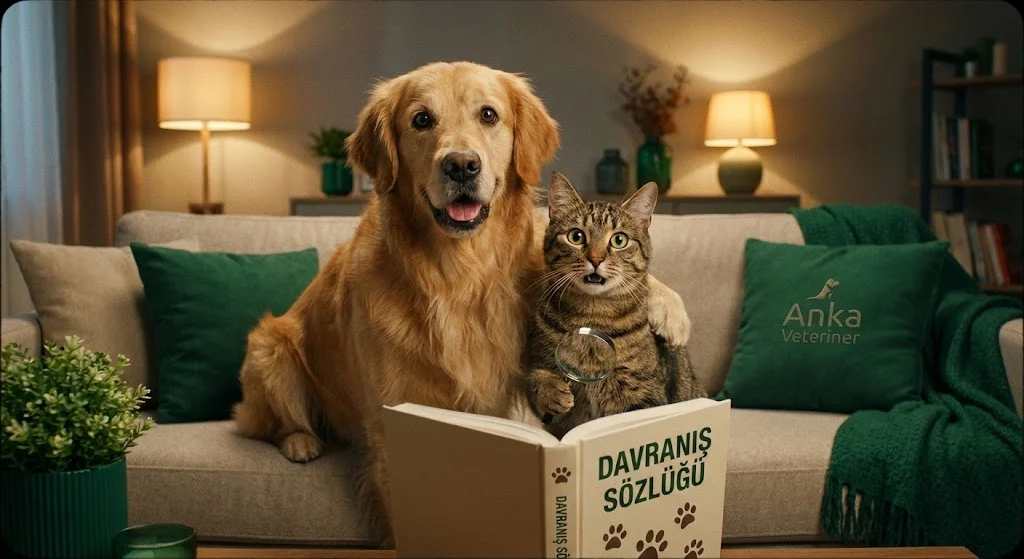
If you think your pet only talks to you by meowing or barking, you’re actually missing more than half of the conversation.
Cats and dogs may not use words, but they provide a “live broadcast” of their feelings with their entire bodies, from the tips of their ears to the base of their tails. At Anka Veterinary Clinic in Mezitli, Mersin, hundreds of different body language messages are observed every day. Decoding these secret messages helps understand pet behavior.
<span className="w-6 h-6 rounded-full bg-emerald-100 flex items-center justify-center"></span> What You Will Learn in This Guide
01Tail Movements: Is Every Wag a Sign of Happiness
Let’s start with one of the biggest misconceptions: “If they’re wagging their tail, they’re happy.” While this is generally true for dogs, the way the tail wags changes everything. If the tail is wagging broadly and loosely like a fan, yes, everything is fine! However, if the tail is upright, stiff, and only the tip is vibrating rapidly, this could be a sign of tension or preparation before an attack. In cats, the situation is the opposite; a tail hitting rapidly from side to side says that a burst of anger is approaching.
"Your pet’s tail is like an 'antenna' showing their emotional state. Focus not just on the movement, but also on the tension."
02The Language of Eyes: Love or a Challenge
If your cat looks at you and slowly closes and opens its eyes, congratulations! This means they are sending you a “cat kiss.” In dogs, direct and long-term eye contact can be a challenge. Side-long glances where the whites of the eyes become prominent, referred to as “whale eye,” indicates that the pet is very stressed at that moment.
03Ears and Whiskers: The Invisible Radars of Emotion
If the ears are pricked forward, it shows interest and curiosity; if they are opened to the sides like airplane wings, it shows anxiety; if they are pinned completely back, they are in fear or defense mode. In cats, whiskers pointing forward signal excitement for hunting or curiosity, while whiskers flattened against the face indicate intense stress.
04Showing the Belly: “Pet Me” or “I Trust You”
When a dog shows its belly and lies on the ground, it usually gives the message “Please rub here!” But when a cat shows its belly, it’s not always an invitation. Most of the time, this means “I trust you so much that I’m showing you my most vulnerable area.” At Anka Veterinary Clinic in Mersin Mezitli in Mersin Mezitli, we closely monitor our patients with tailored preventive protocols.
Short Summary
Cats and dogs communicate their emotions, stress, and discomfort through body language. Learning to read ears, tail posture, eyes, and posture deepens your bond and allows for early recognition of pain or anxiety.
Note from Mersin Ankavet
Correctly interpreting our pets' body language is the most reliable way to understand their emotional needs and notice potential health problems early.
Book AppointmentRelated Blog Posts
Kaynaklar ve Notlar
- AVMA - Pet Behavior & Communication Guidelines
- WSAVA Animal Welfare & Behavior Guidelines
- AAHA Canine and Feline Behavior Management Guidelines
This content has been prepared for informational purposes and does not replace a professional veterinary examination.
Frequently Asked Questions
My dog sometimes yawns for no reason, are they sleepy?
Dogs don’t only yawn when they’re sleepy. If they’re yawning in a stressful environment, it could be a “calming signal” used to soothe themselves.
Why does my cat rub its head against me or objects?
This is a sign of ownership and trust. Cats have scent glands on their cheeks. When they rub against you, they send the message “This is my human, I trust them”.
My pet’s behavior has suddenly changed, what should I do?
A sudden onset of aggression, hiding, or changes in bathroom habits can often be a sign of a physical illness. A veterinary examination is highly recommended.
Related Service
Behavior and Psychology
For clinical evaluation and a care plan, review the service page connected to this guide.
View ServiceMedical Information Note
This content is for general information only. It does not replace a veterinary examination, diagnosis, treatment, or specific medication/food recommendations. A veterinary examination and individual assessment are required for your pet’s health. In case of emergency symptoms, please contact the nearest open veterinary clinic.
MERSIN MEZITLI PET CARE
Need Professional Guidance for Your Pet?
Are you in Mersin Mezitli? If you notice these symptoms or have any concerns about your pet’s health, consult our AnkaVet veterinarians immediately. English and Russian-speaking support is available!
Your pet deserves quality care.
Get in touch today to discuss your pet’s health or schedule a consultation.