If Your Cat Eliminates Outside the Box: Litter Choice, Box Count and Stress Control
Şanssım Çapanoğlu, DVM
Anka Veterinary Clinic
Last updated:
Mustafa Kemal University graduate (2019). After internships in Adana and Izmir, she worked in clinical practice in Adana and focuses on preventive medicine and behavior.
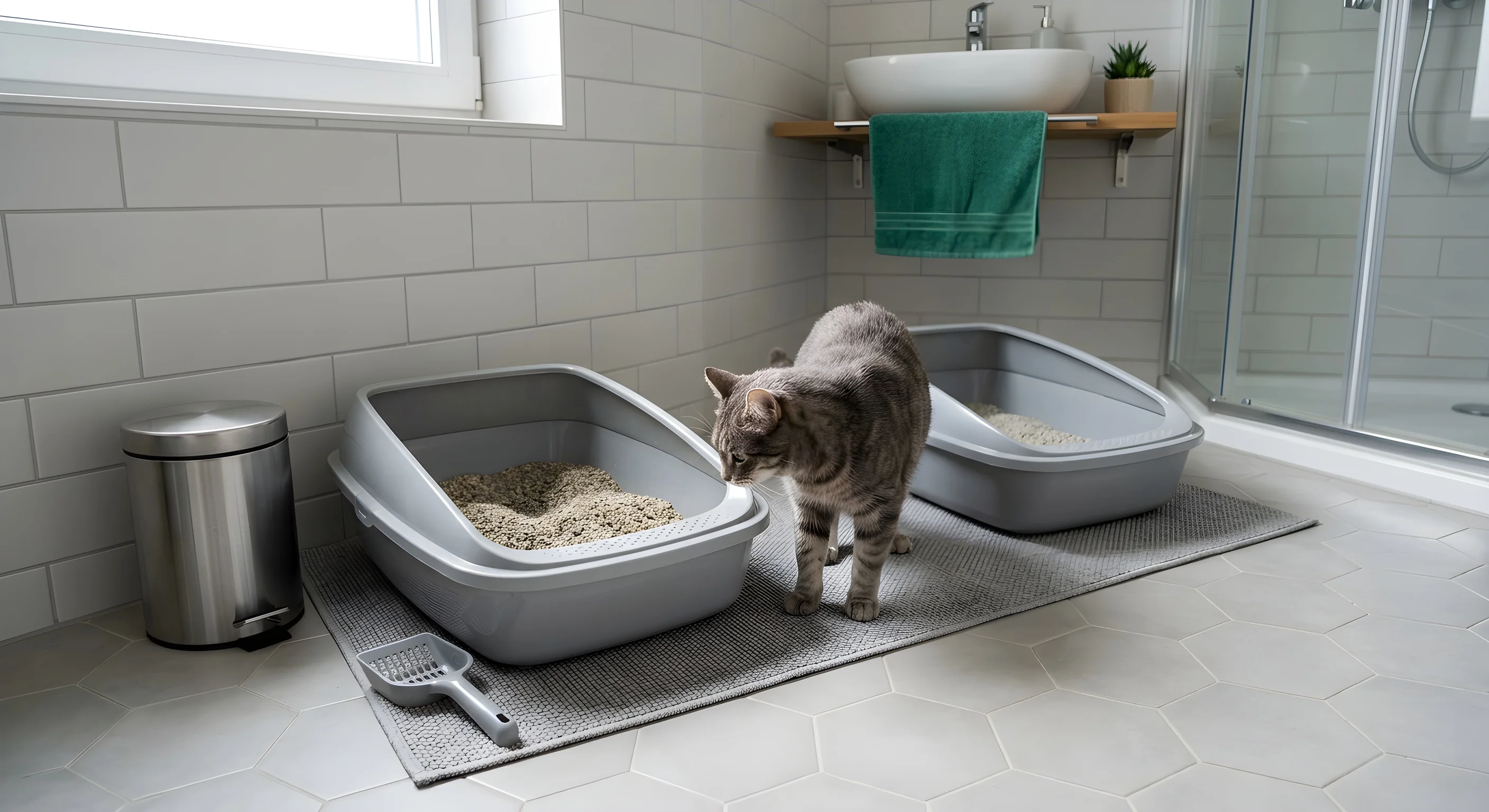
Owners who visit the clinic because their cat eliminates outside the litter box often blame themselves. Yet this picture almost always carries a message: the litter box is dirty, the litter texture feels unpleasant, the number of boxes is not enough, there is stress at home, or an underlying medical problem disrupts the urination pattern. Scolding, punishing, or constantly moving the box makes the problem worse. The right approach is to stay calm, observe regularly, and move forward step by step, using a process of elimination.
In this article we address elimination outside the litter box from a veterinary perspective. We share a practical home plan for litter choice, box count, location, cleaning, and stress control. We also clarify which signs are urgent. Because sometimes the picture looks behavioral, but a urinary problem is involved. When you read to the end, you will clearly see what to change at home and when to visit a veterinary clinic in Mezitli.
What You Will Learn in This Guide
01Medical or Behavioral: How to Make the First Distinction
Before trying to correct elimination outside the box, the first question is always the same: is there a medical cause. Urinary tract infection, urinary crystals, kidney disease, diabetes, painful joint problems, and constipation directly change toileting habits. The cat associates the box with pain and looks for a different surface. In older cats, joint pain makes it hard to enter a box with high sides. For this reason, we first treat as medical any picture that started in the last two weeks, becomes more frequent, or appears together with bloody urine, foul-smelling urine, or vocalizing while passing urine.
There is a vital distinction here. In a male cat, straining, entering and leaving the litter box often, passing urine drop by drop, or not passing urine at all points to urinary blockage. This picture damages the kidneys within hours and needs emergency care. If your cat enters the litter box but cannot go, you treat it as an emergency without waiting as if it were a behavior problem. In a female cat, painful urination, repeated attempts, and lethargy are also taken seriously. In every case where you are unsure, planning a general examination with a urine check and physical examination is the right step.
The behavioral picture appears more often after a change in routine. Moving to a new home, a new cat, a new baby, guests, construction noise, a change of litter brand, a switch to a covered box, or less frequent cleaning are among the typical triggers. These cats usually look healthy, their appetite stays normal, and they choose a specific spot: a rug corner, a bath mat, the edge of a bed, plant soil. Still, before deciding it is behavioral, we recommend a veterinary check if there was no examination in the last year. Because without resolving pain, changing litter, box, or location gives no lasting result. Keeping an observation diary makes your work easier at this stage: where, when, how often, urine or stool, how much. These notes help us a lot during the examination.
02Problem, Possible Cause and First Home Check Table
| Observation | Possible Cause | First Home Check |
|---|---|---|
| Eliminates right outside the box, near the edge | Box too small, sides too high, too little litter, or clumping feels unpleasant | Try a wider open box, keep litter about 5 cm deep, clean daily |
| Started after a new cat arrived home | Resource competition, odor anxiety, not enough boxes | Add one more box than the number of cats, place boxes in different rooms, add hiding areas |
| Enters often, strains, passes drops | Urinary blockage or painful urination, emergency | Do not wait, do not distract with water and food, plan an emergency examination the same day |
| Misses together with soft stool or constipation | Digestive problem, painful defecation, reaction to litter texture | Note stool consistency for 2 days, switch to a low-sided box, plan an examination |
| Always uses the same rug or bed corner | Odor mark remains, floor texture feels inviting, a stress area has formed | Wash the area with an enzymatic cleaner, place play and food there, block access |
| Uses a covered and scented box, refuses to enter | Sensitivity to odor, poor air circulation, fear | Switch to a wide open-top box, try unscented clumping fine-grained litter, move the box to a quiet corner |
Eliminates right outside the box, near the edge
Started after a new cat arrived home
Enters often, strains, passes drops
Misses together with soft stool or constipation
Always uses the same rug or bed corner
Uses a covered and scented box, refuses to enter
03The Litter, Box and Location Trio
In litter choice, most cats prefer a fine-grained, unscented, clumping texture. Thick, hard, or strongly perfumed litter irritates the paws, and the odor keeps the cat away from the box. Clumping fine-grained litter makes daily cleaning easier and helps with odor control. You keep the litter depth at about 5 cm. In shallower litter the cat cannot dig and cover, and in deeper litter kittens and older cats struggle. Replacing all litter once a week, removing clumps every day, and washing the box with an odorless detergent become the basic routine. When all care steps stay regular together with this routine, the cat sees the box as a safe area.
The box count rule is simple but often skipped: number of cats plus one. If you have two cats, we recommend three boxes; if you have three cats, four boxes. When boxes stand side by side, the cat perceives them as a single box. For this reason you distribute the boxes to different spots in the home. For box size, instead of giving a single measure, you choose a model in which the cat turns around comfortably, a larger model for large cats. For an older, overweight, or arthritic cat, you choose a wide box with a low entrance. Covered boxes trap odor and create a feeling of being trapped in timid cats. An open box gives a better result in most homes. For a kitten, a model with low sides and easy entry also works.
Location matters at least as much as litter. Next to the washing machine, a hallway passage, next to the dog food bowl, or a room whose door constantly closes is not a suitable place. The cat wants to see around while toileting and find a quick escape route. You choose a quiet, airy, easily reached corner away from home traffic. Many of our clients living in Mezitli consider the balcony in summer. The balcony is not a suitable area because it is hot, windy, and carries a fall risk. You set a fixed corner indoors and do not move the box from there. In a forced change such as moving or renovation, transferring some old litter to the new box keeps odor continuity. The cat smells the new box, recognizes it, and accepts it faster.
Cleaning frequency also shapes behavior. Scooping once a day is the minimum limit. In a crowded home, morning and evening cleaning is needed. If the cat continues to go outside while clean litter is available, the problem is in the litter type or the box location. At this point you change the litter slowly: you add one scoop of new litter into the old litter every day and complete the transition in one week. A sudden change causes refusal in a selective cat. If stool consistency, urine clump size, and frequency change, you take notes. This information speeds up diagnosis during examination and prevents unnecessary attempts.
04Do and Avoid List
We keep this list simple enough to pin on the fridge. You apply each item for one week, observe the change, then move to the next step. The list works for both single-cat and multi-cat homes.
While applying the list, everyone at home needs to follow the same rule. If one person cleans the box while another person changes the litter type, the routine breaks for the cat. You make a short task sharing: who cleans which box on which day. This routine does not look like a formal chart, but it ends confusion at home. If there are children, you also explain the calm approach to them: the cat is not petted, chased, or locked in while toileting.
- Remove clumps with a scoop every day, keep the litter level at about 5 cm.
- Increase the box count with the number of cats plus one rule and distribute boxes to different rooms.
- Use unscented clumping fine-grained litter, spread the litter change over one week.
- For older and overweight cats, choose a wide open-top box with low sides.
- Wash soiled areas with an enzymatic cleaner, stay away from cleaners with ammonia and vinegar that resemble urine odor.
- Keep the toileting area in a quiet, fixed, easily reached corner, do not move the box often.
- Note urination and defecation frequency, amount, and consistency for a few days, visit the examination with these notes.
- Do not change litter, box, or place together on the same day; move forward with a single variable.
- Stay away from methods such as blowing in the cat's face, pressing its nose to the soiled area, and frightening with a loud voice.
- Do not use practices that increase stress, such as punishment, locking in a room, or keeping the cat on the balcony for a long time.
- Do not use strongly perfumed litter, scented bags, or sharp-smelling cleaning products.
- Do not wait at home when blockage signs appear; repeated straining and drop-by-drop urine need an emergency examination.
05Stress and Multi-Cat Home Setup
Cats show their feelings not with voice but with area use. Elimination outside the box is often the first sign of stress. A new cat, new furniture, crowded guests, loud renovation noise, a changed food bowl place, or a broken attention routine creates insecurity in the cat. The cat looks for safe odor and turns to soft surfaces where it can leave its own scent. For this reason you do not see the problem only as a litter problem; you also review the home setup.
In a multi-cat home, resource rivalry progresses silently. One cat does not look like chasing the other, but blocks with stare, cuts the way in the hallway, or waits at the litter box. The timid cat therefore cannot use the box and misses in a quiet corner. The solution is to distribute resources together with increasing the box count: separate food and water bowls, add hiding boxes and high shelves, place scratching areas. Each cat having a separate resting corner lowers tension. You also spread play time through the day: ten minutes of wand play twice a day meets the hunting need and reduces night restlessness.
You make routine changes slowly. New litter, a new box, a new room, or a new cat are not packed into the same week. When a new cat arrives home, you set a separate room, separate box, and separate food routine for the first days. You introduce with scent exchange, feed through the door gap, and meet under supervision. A synthetic pheromone spray or diffuser supports calming in some homes but is not a solution alone. The real solution is a predictable daily routine: food at the same hour, play at the same hour, cleaning at the same hour. This routine creates a feeling of safety for the cat. If missing lasts longer than 2 days, we recommend a veterinary check; if there is no improvement in 2 weeks despite a regular plan in a stress-related picture, you do not delay the examination further.
06Planning in Mersin Mezitli
In apartment living, the balcony, stairwell, and noisy basement are not suitable areas for the litter box. In Mezitli, summer heat and humidity increase odor, and litter gets dirty faster. For this reason you do not skip daily cleaning in summer months, and you do not place the box in direct sunlight. Switching to perfumed litter because odor increases keeps the cat away. Staying with unscented litter and increasing cleaning frequency gives a more accurate result.
As Mersin Anka Veterinary Clinic, serving in Mersin Mezitli, we first make a medical rule-out in every patient arriving with this complaint. We investigate the pain source with urine examination, physical examination, and imaging when needed. If there is no medical problem, we build the home plan together: box count, litter type, location, and cleaning routine. In multi-floor homes in Mersin, we often see that boxes need distribution across different floors, and that placing a low box on each floor for an older cat makes things easier. Working with a Mezitli veterinary team speeds up the process at this point. Visiting the clinic with your home notes, a short video you recorded, and litter-box photos makes our diagnosis easier.
Short Summary
If your cat eliminates outside the box, you first rule out a medical cause, then arrange the litter, box, and location trio. You use number of cats plus one boxes, keep unscented clumping fine-grained litter about 5 cm deep, and place the box in a quiet fixed corner. To reduce stress, you distribute resources, keep the routine stable, and stay away from punishment. Repeated straining and drop-by-drop urine count as an emergency. With regular cleaning and calm observation, the picture improves in most homes within a few weeks.
A Note from Anka Veterinary
When your cat misses the litter box, we first rule out medical causes, then build your home plan together. Bring your observation notes so we can reach the diagnosis faster.
Book AppointmentRelated Blog Posts
References and Notes
- ASPCA - Litter Box Problems
- Cornell Feline Health Center - House Soiling in Cats
- AAFP - House Soiling Guidelines
This content has been prepared for informational purposes and does not replace a professional veterinary examination.
Frequently Asked Questions
My cat suddenly started eliminating outside the box, what should I do first?
First observe urine and general condition. If there are repeated urination attempts, straining, blood, vomiting, or lethargy, plan an examination without waiting. If these signs are absent, clean the box, adjust the litter level, and note anything that changed in recent days. Write down changes such as new litter, a new box, guests, or moving. For missing that lasts longer than 2 days, we recommend a veterinary check.
How many litter boxes should there be?
The general rule is number of cats plus one. For one cat we recommend two boxes, for two cats three boxes. You place boxes in different rooms, not side by side. This way the cat feels safe and does not wait in line. If there is an older cat, you add a low-sided box on the floor where it stays.
Which litter should I choose?
Most cats accept unscented clumping fine-grained litter more easily. The soft texture does not tire the paws and is easy to dig. Perfumed and coarse-grained litters increase refusal. You spread the litter change over one week. You add some new litter to the old litter every day and watch the cat reaction.
Where should the litter box go?
You choose a quiet, airy, easily reached, and fixed corner. Next to the washing machine, a narrow hallway, and a room whose door constantly closes are not suitable. The cat wants to see around while toileting. We do not recommend the balcony because it is hot and carries a fall risk. You do not change the box place often; you keep it at the same spot.
My male cat strains often but passes little, can I wait?
No, you do not wait with this picture. Especially in a male cat, straining together with little urine points to urinary blockage. This condition is treated as an emergency. Waiting for him to drink water or trying massage wastes time. You plan an emergency examination the same day. Painful and frequent urination in a female cat also needs a quick check.
How do I stop repeat soiling in the same spot?
You first dry the area with paper towel, then wash with an enzymatic cleaner. Because cleaners with ammonia and vinegar resemble urine odor, they can direct the cat to the same spot, so you do not use them. After the area dries, you place food there for a few days or make it a play area. The cat does not want to toilet where it eats. Blocking access also prevents new marks.
There is no fighting in a multi-cat home, but the cat still goes outside, why?
No fighting does not mean no tension. Blocking with stare, cutting the way, and waiting at the box are common. The timid cat cannot wait its turn and looks for a quiet corner. You increase the box count, separate food and water spots, and add hiding and high areas. If there is no improvement in 2 weeks despite a regular plan, we recommend an examination.
Related Service
Behavior and Psychology
For clinical evaluation and a care plan, review the service page connected to this guide.
View ServiceMedical Information Note
This content is for general information only. It does not replace a veterinary examination, diagnosis, treatment, or specific medication/food recommendations. A veterinary examination and individual assessment are required for your pet’s health. In case of emergency symptoms, please contact the nearest open veterinary clinic.
MERSIN MEZITLI PET CARE
Need Professional Guidance for Your Pet?
Are you in Mersin Mezitli? If you notice these symptoms or have any concerns about your pet’s health, consult our AnkaVet veterinarians immediately. English and Russian-speaking support is available!
Your pet deserves quality care.
Get in touch today to discuss your pet’s health or schedule a consultation.