My Cat Goes to the Litter Box But Can’t Pee: Urinary Issue or Constipation?
Sedat Çapanoğlu, DVM
Anka Veterinary Clinic
Last updated:
Mustafa Kemal University graduate (2018). After clinical experience in Mersin and a short period in municipal shelter practice, he takes an active role in surgery, emergency care, dental health, and diagnostics.
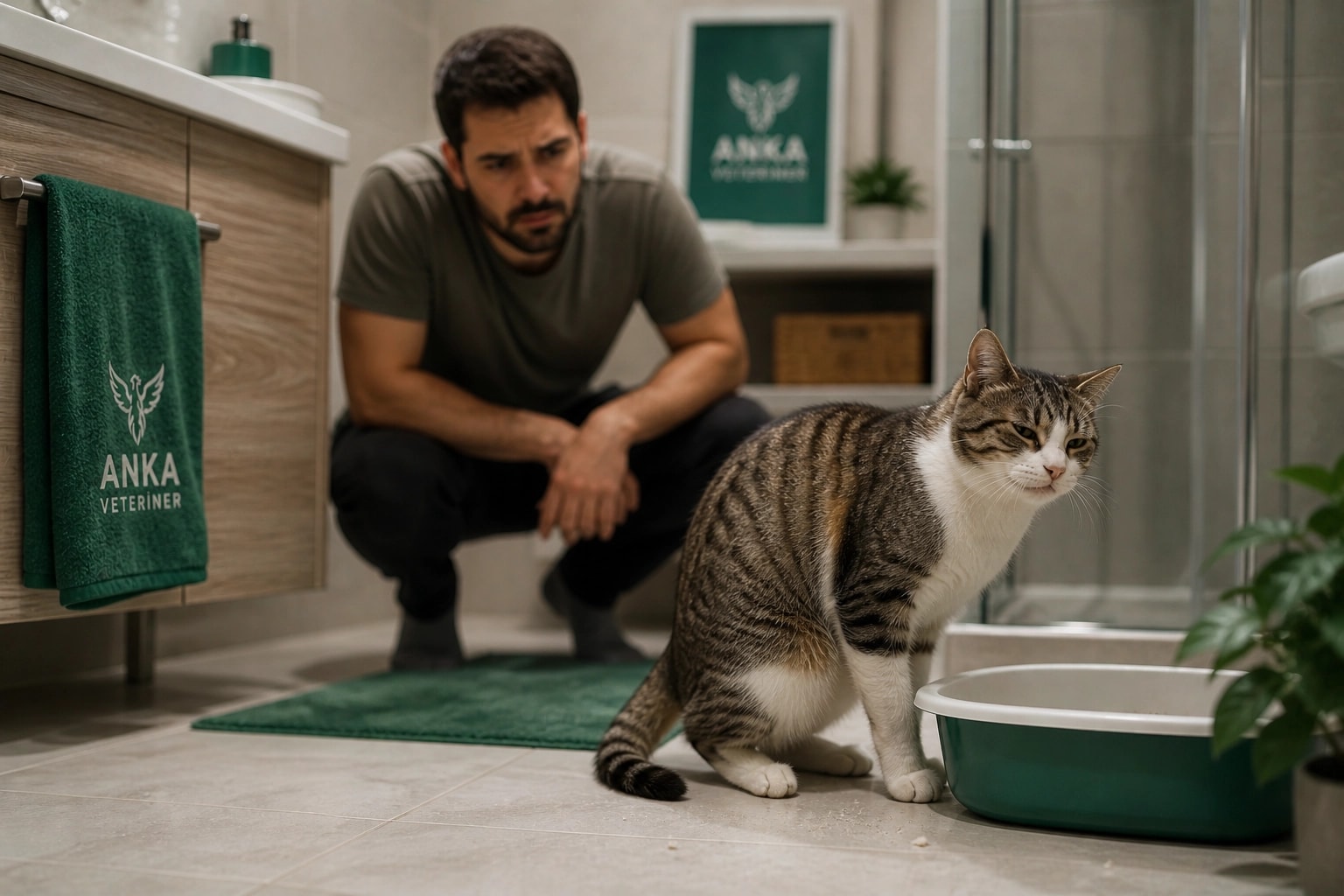
If your cat keeps going in and out of the litter box, strains for a long time, and produces little or nothing, the situation should not be minimized. At first glance it may look like constipation, but especially in male cats, the same behavior can be one of the earliest signs of a urinary blockage.
In this guide, Anka Veterinary Clinic explains why litter box straining is often confused with constipation, which signs point more strongly toward lower urinary tract disease, and when emergency veterinary care should not be delayed.
What You’ll Learn in This Guide
- 1Why Should Litter Box Straining Be Taken Seriously?
- 2Why Are Constipation and Urinary Problems Confused?
- 3Signs That Suggest Urinary Obstruction
- 4Findings More Common in Constipation
- 5When Should You Go to the Vet Without Waiting?
- 6What Should Not Be Done at Home?
- 7How Is Treatment Generally Planned?
- 8How Can Recurrence Risk Be Reduced?
- 9Sources and Notes
- 10Frequently Asked Questions
01Why Should Litter Box Straining Be Taken Seriously?
Straining in the litter box does not automatically mean constipation. A common concern among owners, “my cat cannot pee”, can point to a much more critical issue like a urinary blockage. Cats may show a very similar posture when they have difficulty passing stool and when they have painful lower urinary tract disease.
If the real problem is reduced urine flow or a complete obstruction, the condition can worsen quickly. In a complete urethral blockage, urine cannot be voided, toxins accumulate, and dangerous electrolyte disturbances can develop, making this a true emergency. Since untreated blockages can lead to kidney failure, you can also read our chronic kidney disease guide for more details.
02Why Are Constipation and Urinary Problems Confused?
In both situations, a cat may enter the litter box, hunch the back, strain, and even cry out. That is why posture alone does not reliably separate constipation from a urinary problem.
The misleading part is that owners often focus on the absence of stool, while the urgent issue may actually be the inability to empty the bladder. What matters is not only how long the cat stays in the box, but also what, if anything, is produced.
03Signs That Suggest Urinary Obstruction
The following findings strengthen concern for lower urinary tract disease or urethral obstruction: frequent litter box trips, producing only tiny amounts of urine or none at all, blood in the urine, excessive licking of the genital area, and obvious distress.
Merck and Cornell both describe painful urination, frequent attempts to urinate, genital licking, and little to no urine production as key warning signs of feline lower urinary tract disease. Male cats are at greater risk of complete blockage because their urethra is longer and narrower.
- Repeated trips in and out of the litter box
- Only a few drops of urine or no urine at all
- Pink or red urine
- Intense licking of the genital area
- Restlessness, hiding, or pain-related vocalization
04Findings More Common in Constipation
True constipation can also cause straining, but the pattern is often somewhat different. Very dry, hard, small stool fragments may be seen, bowel movements may become infrequent, and some cats may continue to pass normal amounts of urine.
Reduced appetite, vomiting, abdominal discomfort, and low energy may accompany constipation, but these signs should never be used alone to rule out a urinary emergency. In any straining cat, urine output must be considered first.
05When Should You Go to the Vet Without Waiting?
If your cat enters the litter box, strains, and the litter remains mostly dry, waiting is not appropriate. If no urine is being produced, the situation should be treated as urgent.
The emergency threshold rises even further if the cat is lethargic, vomiting, painful when the abdomen is touched, crying out, or becoming collapsed. Cornell Feline Health Center clearly states that urethral obstruction is an absolute emergency and that complete obstruction can deteriorate rapidly.
If you suspect your cat cannot urinate, seek emergency evaluation immediately or come directly to the clinic.
06What Should Not Be Done at Home?
Giving olive oil, human laxatives, or random supplements because the problem looks like constipation will not relieve a urinary blockage. It only delays proper treatment.
Pressing on the abdomen, trying to massage the bladder, or using human pain medicines is also unsafe. Many human medications are toxic to cats, and pressure on a distended bladder can be harmful.
07How Is Treatment Generally Planned?
At the clinic, the first goal is to confirm whether the cat is truly unable to urinate and how distended the bladder is. Physical examination, palpation, ultrasound, urinalysis, and blood work may all be part of the assessment.
If a complete obstruction is present, treatment often involves catheterization under sedation or anesthesia to relieve the blockage. Fluid therapy, pain control, electrolyte monitoring, and investigation of the underlying cause then follow.
08How Can Recurrence Risk Be Reduced?
Reducing recurrence risk means more than simply relieving the blockage. The underlying lower urinary tract problem must also be managed. Stress reduction, higher water intake, appropriate diet, and improved litter box setup are all important parts of this plan.
Cornell and Merck emphasize that environmental stress reduction, clean and accessible litter boxes, enough litter boxes in multi-cat homes, increased moisture intake, and veterinarian-guided urinary diets may help in selected cases. At Mersin Ankavet in Mersin Mezitli, we closely monitor our patients with tailored preventive protocols.
If lower urinary tract signs keep returning, book an appointment to determine the underlying cause and arrange the necessary treatment.
Short Summary
Straining in the litter box can indicate either urethral obstruction (a medical emergency in male cats) or constipation. Immediate veterinary evaluation is vital whenever urinary distress is suspected.
Note from Mersin Ankavet
In a straining cat, the critical distinction is not constipation first, but whether the cat is passing urine. In male cats especially, little to no urine together with pain and distress deserves emergency assessment.
Book AppointmentRelated Blog Posts
Sources and Notes
- AVMA - Feline Lower Urinary Tract Disease (FLUTD)
- WSAVA - Feline Clinical Guidelines
- AAFP - Feline Urinary & Life Quality Guidelines
This content has been prepared for informational purposes and does not replace a professional veterinary examination.
Frequently Asked Questions
My cat cannot pee. Will olive oil or a laxative help at home?
No. That approach will not relieve a urinary blockage and may only delay the emergency treatment your cat needs. A straining cat that may not be producing urine should be assessed urgently instead of treated at home.
What are the signs of a cat urinary blockage, and can a cat’s inability to urinate resolve on its own?
No, a complete urethral obstruction or inability to urinate in cats will never resolve on its own at home. If you notice signs of a cat urinary blockage, such as repeated attempts to urinate, vocalization, or hiding, you must seek emergency veterinary care immediately.
Can stress trigger lower urinary tract problems in cats?
Yes. Stress is an important factor in some lower urinary tract conditions, especially feline idiopathic cystitis. But stress does not mean the situation is automatically safe; if the cat may be unable to urinate, obstruction must be ruled out first.
Related Service
Emergency and Intensive Care
For clinical evaluation and a care plan, review the service page connected to this guide.
View ServiceMedical Information Note
This content is for general information only. It does not replace a veterinary examination, diagnosis, treatment, or specific medication/food recommendations. A veterinary examination and individual assessment are required for your pet’s health. In case of emergency symptoms, please contact the nearest open veterinary clinic.
MERSIN MEZITLI PET CARE
Need Professional Guidance for Your Pet?
Are you in Mersin Mezitli? If you notice these symptoms or have any concerns about your pet’s health, consult our AnkaVet veterinarians immediately. English and Russian-speaking support is available!
Your pet deserves quality care.
Get in touch today to discuss your pet’s health or schedule a consultation.