Why Do Cats Wake Us Up So Early in the Morning? The Biological Secrets Behind Early Wake-Ups
Sedat Çapanoğlu, DVM
Anka Veterinary Clinic
Last updated:
Mustafa Kemal University graduate (2018). After clinical experience in Mersin and a short period in municipal shelter practice, he takes an active role in surgery, emergency care, dental health, and diagnostics.
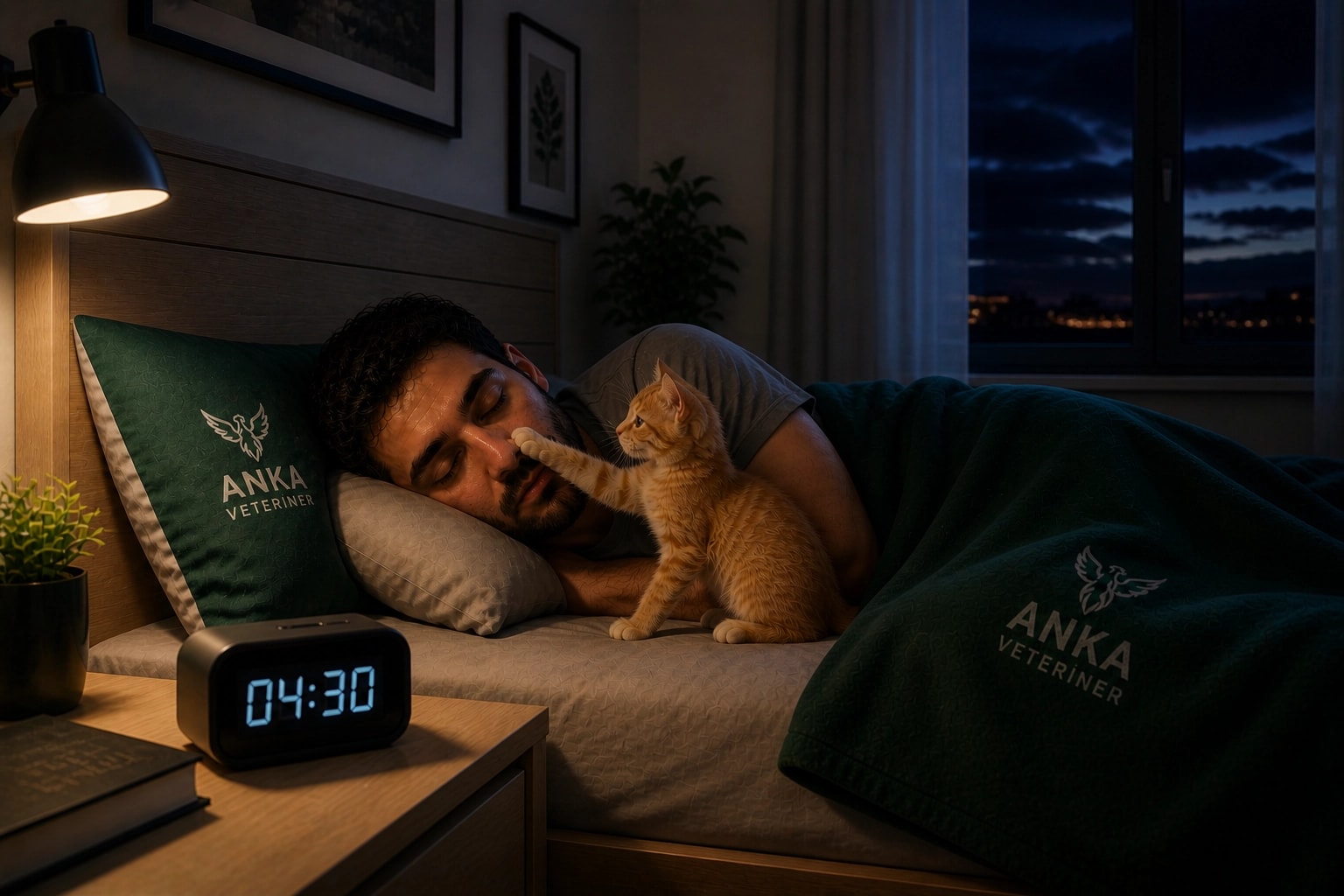
It is 4:30 in the morning. You wake up to a damp paw on your nose, a loud purr in your ear, or insistent scratching at the bedroom door. Your furry alarm clock seems fully committed to the mission until you are wide awake.
Many people describe this as simple “spoiling” or assume cats are nocturnal. In reality, early-morning wakeups are often shaped by crepuscular activity patterns, learned routines, and sometimes underlying medical issues. In this guide, both the behavioral side and the health warnings worth paying attention to are explained.
What You’ll Learn in This Guide
01Scientific Reality: Cats Are Not Truly Nocturnal
Cats are often described as nocturnal, but a more accurate description is that they are active around dawn and dusk. These are the time windows when many of their natural prey species are also more active.
So when your cat suddenly becomes energetic before sunrise, that behavior is often less about “wanting to annoy you” and more about an internal activity schedule shaped by instinct.
02Learned Behavior: How the Alarm is Accidentally Set
Cats learn patterns quickly. If early meowing or pawing leads to food, petting, or conversation, the message becomes clear: this behavior works.
As discussed in the guide to why cats knock things off surfaces, any behavior that reliably gets a response is more likely to repeat. That is why morning wakeups often become a strong household routine.
03What Is an Extinction Burst?
If you suddenly stop responding, the behavior may briefly get louder before it gets better. Your cat may meow more intensely, jump on the bed, or scratch more persistently at the door.
In behavior science, this is called an extinction burst. A previously successful strategy stops working, so the animal may try it with greater intensity for a while. If you give in during that stage, the behavior can become even more persistent. With consistency, improvement is often possible over time, though the pace varies from cat to cat.
04Practical Steps to Protect Your Morning Sleep
Keeping the bedroom darker may delay wake-up behavior in some cats, especially those that respond strongly to the first morning light.
If hunger is the main trigger, an automatic feeder set for very early hours can help shift the food expectation away from you and toward a predictable device.
A short, active play session before bedtime followed by a small meal can also support a more natural “hunt, eat, rest” cycle. Wand toys and other interactive play can be especially useful.
Consistency matters most. If your goal is to reduce the wake-up routine, avoid getting out of bed, talking, or making eye contact. Mixed responses often restart the learning cycle.
If repeated sleep-disrupting behavior is affecting life at home, behavior and psychology counseling may help evaluate the routine more clearly.
05When Should a Medical Cause Be Considered?
If a cat that used to sleep calmly has only recently started restless early-morning vocalization, it should not automatically be dismissed as a habit problem. In older cats especially, a change in sleep-wake rhythm may warrant medical evaluation.
Veterinary references note that new nighttime vocalization and early-morning restlessness can sometimes be associated with pain, hypertension, hyperthyroidism, cognitive change, or another underlying medical issue. If this behavior is accompanied by appetite changes, weight loss, increased thirst, confusion, or aggression, a veterinary exam should be prioritized. At Anka Veterinary Clinic in Mersin Mezitli, we closely monitor our patients with tailored preventive protocols.
If morning vocalization is sudden or paired with weight loss, confusion, or restlessness, book an appointment so that possible medical causes can be assessed.
Short Summary
Early morning feline activity stems from their natural crepuscular hunting rhythms. Evening interactive play sessions and scheduled nocturnal feeding help realign your cat’s sleep cycle.
Note from Mersin Ankavet
Early-morning wakeups in cats are often linked to dawn activity patterns, learned reinforcement, and feeding expectations. In older cats, however, the same behavior can also point to pain, hypertension, hyperthyroidism, or cognitive change.
Book AppointmentRelated Blog Posts
Sources and Notes
- ISFM (Feline Behavior Guide)
- VCA Animal Hospitals (Cat Behavior Training)
- AAHA (Understanding Cat Activity Cycles)
This content has been prepared for informational purposes and does not replace a professional veterinary examination.
Frequently Asked Questions
Should I let my cat sleep in my bedroom at night?
That depends on your sleep quality and your cat’s routine. If early-morning wakeups have become a major problem, closing the bedroom door at night may create a clearer boundary. Once you choose that approach, consistency matters.
Does feeding wet food before bedtime help?
It can help in many cats. A small meal after active evening play may reduce hunger-driven wakeups. The goal is not overfeeding, but building a more predictable routine.
My cat wakes me up, eats, and then goes back to sleep. Is that normal?
Yes, that pattern is common. Cats often show short bursts of activity followed by rest again. If this behavior is sudden or comes with weight loss, restlessness, or excessive vocalization, a veterinary check is appropriate.
Related Service
Behavior and Psychology
For clinical evaluation and a care plan, review the service page connected to this guide.
View ServiceMedical Information Note
This content is for general information only. It does not replace a veterinary examination, diagnosis, treatment, or specific medication/food recommendations. A veterinary examination and individual assessment are required for your pet’s health. In case of emergency symptoms, please contact the nearest open veterinary clinic.
MERSIN MEZITLI PET CARE
Need Professional Guidance for Your Pet?
Are you in Mersin Mezitli? If you notice these symptoms or have any concerns about your pet’s health, consult our AnkaVet veterinarians immediately. English and Russian-speaking support is available!
Your pet deserves quality care.
Get in touch today to discuss your pet’s health or schedule a consultation.