Gravity Test: Why Cats Love Pushing Things Off Tables
Sedat Çapanoğlu, DVM
Anka Veterinary Clinic
Last updated:
Mustafa Kemal University graduate (2018). After clinical experience in Mersin and a short period in municipal shelter practice, he takes an active role in surgery, emergency care, dental health, and diagnostics.
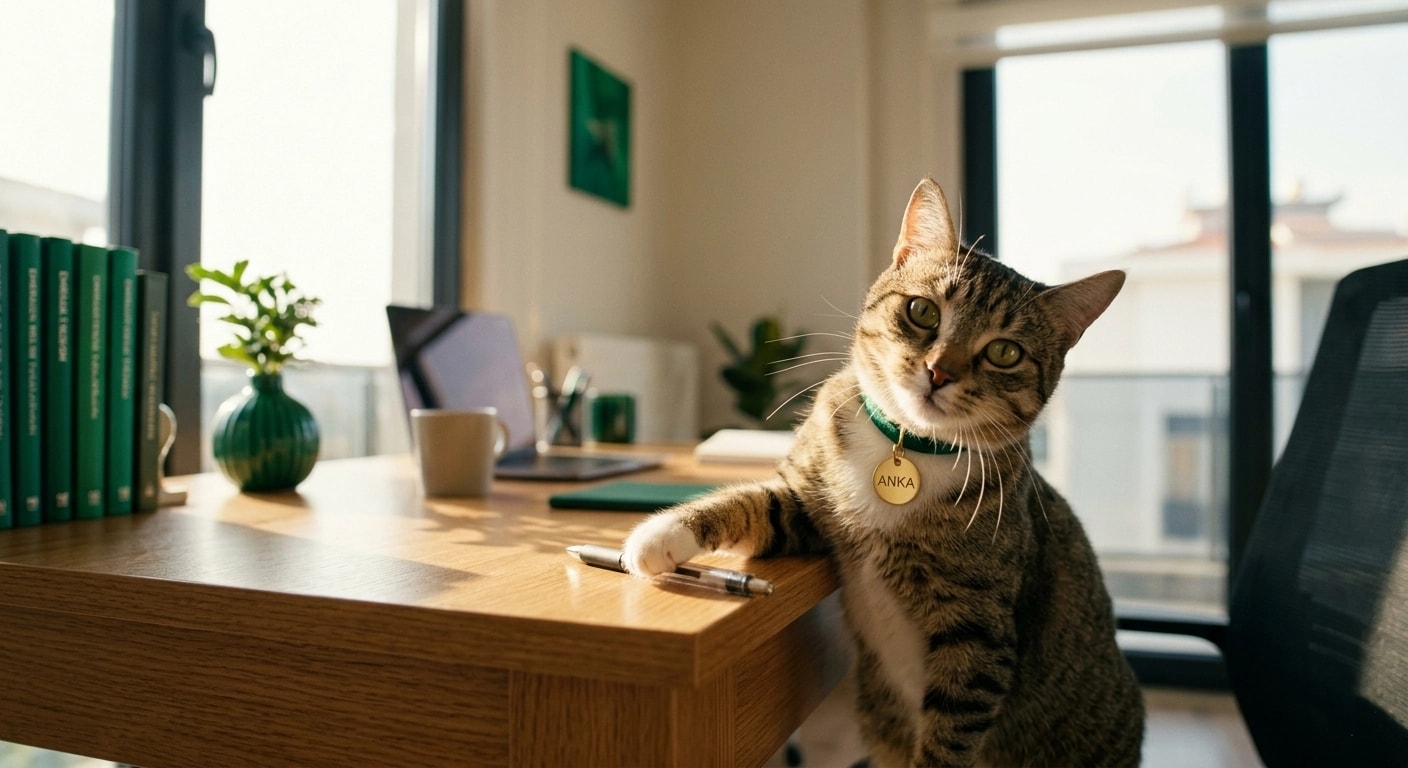
You’re deeply focused on work at your computer when you notice movement at the edge of the table. You lock eyes with your cat. With that innocent, unapologetic look, your cat slowly extends a paw toward your glass or pen and casually knocks it off. After the crash, your cat simply turns and walks away as if nothing happened.
This familiar scene plays out in many homes with cats. We often call it spoiled behavior or stubbornness. In reality, cats are not acting out of revenge or bad intent. They rely on precise instincts and a sharp mind that constantly tests boundaries. As Anka Veterinary Clinic in Mezitli, Mersin, we are opening the door to the behavioral science behind this gravity routine of our little tigers at home. At Anka Veterinary Clinic in Mersin Mezitli, we closely monitor your pet’s well-being with preventive care.
What You’ll Learn in This Guide
01The Sensitive Radar in Cat Paws
A cat’s paws are not only for walking and climbing. They are packed with sensitive nerve endings that help cats map and evaluate their environment. Humans pick objects up with their hands to understand them; cats do a similar scan with their paws. Pushing an item off the table is often part of that sensory investigation.
"Knocking things off tables isn’t mischief; it is an indoor adaptation of ancient hunting and exploration instincts."
02Hunting Instinct: “Is This Thing Alive?”
In nature, a cat must check whether prey is truly inactive or about to escape. The classic tap-and-test behavior is a hunting reflex. Domestic cats still carry this programming. When a cat bats a small object off a surface, the brain may still run a primitive test: “Will it move? Will it run?”
03Cause and Effect: A Clear Sign of Feline Intelligence
Cats are excellent at building cause-and-effect links. The sound of a falling object, the rolling motion, and your immediate reaction create a strong learning loop. If your cat gets attention each time, this can become a reliable communication strategy instead of random play.
04Compensating for Close-Range Vision Limits
Cats detect distant movement very well, but their close-range vision right in front of the nose is less precise than many owners expect. At table edges, they may use paw contact to confirm depth and object boundaries. Some “knocking” behaviors are therefore spatial checks rather than deliberate destruction.
If this pattern becomes frequent, a behavior and psychology consultation is the most reliable next step.
For similar patterns, the following resource can also be reviewed: cat behavior guide .
Short Summary
Cats pawing objects off tables stems from curiosity about cause-and-effect and hunting instincts. Keeping fragile items secured and providing interactive toys manages this natural habit safely.
Note from Mersin Ankavet
Although this behavior is natural, broken objects and spilled liquids can create unwanted risks at home. Professional support can be sought to safely meet your cat’s behavioral and mental stimulation needs.
Book AppointmentRelated Blog Posts
Kaynaklar ve Notlar
- AAFP (Cat Play and Environmental Enrichment)
- ISFM (Cat Behavior and Boredom)
- VCA Animal Hospitals (Feline Play Behavior)
This content has been prepared for informational purposes and does not replace a professional veterinary examination.
Frequently Asked Questions
How can I reduce my cat’s habit of knocking things down?
Use consistent non-reinforcement. If you rush over or react loudly, the behavior gets rewarded. Remove fragile objects from high-risk areas, reward calm and appropriate play, and schedule daily interactive play sessions.
Is my cat doing this out of spite or to punish me?
No. Cats do not operate with human-style revenge motives. This behavior is usually driven by curiosity, play drive, attention-seeking, or a learned response pattern.
Why does my cat target specific objects like glasses?
Cats are highly responsive to sound and movement feedback. Glasses and similar items produce stronger sensory output when moved or dropped, making them more attractive as "test objects."
Related Service
Behavior and Psychology
For clinical evaluation and a care plan, review the service page connected to this guide.
View ServiceMedical Information Note
This content is for general information only. It does not replace a veterinary examination, diagnosis, treatment, or specific medication/food recommendations. A veterinary examination and individual assessment are required for your pet’s health. In case of emergency symptoms, please contact the nearest open veterinary clinic.
MERSIN MEZITLI PET CARE
Need Professional Guidance for Your Pet?
Are you in Mersin Mezitli? If you notice these symptoms or have any concerns about your pet’s health, consult our AnkaVet veterinarians immediately. English and Russian-speaking support is available!
Your pet deserves quality care.
Get in touch today to discuss your pet’s health or schedule a consultation.