Why Does My Dog Keep Licking Their Paws? Allergy, Irritation, and Stress Signs
Sedat Çapanoğlu, DVM
Anka Veterinary Clinic
Last updated:
Mustafa Kemal University graduate (2018). After clinical experience in Mersin and a short period in municipal shelter practice, he takes an active role in surgery, emergency care, dental health, and diagnostics.
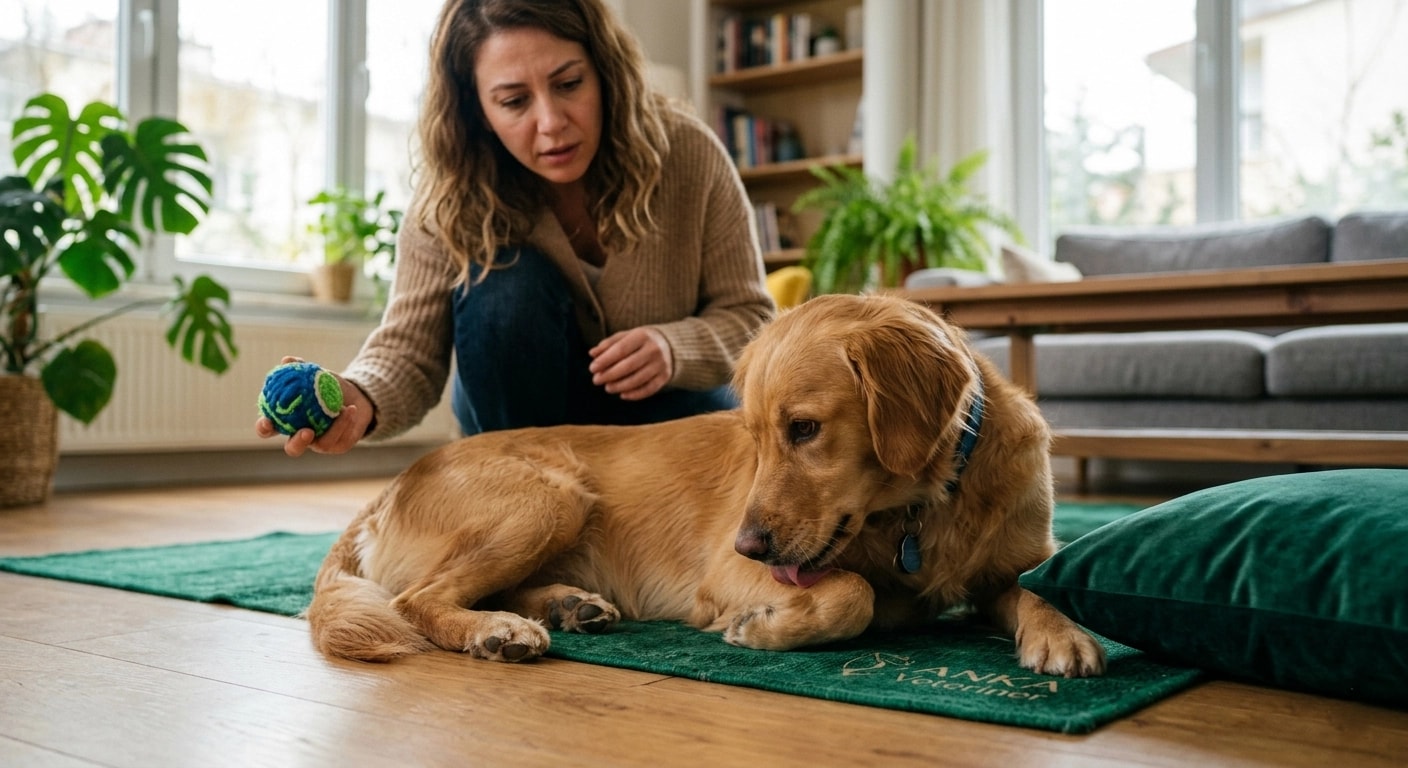
Hearing a rhythmic paw-licking sound at night is not always a reason to panic. Dogs may lick their paws briefly as part of normal grooming. But if the habit becomes repetitive, if redness or odor appears, or if your dog starts chewing the same paw over and over again, there may be an underlying skin, allergy, pain, or stress-related issue.
Paw licking is common to a point. However, when it becomes persistent, wakes a dog from sleep, or leaves discoloration between the toes, it should not be dismissed as simple cleaning. At Anka Veterinary Clinic, this guide is prepared to explain the most common causes, from allergies and irritation to foreign bodies, infection, and behavioral stress.
What You’ll Learn in This Guide
01When Is Paw Licking Normal in Dogs?
Dogs may lick their paws briefly after meals, after a muddy walk, or before falling asleep. That short grooming routine is usually normal.
The concern begins when licking turns into persistent chewing, nibbling, fur pulling, or when the paw remains constantly wet. Ongoing licking can further irritate the skin and create the perfect setting for secondary bacterial or yeast overgrowth.
02The Most Common Causes of Persistent Paw Licking
The causes of dog paw licking vary widely. We typically observe the following primary reasons:
- Environmental Allergies: Pollen, grass, and dust in spring cause intense itching, leading the dog to lick between their toes.
- Redness and Yeast Infections: Mersin’s high humidity traps moisture between the toes, leading to yeast or bacterial infections. This is the most common cause of dog paw space redness.
- Foreign Bodies: Foxtails, tiny pebbles, or thorns stuck in the paw during walks trigger constant licking.
- Food Allergies: Protein sources in dog food can start an allergic reaction, which is a frequent reason why owners say “my dog licks paws a lot.”
- Stress and Anxiety: Boredom or separation anxiety can turn paw licking into a repetitive self-soothing habit.
03What Can Be Safely Checked at Home?
If your dog starts licking a paw, you can calmly inspect between the toes for redness, swelling, a superficial cut, a lodged plant fragment, or another obvious foreign body.
When itching may be related to external parasites, remember that flea sensitivity is not completely ruled out just because you do not see fleas. The spring tick and flea protection guide may help review prevention timing.
04When Should You See a Veterinarian?
If you cannot identify a clear foreign body, if the licking lasts more than a few days, or if any of the following signs are present, a veterinary evaluation is the right next step.
05Spring Paw Care Considerations in Mersin
Mersin’s warm and humid spring months can intensify both environmental triggers and skin sensitivity. After walks, it may help to wipe the paws with a soft cloth dampened only with water and then dry them thoroughly.
Damp paws are more likely to support yeast overgrowth. Strong wipes, perfumed wipes, or harsh soaps may increase irritation instead of helping. At Mersin Ankavet in Mersin Mezitli, we closely monitor our patients with tailored preventive protocols.
Short Summary
Persistent paw licking in dogs often signals underlying allergies, interdigital dermatitis, foxtail penetration, or anxiety. Early veterinary evaluation prevents secondary skin infections.
Note from Mersin Ankavet
Paw licking is often not a disease by itself, but a sign pointing to an underlying problem. When redness, odor, seasonal itching, or repeated chewing is present, early evaluation usually makes both diagnosis and relief much easier.
Book AppointmentRelated Blog Posts
Sources and Notes
- WSAVA (Paws Licking and Dermatitis Guide)
- VCA Animal Hospitals (Why Dogs Lick Their Paws)
- ASPCA (Compulsive Licking Behaviors in Dogs)
This content has been prepared for informational purposes and does not replace a professional veterinary examination.
Frequently Asked Questions
Is it normal if my dog keeps licking their paws?
Brief daily grooming can be normal. However, licking or chewing that lasts for hours, becomes repetitive, or wakes your dog from sleep often suggests an underlying medical or behavioral issue.
What causes redness between a dog’s toes?
Common causes include environmental allergies, food sensitivities, irritation from hot surfaces, contact with cleaning agents, and bacterial or yeast overgrowth.
Why does my dog lick their paws after walks?
Plant fragments, tiny thorns, hot pavement, or irritating residue picked up during walks can all trigger paw licking afterward.
Can stress cause paw licking in dogs?
Yes. Boredom, separation anxiety, loneliness, or changes in the home can turn licking into a repetitive self-soothing behavior in some dogs.
What does a bad smell from my dog’s paws mean?
A sour or corn-chip-like odor may suggest yeast or bacterial overgrowth, especially when the spaces between the toes stay damp. A veterinary exam is the recommended way to clarify the cause.
Can I give my dog human allergy medicine?
No. Human medications may not be safe for dogs, and using them without guidance can worsen the picture or create a risk of toxicity.
When should I see a veterinarian?
If paw licking lasts more than a few days or is accompanied by redness, swelling, odor, limping, discharge, or an open sore, a veterinary evaluation is recommended.
Related Service
Dermatology and Skin Health
For clinical evaluation and a care plan, review the service page connected to this guide.
View ServiceMedical Information Note
This content is for general information only. It does not replace a veterinary examination, diagnosis, treatment, or specific medication/food recommendations. A veterinary examination and individual assessment are required for your pet’s health. In case of emergency symptoms, please contact the nearest open veterinary clinic.
MERSIN MEZITLI PET CARE
Need Professional Guidance for Your Pet?
Are you in Mersin Mezitli? If you notice these symptoms or have any concerns about your pet’s health, consult our AnkaVet veterinarians immediately. English and Russian-speaking support is available!
Your pet deserves quality care.
Get in touch today to discuss your pet’s health or schedule a consultation.