Are You Entertaining Your Cat With a Laser? You Might Actually Be Harming Them!
Şanssım Çapanoğlu, DVM
Anka Veterinary Clinic
Last updated:
Mustafa Kemal University graduate (2019). After internships in Adana and Izmir, she worked in clinical practice in Adana and focuses on preventive medicine and behavior.
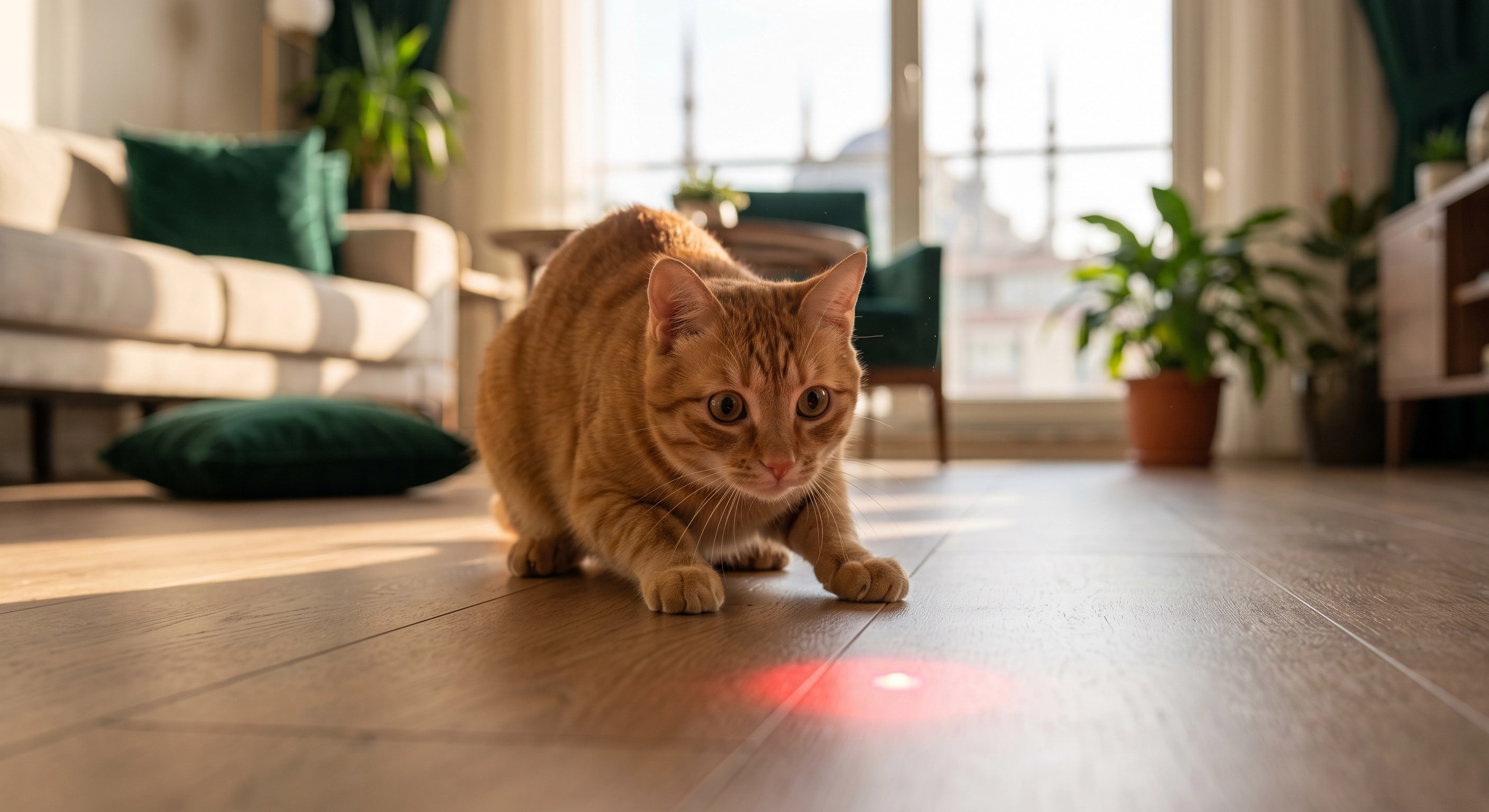
In the dynamic apartment life of Mersin and Mezitli, it is quite natural to look for a practical method for cats to release their energy indoors. In this regard, cats chasing a rapidly moving red dot of light on the wall or floor often seem like a highly entertaining and exhausting exercise session to pet owners. However, the deep psychological repercussions and hidden frustrations that this seemingly effortless toy can create in the mental processes of our pets are frequently overlooked.
Throughout their evolutionary process, cats have been designed as perfect hunters. These predatory instincts are built not just on running and expending energy, but on obtaining a physical reward at the end of the process. Therefore, a laser light that can never be physically caught, touched, or bitten creates an incomplete cycle in the minds of cats. In this guide, the harms of cat laser toys, the neurological stress triggered by the incomplete prey cycle, and the medical and behavioral approaches to preventing this situation are discussed in a professional framework.
What You Will Learn in This Guide
- 1Cats’ Prey Sequence and the “Uncaught Prey” Problem
- 2Comparison of Laser and Physical Toys
- 3Symptoms of Laser Obsession in Cats
- 4Safe and Correct Play Methods with Lasers
- 5Alternative Games to Increase Cat Happiness at Home
- 6Cat Behavior Problems and Solutions in Mezitli, Mersin
- 7References and Notes
- 8Frequently Asked Questions
01Cats’ Prey Sequence and the “Uncaught Prey” Problem
In the natural behavioral repertoire of cats, there is a highly distinct physiological and psychological cycle called the “predatory sequence”. This cycle consists of the stages of observing the prey, stalking (hiding), pouncing, catching, biting, and finally eating, respectively. Each of these stages allows for the release of specific chemicals and endorphins in the cat’s brain.
In games played using laser pointers, however, this chain abruptly breaks after the pouncing stage. When the cat sees the moving light, it chases after it with great motivation, but when it closes its paws over the light, it finds no physical reality underneath. The sense of satisfaction that should be felt the moment the prey is caught never occurs. Because the dopamine level, which rises with the hunting instinct in the brain, cannot be reset with a physical bite and reward, this situation directly turns into intense mental frustration and accumulated stress. In the long run, these incomplete cycles exhaust the cat’s nervous system, laying the groundwork for behavioral disorders.
02Comparison of Laser and Physical Toys
| Toy Type | Prey Satisfaction Level | Energy Expenditure Rate | Risk of Stress and Frustration |
|---|---|---|---|
| Laser Pointers | None (Visual Tracking Only) | Quite High | Very High (Uncaught Prey Syndrome) |
| Wand Toys | Full (Catching and Biting) | High | Very Low (Prey Sequence Completed) |
| Puzzle Toys | Full (Getting a Reward) | Medium (Mental Effort) | Low (Natural Exploration and Satisfaction) |
| Plush Toys | Full (Shredding Simulation) | Medium | Very Low (Physical Contact) |
Laser Pointers
Wand Toys
Puzzle Toys
Plush Toys
03Symptoms of Laser Obsession in Cats
The continuous and incorrect repetition of laser games can lead to clinical-level behavioral disorders in cats over time. This condition, called laser obsession in cats, is a state where the cat develops an unhealthy fixation on light and shadow reflections.
The most obvious indicator of this obsession is the cat constantly searching for the red dot on the floor, carpet, or walls long after the play session has ended. Even sunlight bouncing off a watch glass, the reflection of a phone screen, or light beams reflecting off the headlights of a passing car suddenly triggers hunting stress in the cat. The cat waiting on high alert, exhibiting constant restlessness, and showing aggression towards other living beings or objects in the house when the laser is hidden or the game ends are clinical findings indicating the severity of this obsession.
04Safe and Correct Play Methods with Lasers
Although laser pointers do not need to be completely banned, it is recommended to strictly follow the rules below to minimize the risk of harms from cat laser toys and prevent psychological damage:
- Ending the Laser on a Physical Toy: The only way to prevent the frustration caused by laser games is to artificially complete the prey sequence. Towards the end of the game, the laser light should be directed onto a previously hidden physical toy (e.g., a catnip-stuffed plush mouse) or a delicious treat on the floor. The light is stopped on the toy, and the laser is turned off the moment the cat catches and bites the toy. Thus, the brain receives the message 'I caught the prey and won.'
- Limiting Play Time: Laser games require intense effort. Care should be taken to ensure play sessions do not exceed 5 to 10 minutes. Prolonged laser chases can put sudden loads on the joints and cause physical exhaustion such as panting.
- Avoiding Eye Contact and Unexpected Movements: Directly shining the laser beam into the eyes of the cat or other living beings in the house must be strictly avoided. These beams carry the risk of causing permanent damage to the retinal layer. In addition, the light should not be suddenly directed onto high walls or dangerous objects, but should be kept on a safe floor.
05Alternative Games to Increase Cat Happiness at Home
For cats to both expend their physical energy and be mentally satisfied, it is of great importance to include physical alternatives other than lasers in their daily routine. Cat wands with a feather or bell at the end that mimic the movement of a bird/insect are the healthiest play materials that perfectly complete the prey sequence.
Kicker toys containing catnip or matatabi (silvervine) allow the cat to safely experience its instinct to neutralize its prey using its hind paws. Additionally, puzzle feeders and snuffle mats where dry kibbles or treats are hidden allow the cat to reach the food by searching for its prey and expending mental effort. In this way, indoor boredom and stress are largely prevented.
06Cat Behavior Problems and Solutions in Mezitli, Mersin
The behavioral health of our pets is a matter that needs to be handled with as much meticulousness as their physical health. Incorrect play habits, insufficient environmental enrichment, or chronic stress can evolve into more difficult-to-solve psychological problems over time.
As Anka Veterinary Clinic in Mezitli, Mersin, alongside medical evaluations, cat psychology and behavioral health processes are also followed with utmost seriousness. Within the scope of Mezitli veterinary services, comprehensive behavioral analysis is performed in cases of laser obsession, anxiety, unexplained aggression, or indoor incompatibility. Professional guidance is provided to help our friends regain a healthy state of mind and improve their welfare.
You can visit our behavior and psychology page for comprehensive behavioral analyses. You can get information about our general examination service, which is a part of physical health check-ups.
Short Summary
Although laser pointers seem very practical for entertaining and running cats, they can cause mental frustration and stress in cats because they present a prey that cannot be physically caught. The incomplete prey sequence carries the risk of turning into an unhealthy fixation on light and shadows (laser obsession) over time.
To eliminate this risk, laser games should be kept short, and the game must be ended by directing the laser light onto a physical plush toy or treat that the cat can bite and catch. The most reliable way to maintain cats' mental balance is to prefer wand toys and puzzle toys that allow the prey to be physically caught.
Note from Anka Veterinary Clinic
Behavioral disorders caused by laser toys can directly affect your cat’s overall well-being. At our clinic in Mezitli, we are here for both the physical and psychological health problems of your pets.
Book an AppointmentRelated Blog Posts
References and Notes
- FelineVMA (AAFP) - Feline Environmental Needs Guidelines
- VCA Animal Hospitals - Kitten Behavior and Training - Play
- Cats Protection - 5 Tips for Keeping Your Cat Happy
This content has been prepared for informational purposes and does not replace a professional veterinary examination.
Frequently Asked Questions
Should laser pointers be completely banned for cats?
While a complete ban is not mandatory, their use must be controlled. If a laser is used, it is essential to end the play cycle correctly by ensuring the cat catches a physical toy that satisfies its hunting instinct at the end of the game.
How is laser obsession treated in cats?
The use of the laser should be stopped immediately, and triggers such as light reflections in the house (mirrors, watch glasses, etc.) should be reduced. The play routine should be entirely shifted to concrete, physical wand toys and puzzle toys; in cases of advanced obsession, veterinary behavioral therapies should be consulted.
Why does cats' inability to catch the laser light cause stress?
A large amount of dopamine is released in cats' brains during the prey chasing stage. Under normal conditions, this cycle creates a sense of accomplishment with the catching and biting of the prey, and the dopamine level returns to normal. The uncaught light causes this hormone to remain suspended, creating accumulated frustration and stress in the nervous system.
Are the harms of cat laser toys also valid for dogs?
Yes, in fact, dogs are much more sensitive than cats regarding the predisposition to laser obsession. Playing with a laser light in dogs can extremely quickly pave the way for a light and shadow chasing obsession (light syndrome) and severe anxiety disorders. For this reason, laser games are strictly not recommended for dogs.
Are automatic laser toys suitable for cats left alone at home?
Automatic laser toys working unsupervised are not considered suitable for use with pets left alone, as they both carry the risk of direct eye contact and subject the cat to intense stress by constantly putting them in a fruitless prey cycle.
How long should a healthy cat play session last?
The natural hunting process of cats consists of short bursts of high effort. Therefore, play sessions lasting about 10 to 15 minutes each, repeated a few times a day, are considered ideal for the cat to release its physical energy in a healthy way and end the game without getting bored.
Related Service
Behavior and Psychology
For clinical evaluation and a care plan, review the service page connected to this guide.
View ServiceMedical Information Note
This content is for general information only. It does not replace a veterinary examination, diagnosis, treatment, or specific medication/food recommendations. A veterinary examination and individual assessment are required for your pet’s health. In case of emergency symptoms, please contact the nearest open veterinary clinic.
MERSIN MEZITLI PET CARE
Need Professional Guidance for Your Pet?
Are you in Mersin Mezitli? If you notice these symptoms or have any concerns about your pet’s health, consult our AnkaVet veterinarians immediately. English and Russian-speaking support is available!
Your pet deserves quality care.
Get in touch today to discuss your pet’s health or schedule a consultation.