My Cat is Shedding Excessively, What Should I Do? 5 Ways to Reduce Shedding in Cats
Şanssım Çapanoğlu, DVM
Anka Veterinary Clinic
Last updated:
Mustafa Kemal University graduate (2019). After internships in Adana and Izmir, she worked in clinical practice in Adana and focuses on preventive medicine and behavior.
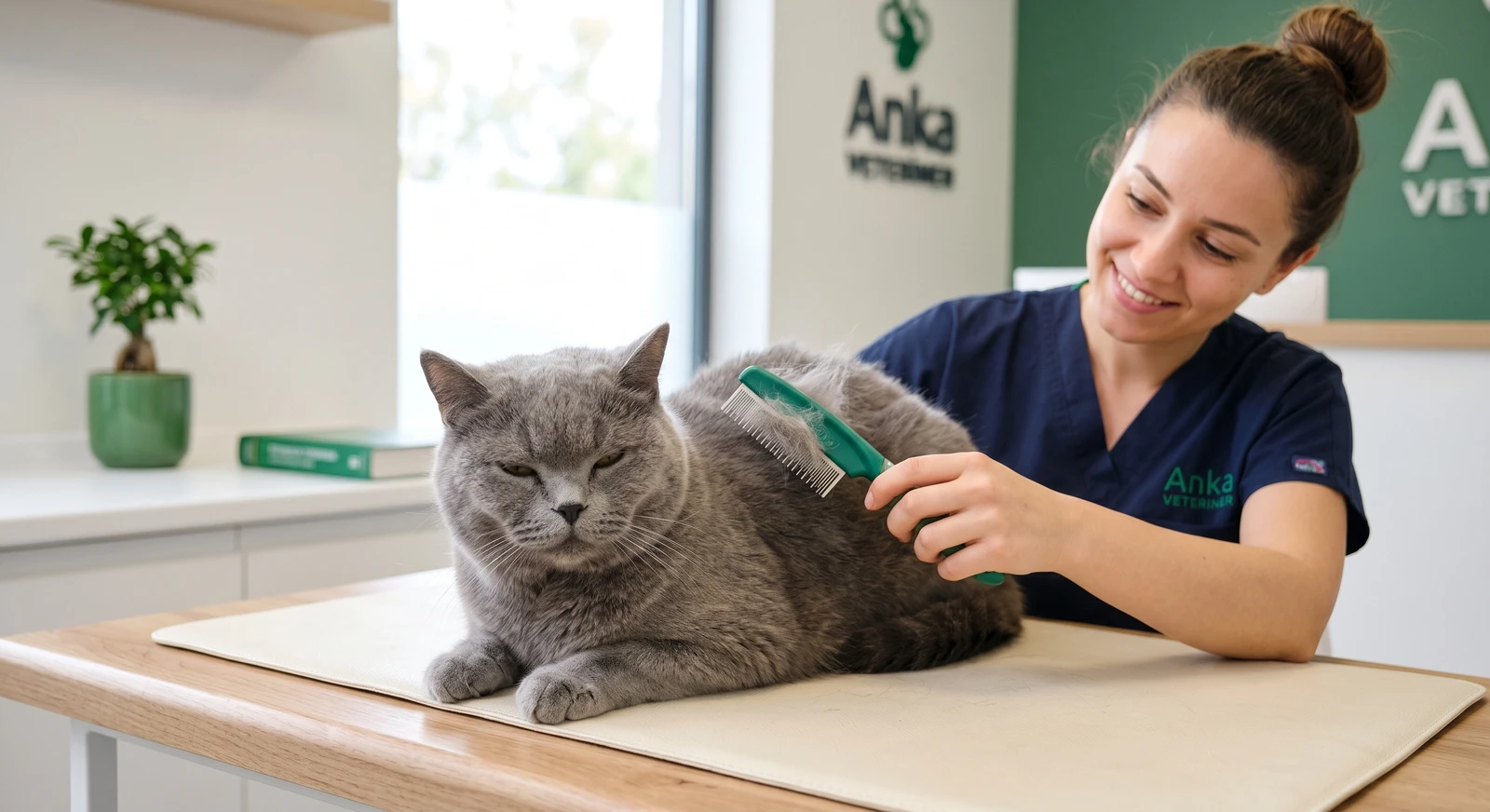
If a cat leaves behind a small tuft of fur every time they curl up in a lap or get off a favorite sofa, cleaning up pet hair at home may have turned into an endless chore. Undoubtedly, one of the most curious topics for cat owners and the most frequently consulted issue with veterinarians is this never-ending shedding. “What should be done for excessive cat shedding?” is a frequently raised concern at the clinic, especially during the spring and summer months.
In a climate like Mersin, where heat and humidity peak in the summer and winters are extremely mild, a cat’s coat quickly reacts to these changing weather conditions. Indoor air conditioning and heating systems can make their biological clocks, which perceive the seasons, even more complicated. At Anka Veterinary Clinic in Mersin Mezitli, the issue of cat shedding is evaluated from a scientific perspective, detailing when this shedding is a normal renewal process and when it indicates a health problem. Managing this process with simple but effective solutions that can be applied at home is much easier than it seems.
What You Will Learn in This Guide
- 1Biological and Seasonal Shedding in Cats
- 2Shedding Condition Assessment
- 3Regional Hair Loss in Cats and Underlying Causes
- 4Proper Brushing Techniques and Equipment Selection
- 5The Role of Nutrition on Coat Health
- 6Stress Management and Environmental Factors
- 7Dermatology and Diagnostic Procedures at Anka Veterinary
- 8Feline Skin Health and Appointment Planning in Mersin Mezitli
- 9Sources and Notes
- 10Frequently Asked Questions
01Biological and Seasonal Shedding in Cats
A cat’s coat not only protects them from external factors and temperature changes but also acts as a sensory shield. Every single hair follicle has its own growth, resting, and shedding phase. This cycle, much like hair shedding in humans, is a physiological necessity that allows dead hair to be shed and new, healthy hair to grow underneath.
Cats living in their natural habitats shed their thick winter coats in the spring to transition to a finer summer coat. In the autumn, they shed this fine hair and grow a dense coat that provides insulation against the winter cold. However, our friends who live entirely indoors, spending their winters in heated environments and their summers in air-conditioned coolness, cannot fully experience this seasonal cycle. This causes them to enter a constant, year-round shedding tendency. If your cat’s hair is shedding evenly everywhere and there is no visible thinning on their skin, this is usually a natural process.
02Shedding Condition Assessment
| Condition | Normal Stage (Seasonal/Physiological) | Stage Requiring Vet Examination (Pathological) | Points to Watch at Home |
|---|---|---|---|
| Shedding Pattern | Even, general thinning across the entire body. | Coin-sized, completely hairless, and round areas (localized bald spots). | Observe whether your cat is scratching frequently. |
| Skin Appearance | The skin under the coat looks clean, smooth, and healthy (pinkish-white). | Redness, flaking, crusting, sores, or pimple-like structures appear on the skin. | Part the fur slightly while brushing to examine the skin. |
| Itching Status | Routine daily grooming and mild scratching are present. | There is a tendency to scratch severely enough to injure themselves with their paws or teeth. | Focus on how much time your cat spends licking themselves during the day. |
| Hair Quality | The hair is soft and shiny; only weak, dead hairs are shed. | The hair has become dull, hardened, or brittle, and breaks easily. | Evaluate vitamin and omega deficiencies in their diet. |
Shedding Pattern
Skin Appearance
Itching Status
Hair Quality
03Regional Hair Loss in Cats and Underlying Causes
If your cat’s hair is shedding in patches at specific points rather than general thinning, leaving completely bare, bald areas (alopecia) on the skin, this indicates a pathological rather than physiological condition. Regional hair loss in cats can be a symptom of various health issues:
In such cases, professional veterinary support is necessary to pinpoint the underlying cause through Wood’s lamp examinations or skin scraping tests.
Fungal Infections: Ringworm (Microsporum canis, etc.), which is common in cats, especially in kittens or senior cats with weakened immune systems, creates coin-shaped, slightly flaky, hairless areas on the skin. In humid cities like Mersin, the ground is more favorable for fungal growth. We also shared detailed information on this topic in our article on [Mersin humidity and skin health](/blog/mersin-nemi-ve-deri-sagligi). Ectoparasites: Fleas, ticks, or mites (especially Notoedres or Otodectes) trigger severe itching in cats. Your friend may irritate the itchy area and pull out their hair with their teeth, creating regional bald spots. Allergies: Food sensitivities or environmental allergens (house dust, pollen) cause skin reactions in cats, just as they do in humans, paving the way for intense hair shedding and regional irritations.
04Proper Brushing Techniques and Equipment Selection
The most effective and natural way to reduce shedding in cats is regular brushing. A proper brushing routine collects weakened and dead hair before it scatters around the house; it also increases hair quality by ensuring the natural oils in the skin are evenly distributed to the coat.
One of the most frequently asked questions by cat owners is, “Which is the best cat hair removal brush?” For long-haired cats (Persian, Maine Coon, etc.), wide-toothed combs (slicker brushes) that prevent matting are ideal, while fine-toothed dense combs or special grooming gloves may be sufficient for short-haired cats. Professional brushes (deshedding tools) that gently remove dead hair from the undercoat layer provide great convenience during seasonal transitions. Brushing your cat at least 2-3 times a week, and daily in short sessions during shedding periods, will be your greatest ally in dealing with hair problems.
05The Role of Nutrition on Coat Health
Your friend’s coat is actually a mirror of their internal health and nutritional quality. Almost all cat hair is made of keratin, a type of protein. If your cat’s diet does not contain high-quality and sufficient protein, the hair quickly becomes dull, brittle, and the shedding rate increases.
In addition, Omega-3 and Omega-6 fatty acids are the most important components that strengthen the skin barrier and give the hair its natural shine. A quality cat shedding prevention plan always starts with the food bowl. If needed, salmon oil supplements recommended by your veterinarian or B-vitamin complexes that support skin and coat health can significantly reduce shedding. Furthermore, regular use of cat malt paste is indispensable for digestive system health, as it prevents the hair swallowed during grooming from forming hairballs in the stomach.
06Stress Management and Environmental Factors
Cats are extremely sensitive creatures that are tightly bound to routines. Even the slightest change in the home environment can cause them deep stress. Adding a new pet or baby to the house, moving, changing the location of the litter box, or increasing the noise level in the house raises your cat’s stress hormone (cortisol) levels.
A cat under chronic stress may begin to lick themselves obsessively as a psychological response (psychogenic alopecia). This over-grooming condition causes symmetrical, stripe-like hair loss, especially on the abdomen, inner thighs, and back. If you suspect that stress is the underlying factor in hair loss, providing your friend with safe hiding spots and environmental enrichment (toys, climbing areas) will help them relax.
07Dermatology and Diagnostic Procedures at Anka Veterinary
For cats showing signs of excessive shedding or itching, clinical procedures focus on finding the root cause rather than applying trial-and-error treatments. Thanks to our comprehensive dermatology and skin health evaluation, which we conduct with Wood’s lamp scans, microscopic skin scraping analyses, and, if necessary, nutritional elimination tests, we clinically clarify whether the problem is related to fungus, ectoparasites, hot spots, or allergies. In addition, with our general examination service to evaluate overall health, we find the underlying main cause and create a personalized, accurate treatment and nutrition plan.
08Feline Skin Health and Appointment Planning in Mersin Mezitli
Hair shedding is not just a cleaning issue; it is also a process that provides important clues about your friend’s overall health. If shedding continues severely despite improvements in home brushing and nutrition, or if you notice regional bald spots and redness on the skin, this condition requires a veterinary examination.
Mersin Ankavet provides precise diagnostic assessments and updated treatment protocols for dermatological disorders in cats and dogs. Consultation and appointment details can be obtained at any time.
Short Summary
Hair shedding in cats is a natural renewal process encountered, especially during seasonal transitions, and it is impossible to stop it completely. However, it is possible to minimize this shedding with proper brushing techniques, an Omega-3 supported balanced diet, and a stress-free home environment.
If the shedding has turned into regional bald spots (alopecia), skin redness, or excessive itching, this may indicate a dermatological disorder such as fungus, parasites, or allergies. In such different clinical pictures, getting professional veterinary support without delay ensures that the process is brought under control before it worsens.
Note from Mersin Ankavet
Shedding in cats can be seasonal, but it can also signal an underlying systemic or dermatological issue. You can consult our veterinarians to protect your companion’s skin and coat health.
Book AppointmentRelated Blog Posts
Sources and Notes
- Cornell Feline Health Center - Feline Skin Diseases and Hair Loss
- Cornell Feline Health Center - Cats That Lick Too Much (Psychogenic Alopecia)
- Merck Veterinary Manual - Feline Hair Loss (Alopecia) Guide
This content has been prepared for informational purposes and does not replace a professional veterinary examination.
Frequently Asked Questions
Can hair shedding in cats be completely prevented?
No, it is biologically impossible for a healthy cat not to shed at all. Shedding is a physiological need that allows dead hair to be removed and the skin to breathe. Only with proper care and nutrition can the amount of shed hair be reduced to levels that do not cause discomfort.
Do cat grooming gloves work?
Yes, they are quite useful, especially for short-haired cats, to collect loose hair on the surface that is about to shed. Since the feeling of being stroked with a glove relaxes cats, it is a great alternative for getting cats who resist normal brushes used to grooming.
My cat’s hair is shedding regionally, what should I do?
If the hair is completely opening up (balding) at certain points instead of general thinning, you should avoid intervening at home. This is usually a sign of fungus, ectoparasites, or an allergy and requires direct veterinary examination.
Do cat malt pastes reduce hair shedding?
The main task of cat malt pastes is not to reduce hair shedding; it is to prevent the dead hair swallowed while licking from forming hairballs in the stomach and causing blockages, and to ensure that this hair is safely excreted through feces.
Does frequent bathing prevent cat hair shedding?
No, on the contrary, it can increase it. Cats are creatures that clean themselves by licking, and frequent bathing disrupts the natural oil (sebum) layer on their skin. This can lead to dry skin, lifeless hair, and increased shedding. Cats should not be bathed unless there is a medical necessity.
Which vitamins are good for feline coat health?
Biotin (Vitamin B7), Zinc, and especially Omega-3 / Omega-6 fatty acids are the most basic components that nourish the hair follicles and strengthen the skin barrier. However, to avoid unnecessary vitamin loading, supplement products should always be used under the recommendation of your veterinarian.
Related Service
Dermatology and Skin Health
For clinical evaluation and a care plan, review the service page connected to this guide.
View ServiceMedical Information Note
This content is for general information only. It does not replace a veterinary examination, diagnosis, treatment, or specific medication/food recommendations. A veterinary examination and individual assessment are required for your pet’s health. In case of emergency symptoms, please contact the nearest open veterinary clinic.
MERSIN MEZITLI PET CARE
Need Professional Guidance for Your Pet?
Are you in Mersin Mezitli? If you notice these symptoms or have any concerns about your pet’s health, consult our AnkaVet veterinarians immediately. English and Russian-speaking support is available!
Your pet deserves quality care.
Get in touch today to discuss your pet’s health or schedule a consultation.