Winter Is Around the Corner: Six Ways to Support Joint Health in Senior Cats and Dogs
Sedat Çapanoğlu, DVM
Anka Veterinary Clinic
Last updated:
Mustafa Kemal University graduate (2018). After clinical experience in Mersin and a short period in municipal shelter practice, he takes an active role in surgery, emergency care, dental health, and diagnostics.
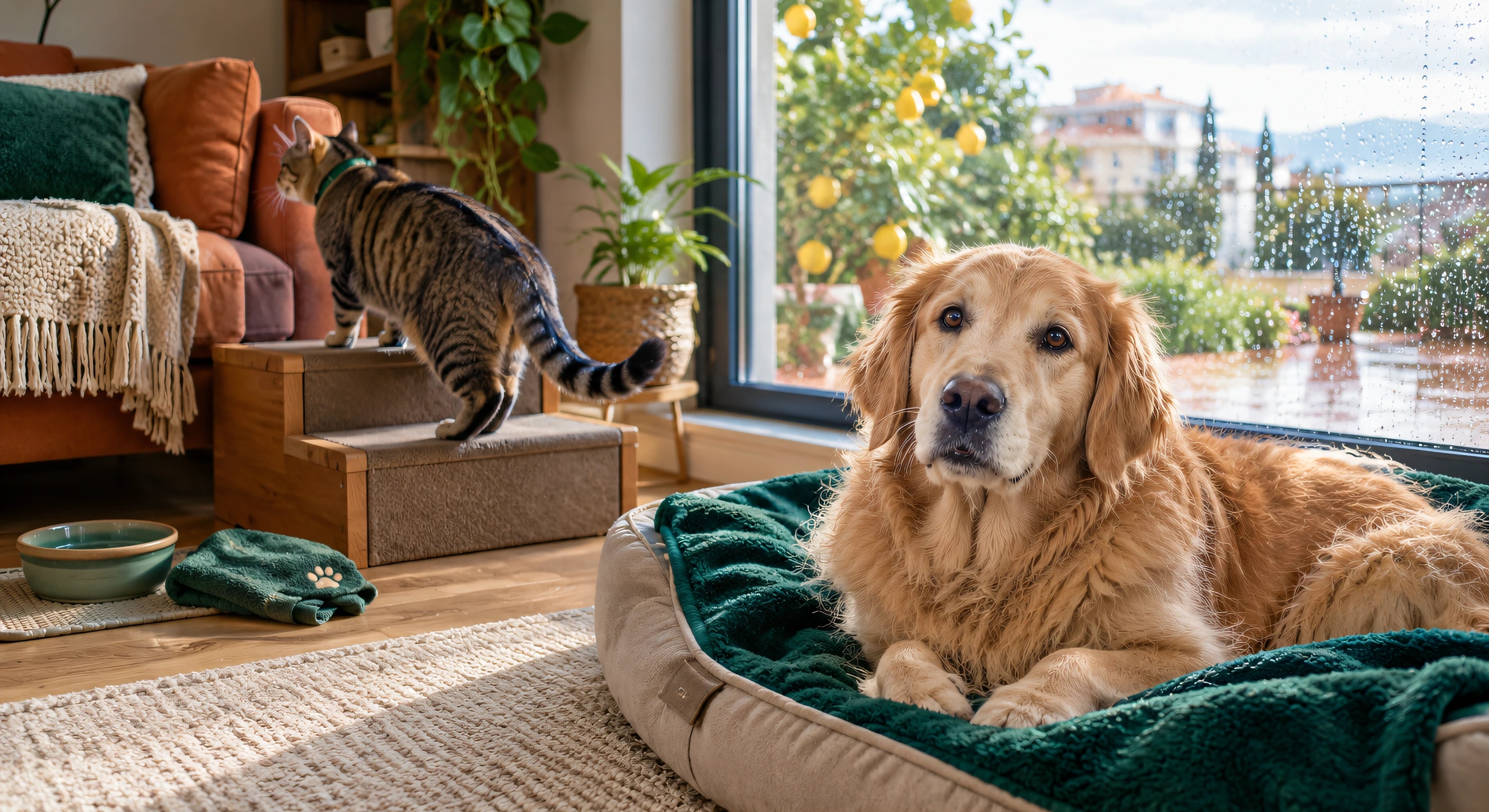
As autumn progresses, daylight hours shorten, and the time spent outdoors may decrease on rainy days. You might notice your senior companion showing stiffness during their first morning steps, your dog hesitating at the bottom of the stairs, or your cat no longer jumping onto the sofa they used to reach with ease. Joint pain is one possible cause of these changes. However, these signs alone do not confirm osteoarthritis. Muscle, nerve, paw, and other health problems can also affect mobility.
Although many people believe weather worsens joint pain, this link has not been firmly established in pets. In a study of 62 dogs diagnosed with osteoarthritis, daily activity measurements were statistically associated with average temperature and daylight. However, these factors explained less than one percent of the variation in activity. Humidity, precipitation, high and low temperatures, and barometric pressure were not significantly associated with activity. Weather conditions were also not statistically associated with owner-reported pain. The study included dogs only, not cats. Its findings should not be generalized to every animal. Some owners may notice stiffness more on certain days. Keeping a record of these observations can help your veterinarian assess your pet.
This guide explains how to monitor your senior pet’s movement during seasonal transitions, reduce the risk of falls and burns at home, and recognize signs that need veterinary attention. For more about osteoarthritis, read our guide to joint health in cats and dogs.
What You Will Learn in This Guide
01Joint Problems and Seasonal Changes
Osteoarthritis is a chronic disease that causes changes over time in joint cartilage, bone, and surrounding tissues. The changes and the discomfort an animal experiences vary from patient to patient. Some pets move more stiffly after resting, while others show less interest in stairs, jumping, or long walks. Signs can change during the day. There is not enough evidence to identify cold or dampness alone as the cause.
Whatever the weather, reduced movement can affect muscle strength and conditioning. Walks may become shorter on rainy days, and indoor play may decrease. If this continues, the muscles that support the joints can lose strength. Too much exercise or activity that does not suit the animal can also increase pain. The goal is not to stop movement altogether. It is to maintain regular, low-impact activity as recommended by a veterinarian.
Weight monitoring is also part of joint care. If activity decreases while calorie intake exceeds energy use, weight gain may follow. The load extra weight places on joints varies with species, body frame, and health status. Rather than judging by appearance alone, plan regular weighing and body-condition monitoring with your veterinarian. You can also read our guide to obesity and weight management in cats and dogs.
Older age alone does not mean osteoarthritis. Developmental joint problems or past injuries can affect younger animals too. Not every aging pet develops noticeable pain. What matters in daily life is a change from your companion’s usual movement. You may see a dog that normally gets up easily make several attempts, a cat lose interest in a favorite game, or a pet develop changes in litter-box habits. Note these changes. Do not test your pet at home by pressing on joints, pulling limbs, or forcing them up stairs.
02Winter Care Table
| Care area | Autumn preparation (October-November) | Winter routine (December-February) | When to contact a veterinarian |
|---|---|---|---|
| Bedding and rest | Move the bed to a dry, accessible place away from drafts. | Keep it dry and make sure your pet can get in and out comfortably. | If you notice restlessness at rest or nighttime whining. |
| Flooring and access | Place non-slip mats on slippery floors. Make elevated spots easier to reach. | Dry paws after rain and keep walkways dry. | Seek urgent care after a fall, if your pet cannot use a limb, or cannot stand. |
| Weight and nutrition | Review portions and body condition with your veterinarian. | Track weight regularly. Include treats in the daily food allowance. | If weight changes markedly over a short period or appetite decreases. |
| Movement | Set an appropriate exercise plan with your veterinarian. | Maintain short, regular activities suited to your pet’s comfort. | If limping after activity continues or worsens. |
| Paw and coat care | Check long fur between the paw pads and trim it if it contributes to slipping. | Wash and dry paws thoroughly after muddy walks. | If you notice redness, sores, or marked sensitivity. |
| Supplements and heating | Review products and heating devices with your veterinarian. | Use only recommended products as directed. Do not leave heating devices unattended. | If vomiting, diarrhea, or loss of appetite follows a medication or supplement. |
Bedding and rest
Flooring and access
Weight and nutrition
Movement
Paw and coat care
Supplements and heating
03What to Watch for in Changes in Movement
If your dog hesitates on stairs, falls behind on walks, or waits for help to get into the car, these changes may reflect joint pain or another mobility problem. If your cat visits high places less often, hesitates before entering the litter box, grooms less, or reacts differently to touch, note those changes too. None of these signs confirms osteoarthritis on its own. Your veterinarian will assess possible causes during an examination.
Some owners say their pets seem stiffer on cold or rainy days. This observation can be useful. It does not prove that weather causes pain. Keep a daily log of movement, interest in play, stair use, sleep, and appetite. These notes can help explain when the signs occur during an examination.
If possible, record the date, weather, approximate walk duration, and when you first noticed a sign. Instead of writing “today was bad,” describe what you saw: “After resting, the first steps were slow, then the usual pace returned.” A short video of your dog walking or your cat attempting a jump can also help. Do not provoke painful movement to record it. Film only behavior that occurs naturally.
If your pet cannot stand or walk without help, will not use a limb, appears to be in severe pain, or starts limping after a serious injury, seek urgent veterinary care without delay. For milder signs, do not wait for an arbitrary number of days. Contact your clinic for guidance. Mention any worsening signs.
Do not give human pain medicines or leftover prescriptions on your own. Some medicines can be toxic to cats and dogs. They can also interact with other treatments or worsen kidney, liver, or gastrointestinal problems. If pain control is needed, a veterinarian can select an option after considering species, weight, other conditions, and current medicines.
04Six Steps for a Safer Winter at Home
- Prepare a dry, comfortable bed: Place it away from drafts where your pet can reach it without difficulty. Keep the surrounding area dry.
- Use space heaters and heating pads under separate safety rules: Place a space heater on a stable surface where it cannot tip over. Keep cords, curtains, bedding, and other flammable items out of reach. Do not leave it running unattended. If an electric heating pad is necessary, choose one designed for pets, follow its instructions, and use the lowest heat setting. Cover the warm surface with several layers so your pet is not in direct contact with it. Always supervise use and make sure your pet can move to a cooler area. Never leave an older or mobility-impaired pet alone on a pad or confined with one in a crate.
- Reduce slippery surfaces: Put washable, non-slip mats on laminate, marble, and other slick floors. Keep the areas around food and water bowls dry.
- Make elevated places easier to reach: Use a stable ramp or low steps for a pet that struggles to reach a sofa or bed. Stay nearby during the first attempts.
- Review food portions as activity changes: If activity decreases, assess portions with your veterinarian using weight and body condition. Do not sharply reduce food on your own.
- Check paws after walks: Rinse away mud with lukewarm water and dry the paws, especially between the toes. Contact your clinic if you notice redness or sores.
05Joint Health Follow-up in Mezitli, Mersin
Share movement changes you notice during seasonal transitions at a veterinary examination. Geriatric care and check-up screenings are available at Anka Veterinary Clinic in Mezitli, Mersin. The examination may include joint movement, gait, and general health. Imaging or laboratory tests may be planned when indicated. Follow-up frequency and next steps depend on the patient’s findings and the veterinarian’s plan. See our geriatric care service page for details.
Veterinary rehabilitation plans for selected patients may include controlled exercises, massage as part of rehabilitation, or low-level laser therapy (photobiomodulation). The method and expected benefit depend on the animal’s condition. These options do not replace medication and do not guarantee an outcome. Follow the plan made during the examination. Do not press on joints to massage them at home. An incorrect movement may increase pain.
Key Takeaways
Stiffness noticed around a seasonal change may point to a joint problem. Cold or dampness has not been established as its cause. Record changes in movement, reduce slip and fall risks, provide a dry resting area, and review weight and activity with your veterinarian. If your pet cannot use a limb or stand, has severe pain, or starts limping after trauma, seek urgent veterinary care.
A Note from Anka Veterinary Clinic
Notes about changes in movement and daily routines can help your veterinarian assess your pet during an examination.
Book an AppointmentRelated Blog Posts
References and Notes
- WSAVA Global Pain Council Guidelines: Degenerative Joint Disease Protocol
- COAST Development Group: International Consensus Guidelines for the Treatment of Canine Osteoarthritis
- AVMA: Senior Pet Care
- VCA: Are Heating Pads Safe for Pets?
- VCA Urgent Care: Pain or Limping
- Katz et al. (2017): Environmental Factors, Activity Measurements, and Owner-Reported Pain in 62 Dogs with Osteoarthritis
This content has been prepared for informational purposes and does not replace a professional veterinary examination.
Frequently Asked Questions
My senior dog hesitates before climbing stairs. Does this mean osteoarthritis?
Hesitating on stairs can occur with joint pain or other mobility problems. It does not confirm osteoarthritis by itself. Seek emergency veterinary care if your dog cannot use a limb or cannot stand or walk without help.
My cat lies on the radiator. Is this a sign of joint pain?
Seeking a warm place is often normal cat behavior. Contact your veterinarian if it also avoids jumping or movement, or grooms less than usual.
Does joint pain definitely get worse when the weather turns cold?
This effect has not been established in companion animals. Some owners notice stiffness more on certain days, but that observation alone does not show that cold or humidity causes pain.
Should I stop exercising my pet in winter?
No. The type and duration of exercise should suit your pet’s condition. Regular, low-impact activity can support muscle strength and mobility. Follow a plan tailored by your veterinarian.
Can I use a heating pad for my pet?
If needed, use only a pet-specific pad on its lowest setting, cover the warm surface with several layers, and supervise your pet. Your pet must be able to move away. Do not confine a senior or mobility-impaired pet with a heating pad.
Should I change my pet’s supplement dose in winter?
No. The product, dose, and schedule depend on your veterinarian’s plan. Do not change the dose or frequency on your own.
Medical Information Note
This content is for general information only. It does not replace a veterinary examination, diagnosis, treatment, or specific medication/food recommendations. A veterinary examination and individual assessment are required for your pet’s health. In case of emergency symptoms, please contact the nearest open veterinary clinic.
MERSIN MEZITLI PET CARE
Need Professional Guidance for Your Pet?
Are you in Mersin Mezitli? If you notice these symptoms or have any concerns about your pet’s health, consult our AnkaVet veterinarians immediately. English and Russian-speaking support is available!
Your pet deserves quality care.
Get in touch today to discuss your pet’s health or schedule a consultation.