Dog Head Shaking Causes and Ear Health Guide
Şanssım Çapanoğlu, DVM
Anka Veterinary Clinic
Last updated:
Mustafa Kemal University graduate (2019). After internships in Adana and Izmir, she worked in clinical practice in Adana and focuses on preventive medicine and behavior.
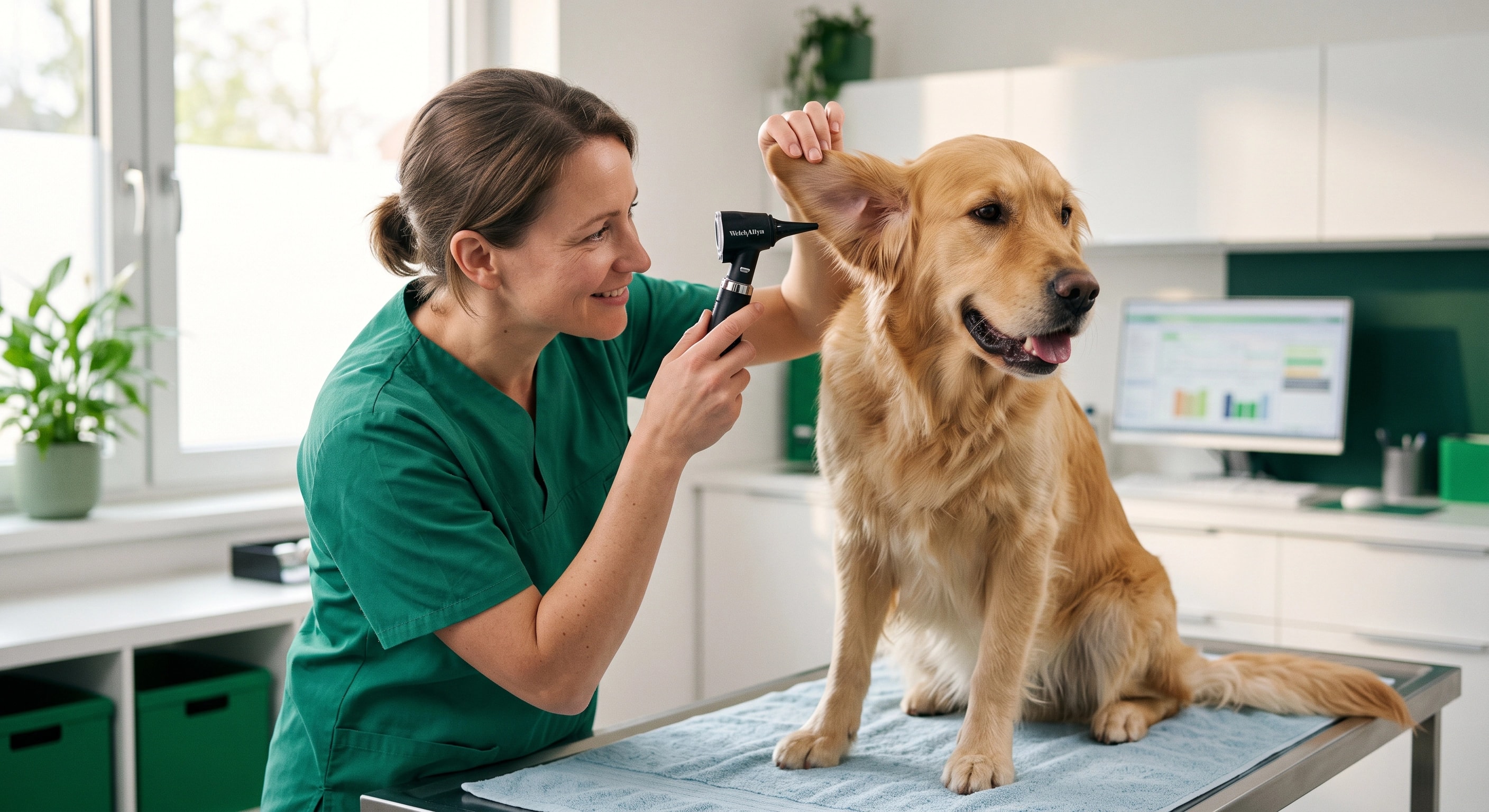
Witnessing your beloved companion wake up suddenly from a peaceful evening sleep, vigorously flapping their ears and repeatedly shaking their head from side to side is a very familiar scenario for most dog owners. That characteristic sound produced by rhythmic ear flapping is usually the first indicator that the dog is trying to relieve a sense of discomfort.
Particularly in coastal cities with high humidity levels like Mersin and Mezitli, canine ear infection cases are encountered quite frequently. Warm and humid weather creates a perfect breeding ground for bacteria and fungi inside dogs' dark, low-airflow ear canals. Dog head shaking should not be viewed merely as a simple itch; it must be considered that it might be a harbinger of an underlying, progressive ear infection or a sneaky foreign body lodged from the outside. In this guide, the medical causes behind the complaint “my dog is shaking its head a lot”, danger signals to watch out for, and professional steps to protect ear health are comprehensively examined.
What You Will Learn in This Guide
- 1When Is Head Shaking Normal in Dogs?
- 2Symptom and Condition Comparison in Ear Problems
- 3Symptom and Condition Comparison in Ear Problems
- 4The Most Common Causes of Constant Head Shaking
- 5Danger Signals to Watch Out For and Aural Hematoma Risk
- 6Home Environment Arrangements and Ear Care Rules
- 7Ear Examination and Treatment Approach in Mersin Mezitli
- 8Sources & Notes
- 9Frequently Asked Questions
01When Is Head Shaking Normal in Dogs?
Head shaking in dogs does not always indicate a serious medical problem. Shaking the head vigorously after coming out of puddles, swimming in the sea, or taking a bath to expel water trapped in the ear canal is considered a completely natural and physiological reflex. Additionally, single, short-lived shaking movements observed after waking up or when a light particle of dust touches the ear are accepted within normal grooming behavior.
However, the boundary between normal and abnormal is drawn by the continuity and severity of this movement. If a dog stops multiple times during the day to shake its head, whines while trying to scratch its ear with its paw, holds its head tilted to one side, or rubs its ear flap against carpets and furniture, that is the point where physiological reflex ends and a medical process requiring a veterinary examination begins.
02Symptom and Condition Comparison in Ear Problems
Accurately interpreting clinical symptoms accompanying the complaint of head shaking is crucial for understanding the source of the problem. Basic ear problems are classified as follows:
02Symptom and Condition Comparison in Ear Problems
| Symptom & Condition | Discharge & Odor Type | Urgency Level | Home Care Focus |
|---|---|---|---|
| Otitis Externa (Outer Ear Infection) | Yellowish/brown discharge, heavy sour yeast odor. | Moderate | Monitor scratching frequency and ear redness. |
| Foreign Body (Foxtail Grass) | Sudden onset bloody or clear discharge. | High (Emergency) | Sudden and non-stop head shaking pattern is observed. |
| Ear Mites (Otodectes cynotis) | Dry, dark, coffee-ground-like debris. | Moderate | Severe itching and risk of transmission to other pets. |
| Aural Hematoma (Blood Accumulation) | No discharge, ear flap is warm, firm, and swollen like a balloon. | High | Caused by ruptured blood vessels; requires urgent medical drainage. |
Otitis Externa (Outer Ear Infection)
Foreign Body (Foxtail Grass)
Ear Mites (Otodectes cynotis)
Aural Hematoma (Blood Accumulation)
03The Most Common Causes of Constant Head Shaking
The pattern of constant head shaking is usually an effort to relieve irritation and pain developing in the ear canal. The most common clinical issues leading to this condition are listed below:
- Ear Infections (Otitis Externa and Media): External and middle ear infections are the most common cause of head shaking. Particularly in floppy-eared breeds (Cocker Spaniel, Golden Retriever, etc.), ear ventilation is inadequate, accelerating the growth of yeast (Malassezia) and bacteria in the ear canal under the influence of heat and moisture. This leads to severe itching, redness, and inflammatory discharge.
- Foreign Bodies (Foxtail Grass Hazard): During spring and summer, foxtail grass commonly found in Mersin parks and coastal areas has an arrow-like structure that easily enters dogs' ear canals. These grasses move in a single direction, reaching as far as the eardrum and causing the dog to shake its head suddenly in pain.
- Ear Mites (Otodectes cynotis): Ear mites, caused by microscopic parasites settling in the ear canal, create intense itching. They typically manifest as dry, dark brown debris and are diagnosed much more frequently in puppies.
- Allergic Reactions: Food allergies or environmental allergens (pollen, dust mites, etc.) frequently target the ear skin in dogs, causing inflammation and redness. These irritations developing on an allergic background create a suitable environment for secondary infections, making head shaking a chronic behavior.
04Danger Signals to Watch Out For and Aural Hematoma Risk
Knowing when the complaint of head shaking crosses a critical threshold is of great importance. If a dog holds its head constantly tilted to one side (head tilt), exhibits aggression due to pain when the ear flap is touched, or emits a foul odor resembling rot from the ear, the integrity of the eardrum should be considered compromised.
One of the largest complications caused by constant and violent head shaking is Aural Hematoma (Ear Flap Hematoma). The rapid and forceful flapping of the ear pinna causes the capillaries between the cartilage and skin to rupture. Leaked blood accumulates in the ear flap, causing the ear to become warm, firm, and swollen like a balloon. This condition, which is extremely painful, should not be expected to heal on its own; the blood must be drained through surgical or medical interventions.
05Home Environment Arrangements and Ear Care Rules
The foundation of maintaining ear health lies in moisture and hygiene control. Water remaining in the ear canals after bathing or swimming in the sea/pool is a trigger for infections. Following water contact, the inner surfaces of the ear flap and the canal entrance should be gently dried with a dry cotton pad or a soft cloth.
For routine ear cleaning, it is recommended to use only neutral pH-balanced cleaning solutions suitable for canine ear flora, obtained upon veterinary recommendation. After instilling the solution into the ear canal, gentle massage is applied to the base of the ear to loosen debris, and the emerging dirt is wiped away with a cotton pad. Since excessive and unnecessary cleaning of a healthy dog’s ear also disrupts the natural flora, care frequency should be determined by a veterinarian.
06Ear Examination and Treatment Approach in Mersin Mezitli
Ear diseases are insidious conditions that, if left untreated, can progress to permanent hearing loss. At Anka Veterinary Clinic in Mersin Mezitli, a detailed general examination process is conducted for our patients brought in with complaints of head shaking and ear discharge.
First, the ear canal and eardrum are examined using an otoscope (illuminated ear examination device). When deemed necessary, swab samples taken from inside the ear are examined under a microscope to identify the root cause of the problem (bacteria, yeast, or parasites). In advanced foxtail grass cases or severe hematomas, surgical or medical interventions meeting emergency and intensive care standards are applied. Thanks to these specific treatment protocols planned for the root cause of the issue, the risk of recurring infections is minimized, allowing our companions to return to their healthy days. If you would like to review other steps to consider after swimming, you can also check our article on seawater toxicity and ear cleaning.
Summary
Constant head shaking and ear scratching in dogs are primary indicators of various medical problems such as ear infections (otitis), foreign body penetrations, ear mites, or allergic reactions. These risks are known to be significantly higher in dogs living along humid coastal areas.
Attempting to intervene at home with harmful substances like cotton swabs, vinegar, or alcohol in these painful conditions is strictly discouraged. It should be remembered that severe head shaking can lead to cartilage bleeding (hematoma) in the ear flap. The fundamental solution is professional veterinary treatment targeting the root cause through otoscopic examination and microscopic evaluation.
Note from Anka Veterinary Clinic
If your dog is constantly shaking its head or refuses to have its ears touched, it is recommended to get an expert veterinary evaluation without delay.
Schedule an AppointmentRelated Blog Posts
Sources & Notes
- VCA Animal Hospitals - Otitis Externa (Ear Infections) in Dogs
- American Kennel Club (AKC) - Dog Ear Infections: Symptoms, Causes, and Treatment
- Merck Veterinary Manual - Ear Infections and Otitis Externa in Dogs
This content has been prepared for informational purposes and does not replace a professional veterinary examination.
Frequently Asked Questions
Is it safe to use cotton swabs (Q-tips) for cleaning a dog’s ears?
No, using cotton swabs for dog ear cleaning is strictly discouraged. Q-tips push debris and inflammation deeper instead of removing them, causing eardrum damage and worsening the condition.
Can I put vinegar or alcohol in my dog’s ear at home?
Using substances like vinegar, alcohol, or hydrogen peroxide causes severe burns and irritation to the ear mucosa. Instilling such liquids at home should be avoided; only veterinarian-recommended neutral solutions should be used.
What causes ear hematoma (aural hematoma) in dogs?
Aural hematoma occurs when a dog shakes its head violently and continuously due to itching or pain, causing the capillaries in the ear flap to rupture and blood to pool between the cartilage layers.
Why does my dog’s ear infection keep recurring?
Recurrent ear infections usually indicate an underlying undiagnosed food or environmental allergy, incomplete treatment cycles, or anatomically narrow/poorly ventilated ear canals in the dog.
When is head shaking considered an emergency clinical case in dogs?
If head shaking starts suddenly and non-stop (suspected foreign body), if the dog holds its head constantly tilted to one side (head tilt), or if there is severe pain reaction when the ear is touched, the situation should be treated as an emergency.
How should a dog’s ears be dried after swimming in the sea or pool?
After swimming or bathing, the inner parts of the ear flap should be gently wiped dry with a soft cotton pad or dry towel to absorb moisture. Cotton should never be pushed into the canal to prevent water from being driven deeper.
Related Service
Emergency and Intensive Care
For clinical evaluation and a care plan, review the service page connected to this guide.
View ServiceMedical Information Note
This content is for general information only. It does not replace a veterinary examination, diagnosis, treatment, or specific medication/food recommendations. A veterinary examination and individual assessment are required for your pet’s health. In case of emergency symptoms, please contact the nearest open veterinary clinic.
MERSIN MEZITLI PET CARE
Need Professional Guidance for Your Pet?
Are you in Mersin Mezitli? If you notice these symptoms or have any concerns about your pet’s health, consult our AnkaVet veterinarians immediately. English and Russian-speaking support is available!
Your pet deserves quality care.
Get in touch today to discuss your pet’s health or schedule a consultation.