Recurrent Ear Infections in Dogs: Underlying Causes and Long-Term Management
Şanssım Çapanoğlu, DVM
Anka Veterinary Clinic
Last updated:
Mustafa Kemal University graduate (2019). After internships in Adana and Izmir, she worked in clinical practice in Adana and focuses on preventive medicine and behavior.
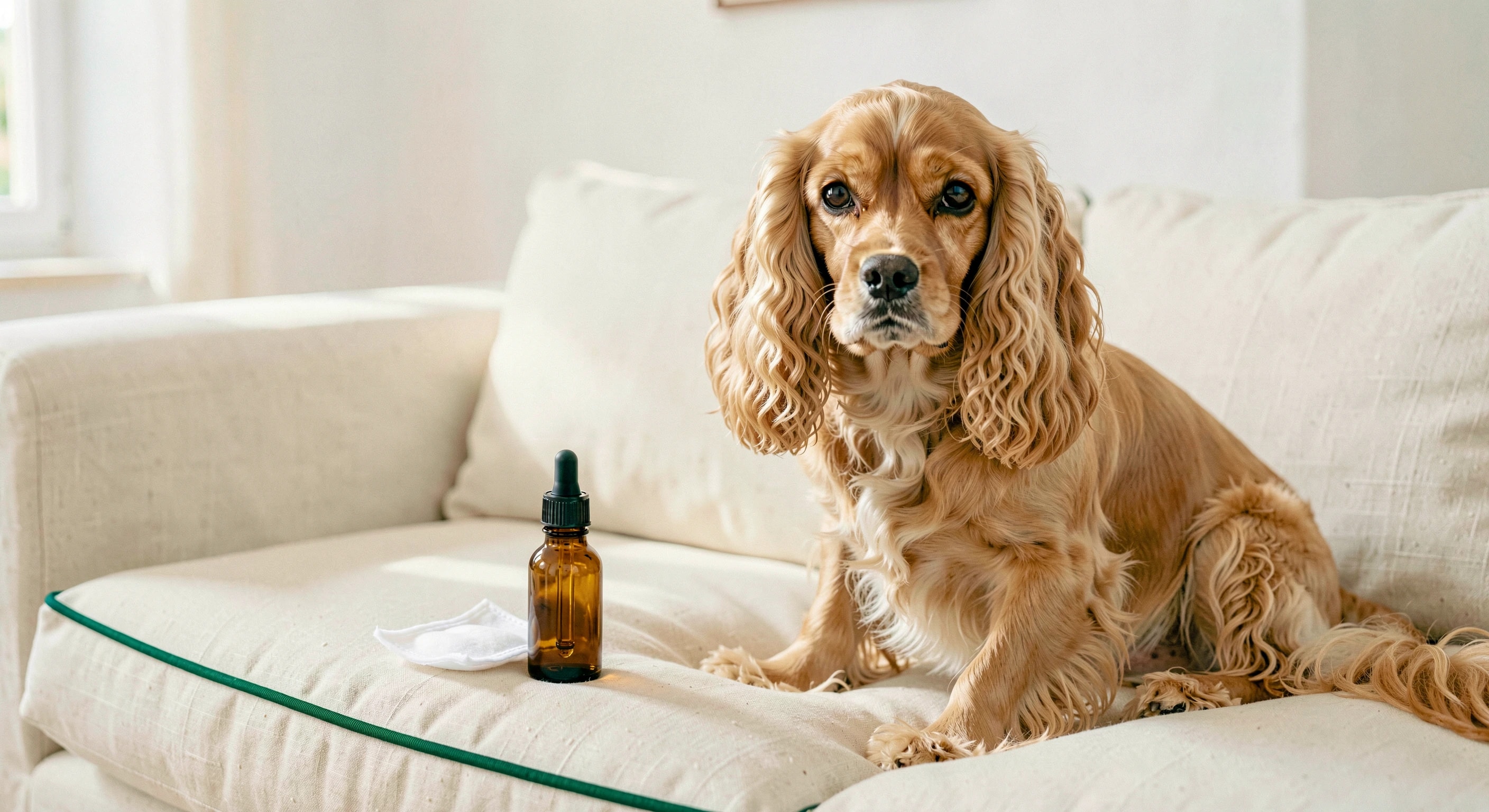
You administer the prescribed ear drops, and within a few days your dog stops shaking its head while the redness fades. You breathe a sigh of relief. Yet barely three weeks later, that familiar sour odor returns and your dog starts rubbing its ear against the carpet once again.
The problem is rarely that the infection cannot be cleared. An ear infection is seldom an isolated illness; it is usually an outward sign of a deeper, unaddressed primary issue. Until that cause is found and managed, the canal will keep flaring up. This guide explains the cycle, the diagnostic steps that matter, and the home care that actually lowers the risk of relapse.
What You Will Learn in This Guide
- 1What Is Recurrent Otitis and How Does Canine Anatomy Complicate It?
- 2The Real Culprit: Allergies and Other Primary Triggers
- 3Cause, Clue, and Approach
- 4Hormonal Imbalances and Structural Risk Factors
- 5Common Treatment Errors and Resistant Microbes
- 6Diagnostic Steps and the Veterinary Approach
- 7Home Care, Emergencies, and Surgical Options
- 8References and Notes
- 9Frequently Asked Questions
01What Is Recurrent Otitis and How Does Canine Anatomy Complicate It?
Recurrence, persistence despite treatment, or relapse shortly after stopping medication suggests that an underlying cause is still present. This pattern is evaluated as chronic or recurrent otitis; the number of infections per year alone does not establish the diagnosis. Understanding why requires a look at canine anatomy. While the human ear canal runs in a relatively straight line inward, a dog's canal forms a distinct "L" shape. The vertical canal descends from the opening, makes a sharp turn, and continues as the horizontal canal toward the eardrum.
This anatomical elbow traps moisture, wax, and cellular debris deep inside. Drops applied casually from above often fail to navigate the turn and never reach the horizontal canal. Poor air circulation then creates a warm, dark microclimate where bacteria and yeasts multiply quickly. The structure itself makes even minor irritation prone to escalating into a full infection.
02The Real Culprit: Allergies and Other Primary Triggers
Microorganisms in the ear canal are usually opportunists that expand after the local balance breaks down. The force driving that breakdown is very often an allergy. Environmental triggers such as dust mites, pollens, and mold spores, along with dietary protein sensitivities, keep the immune system in a constant state of irritation. Because the canal is lined with skin, it responds directly: the tissue swells, cerumen glands overproduce wax, and the protective barrier weakens. A meaningful proportion of dogs with recurring ear disease have an undiagnosed atopic dermatitis or food reaction behind the problem.
Local factors can start the cycle as well. Grass awns caught during walks, ear mites, and water left in the canal after swimming all accelerate inflammation. A common mistake is trying to clean the ear with cotton swabs. Swabs do not remove debris; they pack wax deeper into the elbow, against the eardrum.
03Cause, Clue, and Approach
The table below summarizes common causes of recurrent ear problems and the first approach to each.
| Cause | Typical Clue | Approach |
|---|---|---|
| Environmental Allergy (Atopy) | Seasonal flare-ups, paw licking, red skin on the belly | Reducing exposure and managing the allergy with veterinary guidance |
| Food Sensitivity | Year-round itching, gas, and irregular stool consistency | A strict elimination diet supervised by a veterinarian |
| Ear Mites | Dark brown, coffee-ground-like dry discharge and intense itching | Parasitic treatment and checking all in-contact animals |
| Foreign Body (Grass Awn) | Sudden severe head shaking and acute distress in one ear | Otoscopic examination and removal by a veterinarian |
| Excess Moisture and Improper Cleaning | Moist odor after swimming, blockage after cotton-swab use | Keeping the ear dry and using the correct cleaning technique |
Environmental Allergy (Atopy)
Food Sensitivity
Ear Mites
Foreign Body (Grass Awn)
Excess Moisture and Improper Cleaning
04Hormonal Imbalances and Structural Risk Factors
Recurrent ear problems can also be associated with systemic endocrine disease rather than simple skin sensitivity. In middle-aged and older dogs, low thyroid function (hypothyroidism) can impair the skin's natural renewal. Hormonal disease such as hypothyroidism may predispose the skin and the ear canal's defense mechanisms to recurrent problems, but this relationship is not necessarily causal in every patient.
Breed characteristics and structural changes also play a major role:
- Heavy, pendulous ear flaps block airflow and trap moisture inside the canal.
- Dense hair growth inside the canal collects secretions and creates plugs.
- Repeated inflammation thickens the canal wall and narrows the opening (stenosis).
- Polyps or masses inside the canal obstruct airflow and prevent natural drainage.
In these cases, topical drops alone cannot provide lasting relief. Unless the structural narrowing or hormonal disorder is addressed, the ear cannot stay balanced.
05Common Treatment Errors and Resistant Microbes
Incomplete or improper treatment is another major contributor to chronic ear disease. Many owners stop the drops four or five days after the head shaking settles. But the disappearance of visible signs does not mean the microorganisms have been eliminated. Stopping early can allow the infection to persist or relapse within weeks. Not every recurrence reflects antibiotic resistance; allergies, structural narrowing, or inadequate cleaning can also sustain the cycle.
Common treatment errors include:
- Applying drops into a canal filled with thick discharge and pus, where the medication cannot reach the skin.
- Stopping the prescribed course early because the ear looks better.
- Using leftover drops from a previous episode without a diagnosis.
- Treating only the outer canal without checking whether the infection has reached the middle ear.
- Skipping the follow-up examination after the medication is finished.
These errors can promote resistance in some tougher bacterial strains. The canal tissue gradually thickens and may become too dense for medication to penetrate; recurrent cases therefore require investigation of the underlying cause.
06Diagnostic Steps and the Veterinary Approach
When an infection recurs, empirical treatment should stop. A successful approach starts with a systematic diagnostic protocol. The first step is otoscopic examination: the veterinarian inspects the depth of the canal, checks for foreign bodies, assesses narrowing, and confirms the eardrum is intact. This last point is critical, because many solutions can damage the inner ear and cause deafness if the membrane is perforated.
Next, a swab of canal discharge is examined under the microscope. Cytology shows within minutes whether yeast or bacteria predominate and which inflammatory cells are present. If infections are frequent or fail to respond to standard therapy, a sample is sent for culture and sensitivity testing so the right antimicrobial can be chosen. For a comprehensive assessment, owners can consult the team at Mersin Anka Veterinary Clinic and build a detailed plan that addresses the root cause. In advanced cases with suspected middle ear involvement, radiography may provide useful information, but computed tomography (CT) or magnetic resonance imaging (MRI) may be needed for detailed evaluation of the bony structures.
07Home Care, Emergencies, and Surgical Options
Good home care substantially lowers the risk of relapse. Use a veterinarian-approved cleanser appropriate for the condition of the eardrum. Fill the canal generously, then massage the base of the ear through the outer skin for twenty to thirty seconds. You may hear a soft squelching sound as the fluid moves within the canal. Let your dog shake its head, then wipe away what comes to the outer flap with gauze or cotton pads. Never insert an object into the canal. After swimming or bathing, gently dry the visible outer part of the ear flap; do not insert cotton or any object into the canal. Routine cleaning is not necessary for every healthy dog; frequency depends on ear conformation, wax production, and veterinary advice. In recurrent otitis, the veterinarian may recommend more frequent cleaning, while unnecessary over-cleaning can strip the protective lipid layer.
Some signs mark the limit of home care and require same-day veterinary assessment. If your dog will not let you touch the ear, cries out in pain, or holds the head persistently tilted to one side; if the blink reflex disappears, one side of the mouth droops, balance is lost, or involuntary eye movement (nystagmus) and vomiting appear, middle or inner ear involvement should be suspected. Sudden swelling of the ear flap, a blood-filled hematoma, or facial swelling also warrants urgent evaluation. If the ear is still worsening on the fifth or sixth day of treatment, with increasing odor, fever, or loss of appetite, a new examination is needed. Do not try new drops, oils, or cotton swabs at home in these situations; any product applied without knowing the eardrum's condition can deepen the damage.
If medical treatment, allergy management, and regular care have all been tried and the canal is permanently narrowed, calcified, or filled with scar tissue, surgery may be considered. Total ear canal ablation (TECA) removes the diseased canal. For dogs with chronic pain and an ear that no longer responds to medication, surgery can greatly reduce pain and improve quality of life; the decision is made with the veterinarian after assessing disease stage, the eardrum, and the middle ear.
Short Summary
Recurrent ear infections can reflect the shape of the canal as much as allergies, hormones, or structural disease. Drops quiet the symptoms; lasting relief requires finding the primary cause, treating for the correct duration and technique, scheduling follow-up checks, and caring for the ear gently at home. Never use cotton swabs inside the canal, and dry the ears after swimming. Seek veterinary care promptly for pain, head tilt, facial paralysis, or worsening despite treatment.
A Note from Anka Veterinary Clinic
Sharing the discharge you have noticed, your cleaning routine, and any drops used in previous treatments helps us identify why the infection keeps returning.
Book an AppointmentRelated Blog Posts
References and Notes
- Merck Veterinary Manual - Ear infections and otitis externa in dogs
- Merck Veterinary Manual - Otitis externa in animals
- VCA Animal Hospitals - Ear infections in dogs (otitis externa)
- American Kennel Club - Dog ear infections: symptoms, causes, and treatments
This content has been prepared for informational purposes and does not replace a professional veterinary examination.
Frequently Asked Questions
Why do ear infections keep coming back?
Recurring ear infections usually mean the underlying primary cause has not been treated. As long as allergies, parasites, hormonal imbalances, or anatomical narrowing persist, the canal environment will keep inviting microbial overgrowth.
Is every itchy ear an infection?
No. Itching does not always mean an active infection. It can be an early allergic reaction, a foreign body, or temporary irritation from water trapped in the canal before microbes have multiplied.
How often should a dog's ears be cleaned?
Routine cleaning is not necessary for every healthy dog; frequency depends on ear conformation, wax production, and veterinary advice. In recurrent otitis, the veterinarian may recommend more frequent cleaning, while unnecessary over-cleaning can disrupt the natural flora.
Should cotton swabs be used for ear cleaning?
Never insert cotton swabs into the ear canal. Swabs push wax and debris deeper into the L-shaped elbow, form a plug in front of the eardrum, and can trigger infection.
Should treatment stop as soon as the bottle runs out?
Treatment should continue for the duration set by the veterinarian. The decision to stop is made after a follow-up examination and, when needed, cytology results. An ear that looks clean on the outside does not by itself prove that the deeper infection has resolved.
What is the link between allergies and ear infections?
The ear canal is an extension of the skin. Allergic reactions to environmental triggers or food proteins cause swelling and excessive glandular secretions in the canal, creating a favorable environment for bacterial growth.
When is surgery necessary?
Surgery may be considered when chronic infection causes permanent thickening and closure of the canal, cartilage calcification, or deep middle ear damage that no longer responds to medical treatment.
Related Service
Dermatology and Skin Health
For clinical evaluation and a care plan, review the service page connected to this guide.
View ServiceMedical Information Note
This content is for general information only. It does not replace a veterinary examination, diagnosis, treatment, or specific medication/food recommendations. A veterinary examination and individual assessment are required for your pet’s health. In case of emergency symptoms, please contact the nearest open veterinary clinic.
MERSIN MEZITLI PET CARE
Need Professional Guidance for Your Pet?
Are you in Mersin Mezitli? If you notice these symptoms or have any concerns about your pet’s health, consult our AnkaVet veterinarians immediately. English and Russian-speaking support is available!
Your pet deserves quality care.
Get in touch today to discuss your pet’s health or schedule a consultation.