Basic Dog Training: Sit, Come, Stay, and the Right Timing for Rewards
Şanssım Çapanoğlu, DVM
Anka Veterinary Clinic
Last updated:
Mustafa Kemal University graduate (2019). After internships in Adana and Izmir, she worked in clinical practice in Adana and focuses on preventive medicine and behavior.
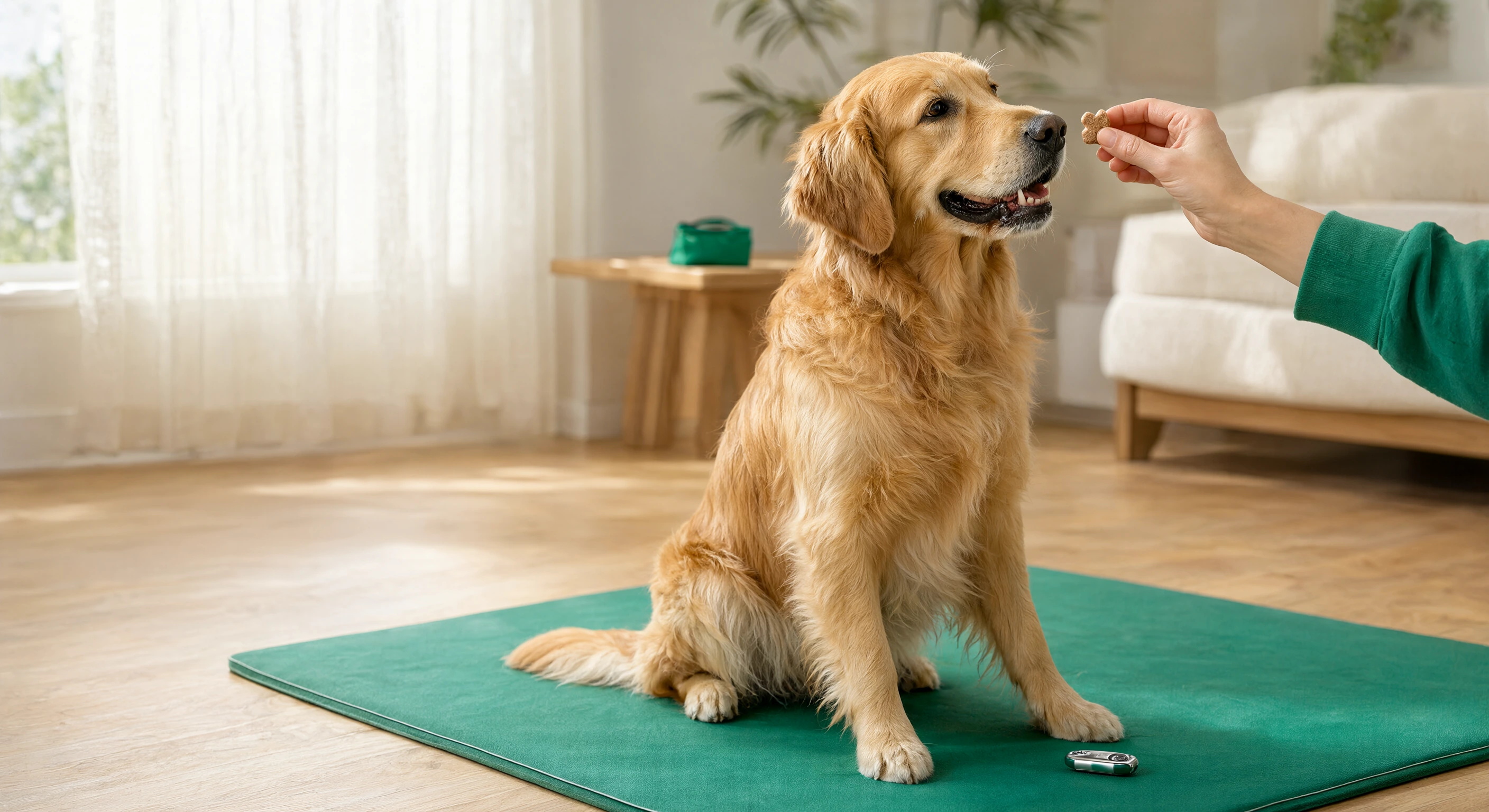
If your dog barks at the doorbell, spins in circles when the leash appears, or greets guests by racing through the living room, you are in good company. Most of these moments happen because the dog has not yet learned what to do instead. Training is not about proving that your dog behaves badly. It is about finding a shared language.
Dogs do not follow our sentences, but they learn very quickly which behaviour pays off. If sitting brings a treat, the dog will try sitting again. Basic command training is therefore not a punishment routine but a short, playful process that makes the right behaviour visible. Below you will find how to teach sit, come, stay and drop at home, when to deliver the reward, and which methods to avoid.
What You Will Learn in This Guide
- 1Training Is Not Punishment, It Is Time Together
- 2Reward Timing: One or Two Seconds
- 3Short Sessions, Small Wins
- 4Seven Basic Commands and How to Teach Them
- 5Sit and Down: The First Wins
- 6Come: The Most Concrete Step Towards Trust
- 7Stay, Drop It, and Walking on a Leash
- 8Methods That Undo Training
- 9Puppies, Apartments, and Everyday Life
- 10References and Notes
- 11Frequently Asked Questions
01Training Is Not Punishment, It Is Time Together
Positive reinforcement means a reward arrives right after the correct behaviour. You need to notice the moment your dog sits, looks at you when its name is called, or walks without pulling. Correct behaviour that goes unnoticed fades away, because for your dog the absence of a reward means the behaviour does not work.
A behaviour learned through fear is the first one to disappear under pressure. A dog that is shouted at or shaken stops because it is frightened, not because it understands the cue. After a while it may start backing away at the sight of the same hand movement. The aim of training is for your dog to repeat the behaviour willingly, trusting you.
02Reward Timing: One or Two Seconds
How valuable the reward is matters, but so does the exact moment it arrives. Within one or two seconds of the correct behaviour, say a short marker word and hand over the reward. The marker should sound the same every time and stay short; a single word such as “yes” or “good” is enough. If you use a clicker, the click serves the same purpose.
A delayed reward can reinforce the wrong behaviour. If you offer the treat after your dog has already stood up again, the reward effectively lands on standing. If you hold the treat and let your dog chase your hand, you are teaching tracking rather than a cue. Keep small, soft pieces in a reward pocket and subtract them from the daily food portion.
03Short Sessions, Small Wins
The longer a session runs, the more your dog’s attention drifts and the more mistakes appear. Two or three sessions of three to five minutes a day are enough for most dogs, and puppies need even less. End the session before your dog gets bored, on a successful repetition. Practising one command over several days works better than one long session in a single day.
- One command: work on a single cue per session and add the next one only after the first is reliable.
- An easy setting: start in a quiet room, then add the street and other pets step by step.
- Gradual difficulty: when the setting changes, increase distance and the number of distractions slowly.
- End on a win: if your dog starts making mistakes, stop for the day and restart one step back tomorrow.
- Everyday moments: turn waiting at the door or sitting before the bowl into short repetitions.
04Seven Basic Commands and How to Teach Them
The table below summarises seven basic commands, the way to teach each one, and the most common mistake. Each command gets its own session.
| Command | How to Teach It | Common Mistake |
|---|---|---|
| Name and attention | Say the name in a quiet room and mark with a word the moment your dog makes eye contact. | Using the name only inside warnings or scolding. |
| Sit | Move a treat slowly from above the nose towards the ears and reward when the hips touch the floor. | Pressing the hips down with your hand or pulling the leash down. |
| Down | From a sitting position, lower the treat towards the floor and reward when the elbows touch. | Pulling the treat away too fast and confusing the dog. |
| Stay | Reward one or two seconds of waiting, then build duration and distance in small steps. | Stretching the duration at once and setting the dog up to fail. |
| Come | Call in a calm place with a cheerful voice and give a high-value reward when the dog arrives. | Punishing the dog after it comes, or chasing it when it runs away. |
| Drop it | Start with a low-value toy and offer a reward trade the moment the dog lets go. | Pulling the toy out of the mouth by force. |
| Walking on a leash | Stop or change direction when the leash tightens, and walk on when it goes slack. | Rewarding pulling by continuing the walk. |
Name and attention
Sit
Down
Stay
Come
Drop it
Walking on a leash
05Sit and Down: The First Wins
Sit is the easiest command to teach and it prepares the ground for most others. Hold a small treat just above your dog’s nose and move your hand slowly back towards the ears. As the dog follows the treat, the hips lower naturally. The moment they touch the floor, mark and deliver the reward. There is no need to press the hips or pull the leash down.
Down is practised from a sitting position. Lower the treat from the nose towards the floor and reward when the elbows touch. If your dog stretches the front legs forward but leaves the hips up, wait a couple of seconds and reward the full position. Use the same word every time, then shrink the hand movement until the verbal cue alone is enough.
06Come: The Most Concrete Step Towards Trust
The recall rests on your dog seeing you as a safe point. Start in a place with few distractions, on a short leash. Say your dog’s name, then say “come” in a cheerful, higher voice. When the dog reaches you, greet it with a high-value reward and release it immediately. This way coming back means the game starts rather than ends.
Never use the recall as a punishment. If you call your dog for a bath, a nail trim or a tablet and then do something it dislikes, it will learn within a few repetitions not to come. Chasing a dog that runs off produces the same result, because running becomes part of the game. Instead, stop, change direction, or show a reward and call in a calm voice. If recall is difficult, reduce distractions and raise the value of the reward.
07Stay, Drop It, and Walking on a Leash
With stay, the goal is to turn waiting into a clear task. Reward your sitting dog for one or two seconds of waiting, then lengthen the time gradually. Once the duration holds, add distance: take one step back and return. Reward every success and end the session before a mistake appears.
For drop it, begin with a low-value toy. When your dog picks it up, show the reward in front of its nose and deliver it the moment the toy is released. This trade is both safer and more lasting than pulling something out of the mouth. A toy that is pulled away becomes more valuable, and letting go becomes harder.
The basic rule of leash walking is to show that pulling does not work. When the leash tightens, stop or change direction, and move forward again once it goes slack. A harness can guide the dog without pressure on the neck. Ask your veterinarian or a training professional which type suits your dog.
08Methods That Undo Training
Some methods produce a brief silence, but the dog does not understand why it was punished. These quick fixes leave fear, lost trust and often an increase in unwanted behaviour. None of the following belongs in a training plan:
If your dog shows aggression, fear, house-soiling or a sudden change in behaviour, do not wait on training. Some of these signs can be the first hint of pain or a hormonal problem. A veterinary examination comes first.
- Dominance-based pressure: pinning a dog down by the neck damages trust.
- Physical punishment: hitting, shaking or frightening with a newspaper stops learning.
- The raised voice: shouting is noise to a dog and drowns out the cue.
- Leash jerks: a sudden load on the neck turns a walk into a punishment.
- Electric and prong collars: pain-based tools can make behaviour problems worse.
- A cue paired with a scolding: using the same word for a recall and a telling-off muddles the meaning.
09Puppies, Apartments, and Everyday Life
Training starts before the vaccination series is complete. During this period, stay away from crowded parks and dogs with unknown vaccination status, and practise name, sit and come indoors in short sessions. Our puppy care guide explains the vaccination schedule and the first days in detail.
In an apartment, the lift, the stairwell and the doorway are ready-made training spaces. Practising sit before the door opens reduces the habit of bolting outside. When barking starts, guide your dog with a calm voice and reward the first quiet moment. Short, frequent toilet walks balance the energy built up during the day and pair well with the routine ideas in our article on keeping a dog in an apartment.
Mental fatigue is as valuable as physical exercise. Scent games and food puzzles channel your dog’s energy safely and make training sessions easier. For simple ideas, see our article on brain games for cats and dogs at home.
It is never too late to teach an adult dog. Age may change the pace of learning, but nothing replaces consistency. A few minutes of regular practice each day works better than one long session a week.
At Mersin Anka Veterinary Clinic in Mezitli, Mersin, we recommend an examination first if you notice pain, limping, a sudden change in behaviour or a loss of appetite during training. Some behaviour problems are linked to pain or to a hormonal imbalance. Once the health side is clear, a behaviour and psychology plan can be built together.
Short Summary
Basic command training is part of the everyday communication you build with your dog. Marking and rewarding the right behaviour within one or two seconds, practising two or three times a day for three to five minutes, and ending on a success is enough for most dogs. Teach sit, down, stay, come and drop without force, using rewards and trades. Avoid punishment, shaking, shouting and electric collars. If pain or a sudden behaviour change appears, do not wait on training and arrange a veterinary examination.
A Note from Anka Veterinary Clinic
Sharing your dog’s age, daily routine and any behaviour changes you notice during training helps us build a safer plan for both health and training.
Book an AppointmentRelated Blog Posts
References and Notes
- American Kennel Club - Teach your puppy these 5 basic commands
- American Kennel Club - Training rewards
- American Kennel Club - How to teach your dog to sit
- Humane World - Positive reinforcement training
This content has been prepared for informational purposes and does not replace a professional veterinary examination.
Frequently Asked Questions
How many minutes a day should I practise?
Two or three short sessions a day are enough, each lasting three to five minutes. Puppies need even shorter sessions. Practising one command over several days works better than one long session.
What can I use instead of training treats?
Small pieces of cooked chicken, a few kernels of the daily kibble, or a tiny slice of cheese all work. Keep the pieces small and bite-sized, and subtract them from the daily food portion. Soft pieces that are easy to swallow keep the session flowing.
Does punishment work?
Punishment may buy a moment of silence, but the dog does not understand why it was punished. Fear slows learning and damages trust, and in some dogs the unwanted behaviour increases. Rewarding the right behaviour straight away gives a more lasting result.
Can an adult dog still learn?
Yes. Age may change the pace of learning, but nothing replaces consistent practice. With a few minutes of training each day, adult dogs learn basic commands too.
Can cats be trained as well?
Yes, cats can learn simple behaviours such as sit, come, or touching a target. Sessions are shorter and the reward is usually a favourite food or a toy. Cats prefer to work at their own pace, so it is best to move forward without pressure.
Why do I struggle with the recall?
The most common reason is that coming has been paired with something unpleasant. If your dog is called for a bath, a nail trim or medication, it learns within a few repetitions to stay away. Reduce distractions, use a high-value reward, and release the dog immediately after it arrives.
Related Service
Behavior and Psychology
For clinical evaluation and a care plan, review the service page connected to this guide.
View ServiceMedical Information Note
This content is for general information only. It does not replace a veterinary examination, diagnosis, treatment, or specific medication/food recommendations. A veterinary examination and individual assessment are required for your pet’s health. In case of emergency symptoms, please contact the nearest open veterinary clinic.
MERSIN MEZITLI PET CARE
Need Professional Guidance for Your Pet?
Are you in Mersin Mezitli? If you notice these symptoms or have any concerns about your pet’s health, consult our AnkaVet veterinarians immediately. English and Russian-speaking support is available!
Your pet deserves quality care.
Get in touch today to discuss your pet’s health or schedule a consultation.