Cranial Cruciate Ligament Rupture and Hind Leg Lameness in Dogs: TPLO and Surgical Treatment Guide
Sedat Çapanoğlu, DVM
Anka Veterinary Clinic
Last updated:
Mustafa Kemal University graduate (2018). After clinical experience in Mersin and a short period in municipal shelter practice, he takes an active role in surgery, emergency care, dental health, and diagnostics.
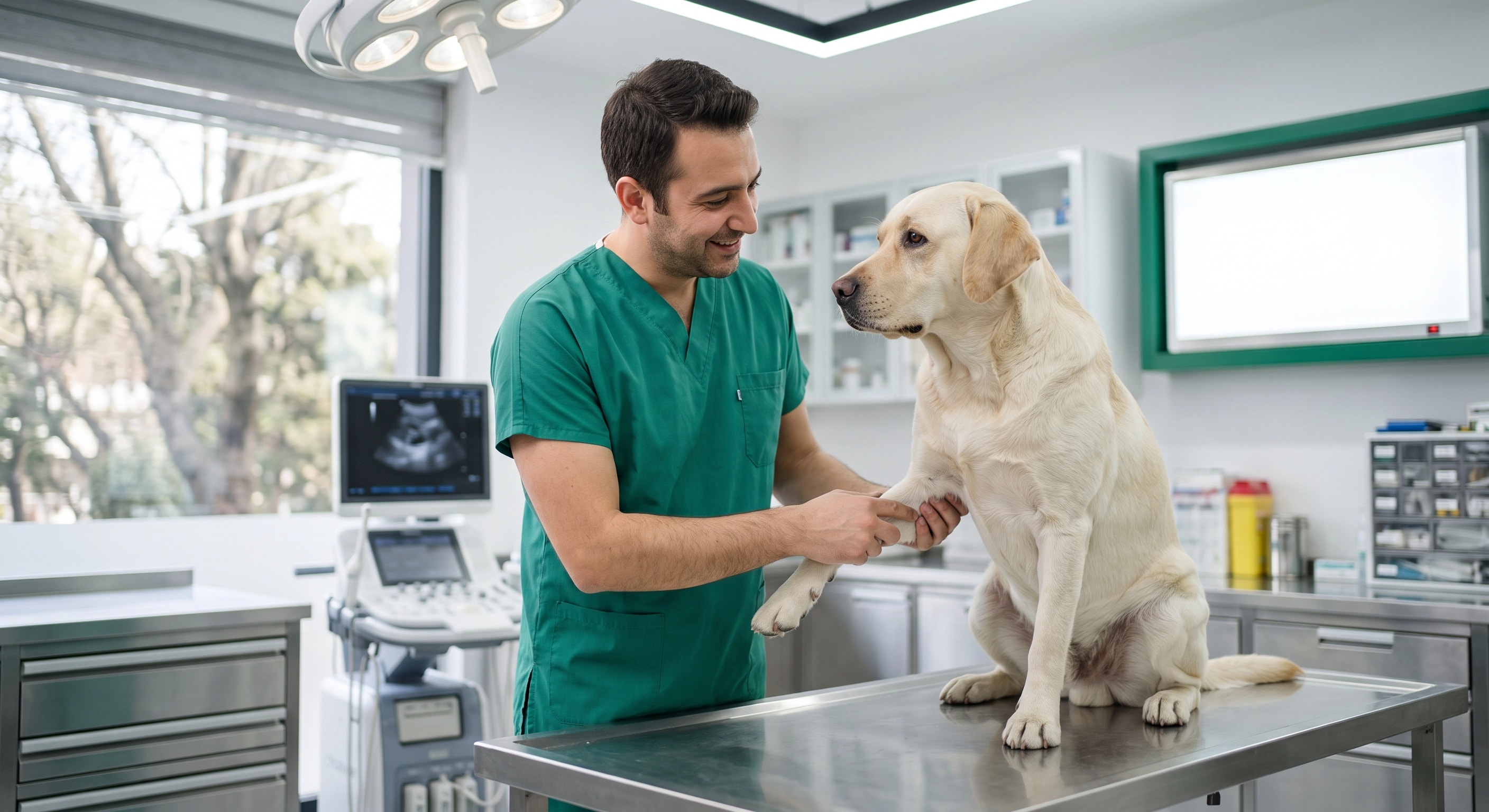
Seeing your dog suddenly hold up a hind leg and refuse to bear weight while chasing a ball in the park or walking along the Mersin coast is a stressful situation for any pet owner. In the open areas of Mersin and Mezitli, active dogs frequently encounter such sudden mobility issues. Often assumed to be a minor sprain, this condition is usually caused by damage to or complete rupture of the cranial cruciate ligament (CCL), which stabilizes the knee joint.
Although this issue can seem overwhelming at first, modern veterinary orthopedics provides reliable procedures that allow your dog to walk comfortably and pain-free again. In this guide, we walk you through the causes of cruciate tears, the signs to watch for at home, the cranial drawer test performed during examination, and the gold-standard TPLO surgery step by step.
What You Will Learn in This Guide
- 1What is the Cranial Cruciate Ligament (CCL) in Dogs and Why Does it Tear?
- 2Conservative Management vs. TPLO Surgery Comparison Table
- 35 Main Signs of Cruciate Ligament Tears and the Drawer Test
- 4Post-Operative Home Care and Physical Rehabilitation
- 5Weight Management and Joint Protection Routines
- 6Orthopedic Surgery and Consultation in Mezitli, Mersin
- 7Academic Sources and Further Reading
- 8Frequently Asked Questions
01What is the Cranial Cruciate Ligament (CCL) in Dogs and Why Does it Tear?
The canine knee joint is stabilized by strong intra-articular bands connecting the femur (thigh bone) to the tibia (shin bone). The cranial cruciate ligament (CCL) is the primary structure that prevents the shin bone from sliding forward relative to the thigh bone during weight-bearing activities.
While human ACL tears usually stem from sudden athletic trauma, cruciate disease in dogs is predominantly degenerative. Over time, the ligament fibers progressively fray and weaken. Eventually, a routine movement, such as jumping down from furniture or turning in the yard, can cause the already compromised ligament to tear completely. Excess body weight, breed-related joint conformation (such as in Golden Retrievers, Labradors, and Rottweilers), and age-related tissue changes accelerate this process.
02Conservative Management vs. TPLO Surgery Comparison Table
| Treatment Method | Recovery Timeline | Joint Stability | Osteoarthritis & Recurrence Risk |
|---|---|---|---|
| Conservative Care (Medication & Rest) | Very long and unpredictable recovery with frequent setbacks. | No biomechanical correction; the joint remains loose and unstable. | High risk of progressive osteoarthritis and secondary meniscal tears. |
| TPLO Surgery (Osteotomy) | Controlled return to normal activity begins within 8–12 weeks. | Bone geometry is adjusted to permanently stabilize joint mechanics. | Provides long-term joint stability with minimal arthritis progression under structured rehabilitation. |
Conservative Care (Medication & Rest)
TPLO Surgery (Osteotomy)
035 Main Signs of Cruciate Ligament Tears and the Drawer Test
Dogs do not always vocalize pain, but noticeable changes in their gait and posture offer clear clinical clues. Common signs observed at home include:
- Sudden and Persistent Limping: The dog avoids placing weight on the affected limb, hopping on three legs with the injured leg suspended.
- Sitting with the Leg Extended Outward (Sit Test): Healthy dogs sit with their rear paws neatly tucked under the body. A dog with a cruciate tear extends the sore leg to the side to relieve joint pressure.
- Swelling and Warmth Around the Knee: Inflammation inside the joint causes noticeable thickening and localized warmth around the stifle area.
- Clicking Sound During Movement: A faint click heard when the dog walks indicates that the meniscal cartilage has also been damaged alongside the torn ligament.
- Reluctance to Exercise: Previously active dogs hesitate to go on walks, struggle with stairs, and avoid jumping onto furniture.
- Clinical Diagnosis (Cranial Drawer Test): During examination, the veterinarian stabilizes the femur and checks whether the tibia translates forward. If the ligament is torn, the shin bone shifts forward like an open drawer. This finding is confirmed using digital radiography.
04Post-Operative Home Care and Physical Rehabilitation
The surgical success of TPLO is directly tied to attentive post-operative management and controlled activity at home. Essential steps during recovery include:
- Controlled Activity: Running, jumping, and stairs must be strictly avoided during the first weeks until bone healing is confirmed. Only short leash walks for bathroom needs are permitted.
- Cold and Warm Compresses: In the initial days, cool compresses help reduce localized swelling. In later stages, warm compresses and gentle massage help ease surrounding muscle tension.
- Passive Range of Motion (PROM): Gentle flexion and extension exercises keep the joint mobile, performed strictly within the guidelines demonstrated by your veterinarian.
- Non-Slip Flooring: Slippery laminate or tile floors can cause the surgical leg to slip. Placing non-slip rugs along main walkways provides safe traction during recovery.
05Weight Management and Joint Protection Routines
Because physical activity is restricted during recovery, managing caloric intake is crucial. Excess weight places unnecessary stress on the healing joint. Furthermore, dogs naturally place extra weight on the unaffected leg to compensate, making it essential to protect the opposite knee.
Adjusting daily meal portions and providing veterinarian-recommended joint supplements containing Glucosamine, Chondroitin, and Omega-3 fatty acids helps protect cartilage integrity.
06Orthopedic Surgery and Consultation in Mezitli, Mersin
At Mersin Anka Veterinary Clinic, we manage orthopedic conditions according to current international veterinary standards. Using digital X-rays and thorough orthopedic assessments, we measure the anatomical slope of the knee and prepare the most appropriate surgical procedures for each patient.
TPLO surgery modifies the bone angle rather than relying on artificial sutures, providing reliable long-term joint stability. Following surgery, our structured orthopedics and physical therapy protocols guide your dog safely through each phase of recovery. Booking an evaluation promptly when limping appears is critical to addressing joint instability before permanent arthritis develops.
Summary
Cranial cruciate ligament rupture in dogs occurs when degenerated ligament fibers tear during routine movement, causing hind limb lameness. Common symptoms include non-weight-bearing limping, altered sitting posture, and joint swelling, diagnosed through the cranial drawer test and digital X-rays.
TPLO surgery corrects the mechanical angle of the knee to establish permanent stability. Combined with structured home rest, weight management, and guided rehabilitation, your dog can safely return to an active, comfortable routine.
Orthopedic and Surgical Consultation at Anka Clinic
If your dog is experiencing sudden lameness or refusing to bear weight, schedule a comprehensive orthopedic consultation before permanent joint degeneration develops.
Book an AppointmentRelated Blog Posts
Academic Sources and Further Reading
- ACVS - Cranial Cruciate Ligament Disease and Treatment Guide
- WSAVA - Global Pain Council and Orthopedic Standards
- Fitzpatrick Referrals - Cruciate Ligament Disease and Surgical Management in Dogs
This content has been prepared for informational purposes and does not replace a professional veterinary examination.
Frequently Asked Questions
Can a torn cranial cruciate ligament in dogs heal without surgery?
A completely torn cranial cruciate ligament cannot heal on its own. Without surgical stabilization, persistent joint laxity rapidly accelerates degenerative osteoarthritis and causes secondary meniscal tears, leading to chronic joint pain and progressive lameness.
What is TPLO surgery and why is it preferred?
TPLO (Tibial Plateau Leveling Osteotomy) is an advanced orthopedic procedure where the tibial plateau is circularly cut, rotated, and stabilized with a specialized locking plate. Rather than relying on synthetic sutures, it fundamentally neutralizes cranial tibial thrust for permanent biomechanical stability.
How long does it take for a dog to walk normally after TPLO surgery?
Most dogs begin light toe-touching weight-bearing within several days after TPLO surgery. Complete bone union and gradual return to unrestricted physical exercise typically require 8 to 12 weeks of structured rehabilitation and monitoring.
If a dog tears one cruciate ligament, will the other one tear too?
Yes. Approximately 40% to 60% of dogs that tear one cranial cruciate ligament will experience a tear in the opposite knee within two years due to bilateral anatomical conformation and compensatory overloading on the sound limb.
Can I walk my dog after cruciate ligament surgery?
Off-leash running, jumping, and stairs are strictly prohibited during the first 6 to 8 weeks. Only short, slow leash walks strictly for bathroom elimination are permitted under strict crate confinement protocols.
Why did my dog tear its cruciate ligament without an obvious accident?
Unlike acute sports injuries in humans, canine cruciate disease is predominantly a chronic degenerative disorder. Collagen fibers weaken over months, until a routine movement, such as stepping off furniture, acts as the final trigger for a complete rupture.
Medical Information Note
This content is for general information only. It does not replace a veterinary examination, diagnosis, treatment, or specific medication/food recommendations. A veterinary examination and individual assessment are required for your pet’s health. In case of emergency symptoms, please contact the nearest open veterinary clinic.
MERSIN MEZITLI PET CARE
Need Professional Guidance for Your Pet?
Are you in Mersin Mezitli? If you notice these symptoms or have any concerns about your pet’s health, consult our AnkaVet veterinarians immediately. English and Russian-speaking support is available!
Your pet deserves quality care.
Get in touch today to discuss your pet’s health or schedule a consultation.